Tokaj wine region guide: visiting from Budapest

Is Tokaj worth visiting from Budapest?
Yes. Tokaj is one of Europe's great wine regions and the source of Tokaj Aszú, a legendary sweet wine with a 500-year history. The 2.5–3 hour journey from Budapest is reasonable for a day trip, and the medieval cellar experiences, vineyard landscapes and local food make it a worthy destination even for visitors who are not wine specialists.
Hungary’s most celebrated wine destination
Tokaj-Hegyalja (the Tokaj Hill Region) is one of the oldest legally defined wine appellations in the world — codified by royal decree in 1737, centuries before Bordeaux or Burgundy formalised their boundaries. The region covers 27 villages in a volcanic hill range at the confluence of the Bodrog and Tisza rivers in northeastern Hungary.
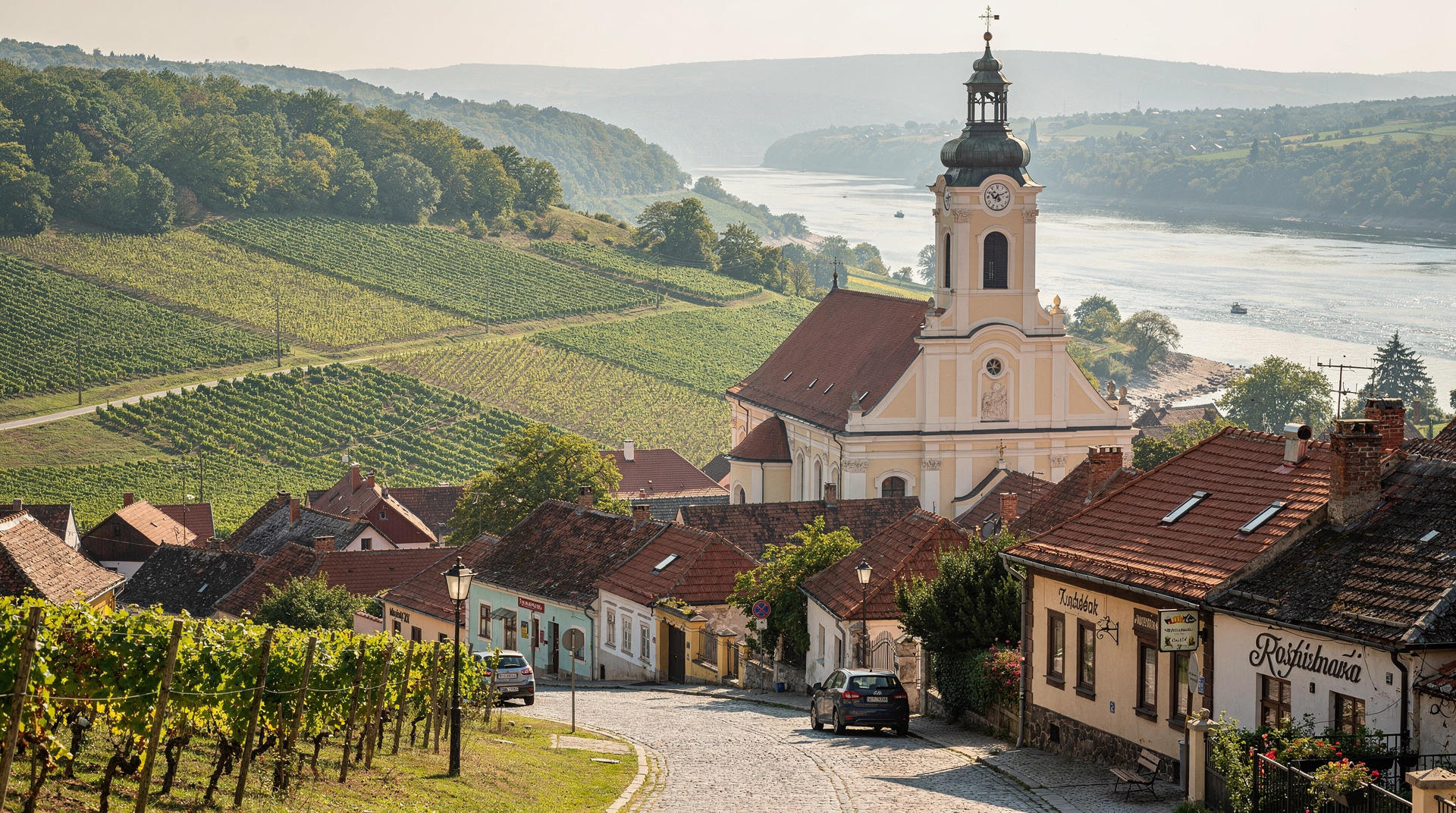
The UNESCO World Heritage designation (2002) recognised not just the wines but the cultural landscape: terraced vineyards, medieval cellars dug into volcanic tufa, Baroque town halls and centuries of viticultural tradition. If you have any interest in wine history, Tokaj is genuinely one of Europe’s essential destinations.
From Budapest, it is a practical day trip — long, but manageable — and the combination of cellar visits, vineyard walks and Aszú tastings makes it one of the most distinctive experiences in Hungary.
| Where | Tokaj-Hegyalja, ~210–230 km northeast of Budapest |
| Getting there | Train from Keleti (~2.5–3hrs), car (~2–2.5hrs), or guided tour |
| Time needed | Full day; overnight if visiting several wineries |
| Cost | Around 3,000–4,500 HUF return train; tastings from ~5,000 HUF/winery |
| Best time | Harvest (Sept–Oct) for atmosphere; year-round for tastings |
For the full logistics of doing this as a single day from Budapest, see the companion Tokaj wine day trip guide, which focuses purely on the day-trip mechanics.
What makes Tokaj wines unique
Tokaj Aszú owes its character to two converging factors. First, the volcanic soils of the Zemplén hills — rhyolite, andesite and clay — give the wines their mineral backbone and natural acidity. Second, the unique microclimate at the river confluence: warm summer days and misty autumn mornings create the conditions for Botrytis cinerea, the noble rot that shrivels and concentrates the furmint and hárslevelű grapes.
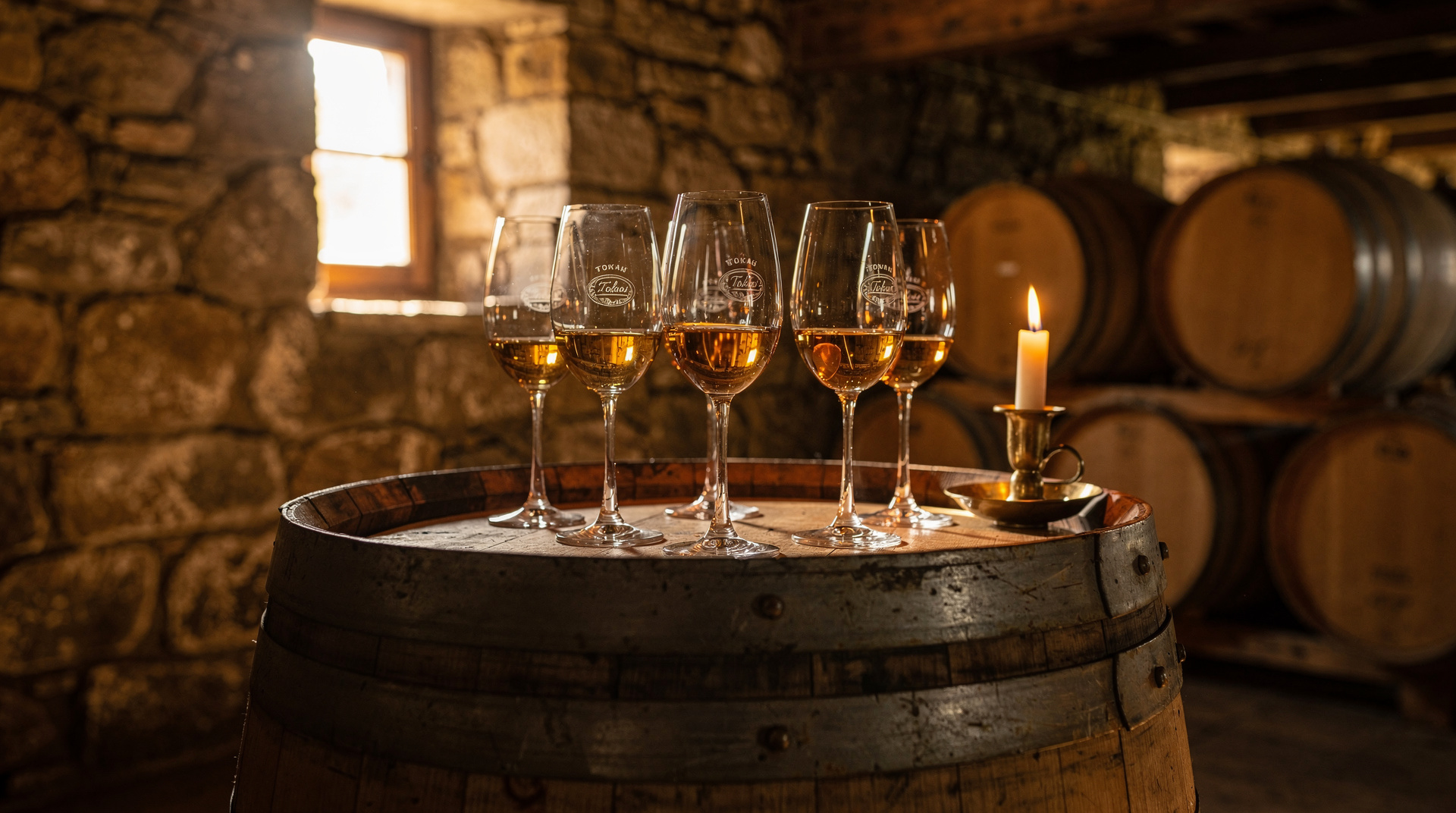
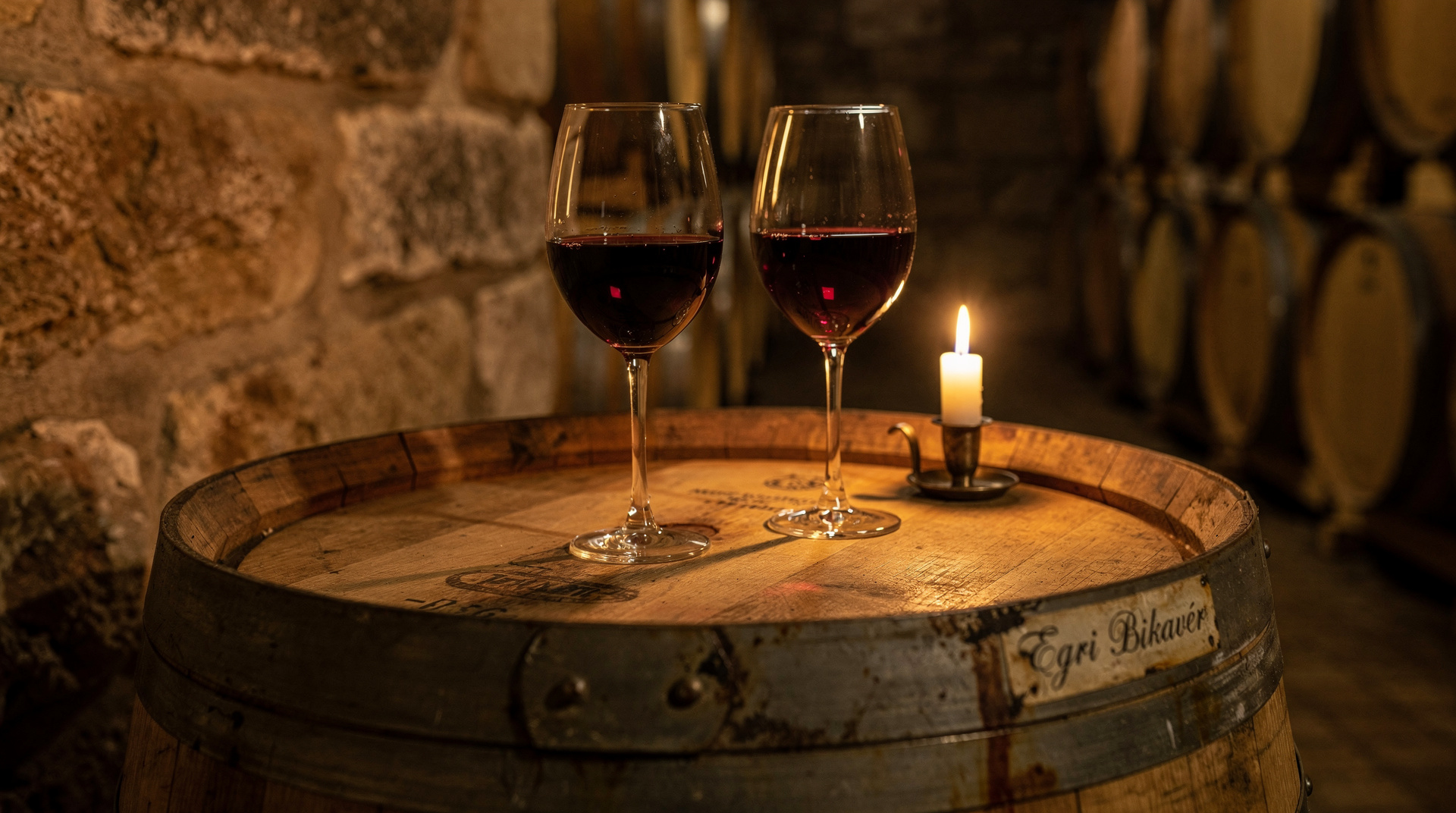
The harvesting process is laborious: pickers go through the vineyards multiple times, selecting only the botrytised berries (aszú berries) by hand. These are collected in 25-litre wooden casks (puttonyos) and pressed into a dough-like paste. The paste is then macerated in dry base wine for 12–60 hours before pressing and ageing in 136-litre oak barrels called gönci hordó in the region’s underground cellars.
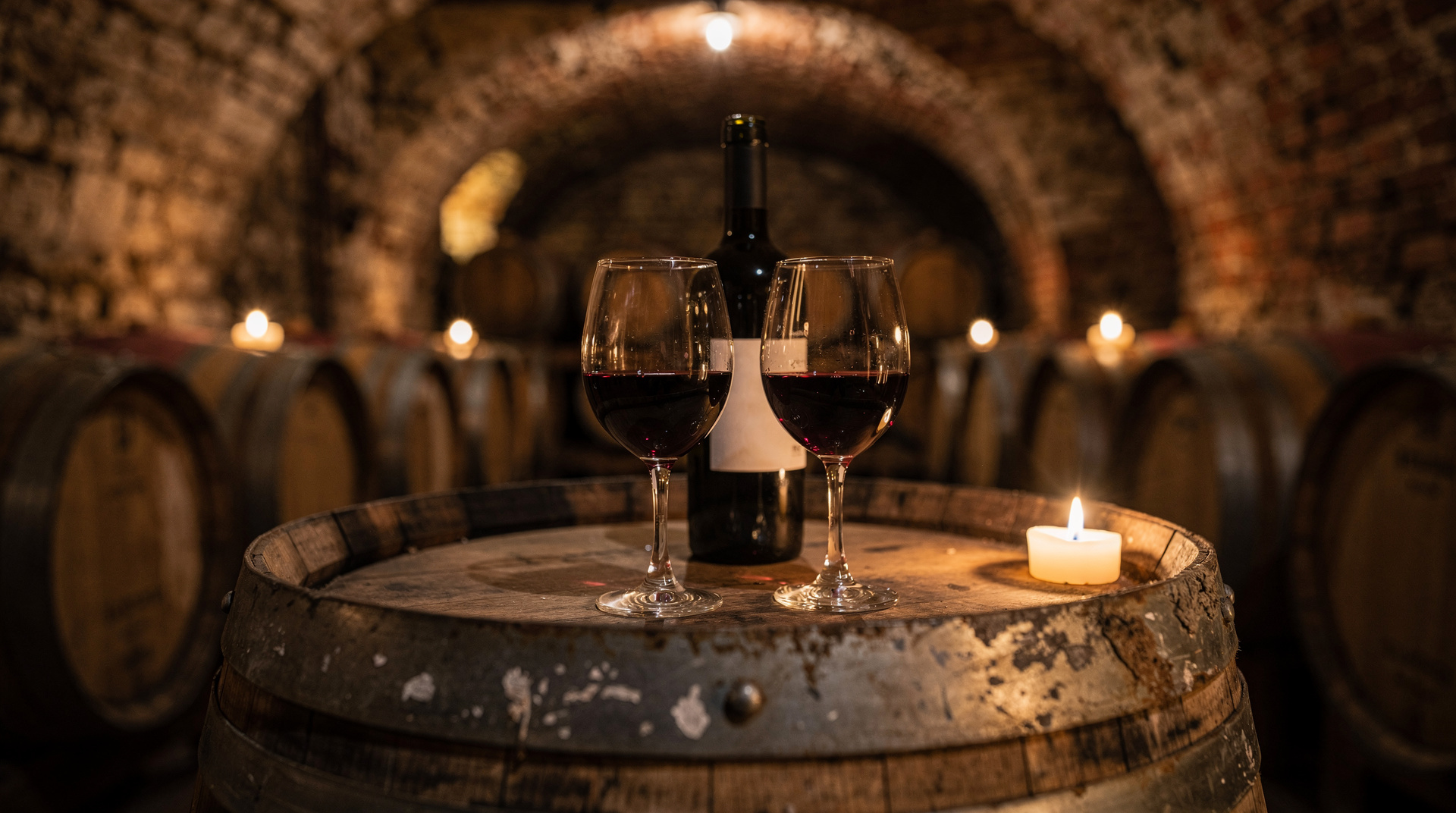
The cellars are themselves remarkable — dark, humid tunnels carved into volcanic tufa, their walls coated in a black mould (Cladosporium cellare) that has given rise to the saying that the ceilings “breathe Tokaj.” Cellar tours are fascinating even without deep wine knowledge.
Dry furmint: the modern revelation
While Aszú is the legend, dry furmint has emerged as Tokaj’s second great wine style in the past 15 years. Good dry furmint is crisp and mineral with stone fruit aromatics, excellent acidity and real age-worthiness. Some producers age it in oak; others prefer steel tanks to emphasise freshness.
Producers like István Szepsy and Oremus are making dry furmints that compete with high-end white Burgundy for complexity and longevity. At cellar prices, quality dry furmint costs 3 000–7 000 HUF — exceptional value for the quality.
How to approach a Tokaj tasting
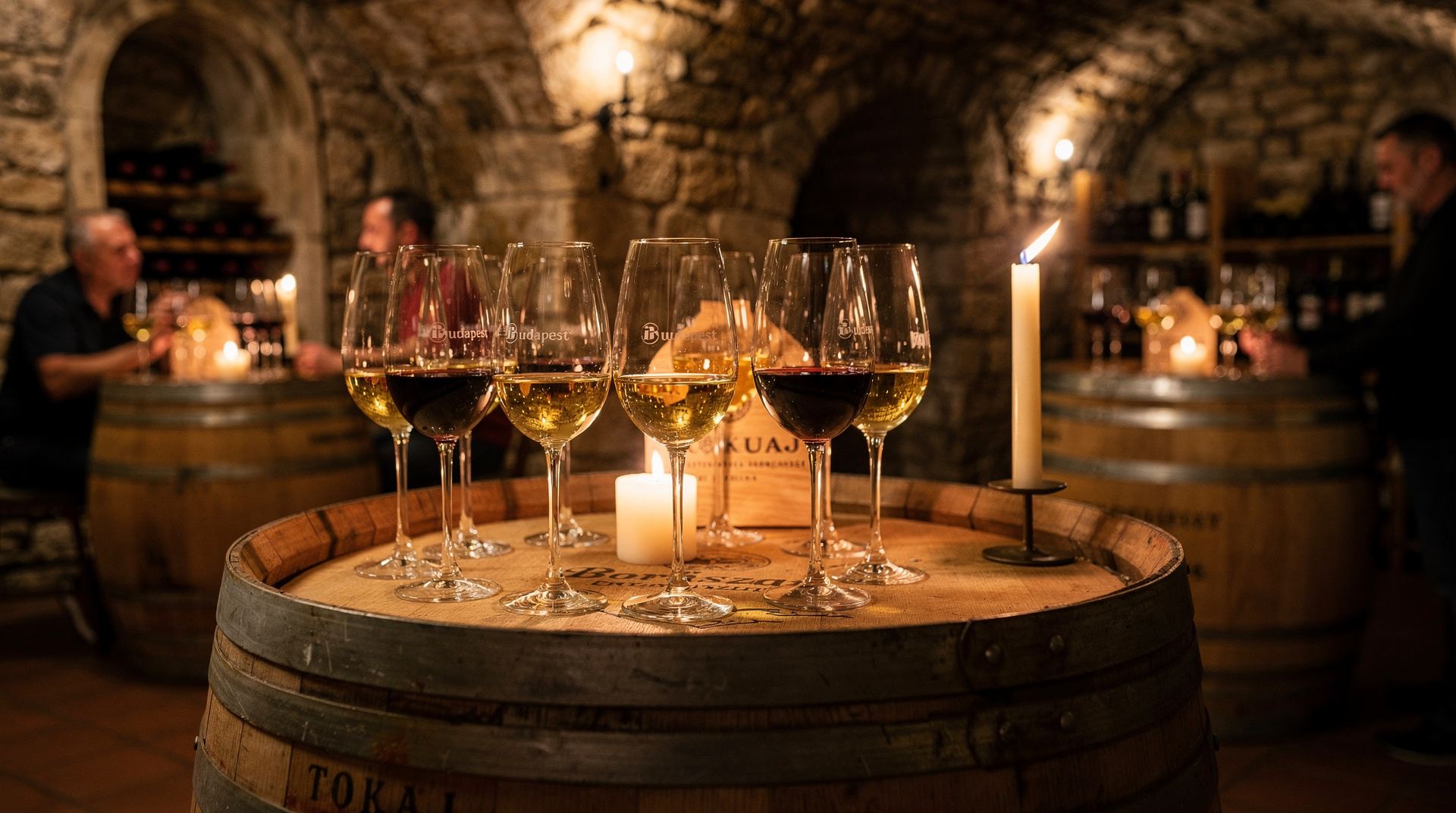
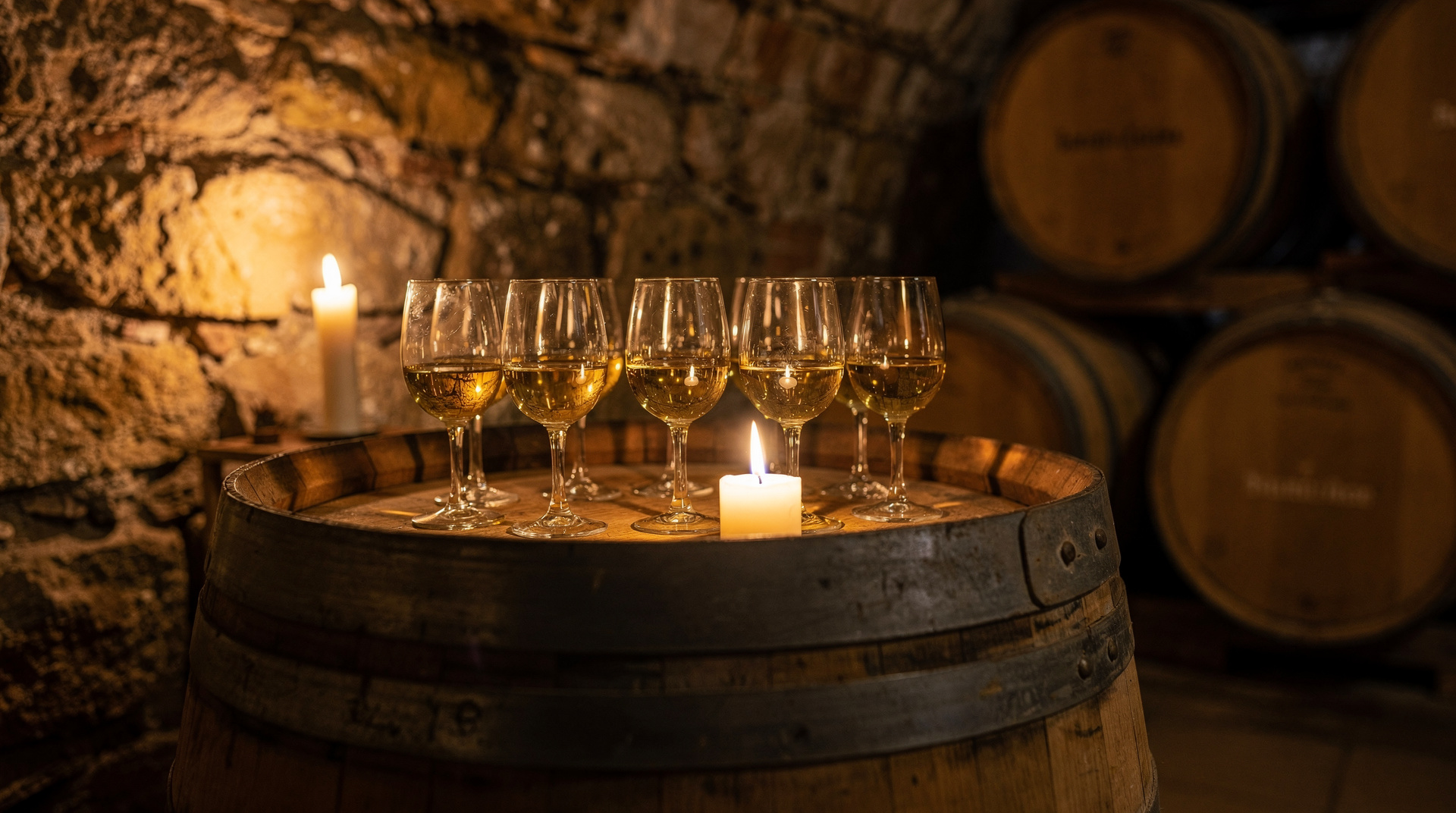
A tasting in Tokaj rewards a little preparation. Most cellars pour in a deliberate order: dry furmint first, then the lightly sweet wines, then the Aszú range from the lower puttonyos to the higher ones. Follow that order and let your palate adjust; jumping straight to the sweetest wine flattens everything that comes after it. Sip slowly, ask the host which vintage they are pouring, and do not feel obliged to finish every glass. Spittoons are normal in serious cellars, and nobody will judge you for using one, especially if you are driving or still have a long train ride ahead.
If you are new to wine, it helps to learn the vocabulary beforehand. The Hungarian wine guide explains the main grape varieties and regions, and a wine tasting in Budapest is a gentle warm-up that teaches you how to taste before you reach the cellars. Visitors who arrive knowing what acidity, residual sugar and noble rot actually mean get far more out of the conversation with the winemaker.
Ask questions. Tokaj producers are generally proud of their region and happy to explain how a particular vineyard, a wet or dry year or a longer maceration shaped what is in your glass. A good host will also tell you honestly which wines are ready to drink now and which are meant to be laid down for years. That advice is worth more than any label.
Getting to Tokaj from Budapest
By train: Direct trains from Keleti station run approximately every 2 hours. Journey time is 2.5–3 hours depending on the service (InterCity trains are faster). A second-class return ticket costs around 3 000–4 500 HUF. Tokaj station is a 15-minute walk or short taxi ride from the town centre; wineries outside town require a taxi (1 000–2 500 HUF).
By car: 210 km via the M3 motorway (direction Miskolc), then east on routes 37 and 38. Allow 2–2.5 hours without traffic. Driving means you can visit multiple wineries across the region and explore villages like Mad, Tarcal and Tolcsva that are hard to reach by public transport.
By guided tour: A dedicated Tokaj wine day tour from Budapest includes return transport, a guide who explains the region’s history and winemaking, and access to 1–2 wineries for structured tastings. This is the easiest option and removes the logistics of train connections and winery bookings.
The main wineries and what to expect
Royal Tokaji (Mad village, 15 km from Tokaj town) is the most polished visitor experience in the region. Founded in 1990 by wine writer Hugh Johnson and a group of investors, it operates the first-growth Blue Label vineyard and the Blue Label and Red Label Aszú lines. Cellar tours are conducted in English, include the underground barrel aging tunnels and end with a structured tasting of 3–5 wines. Book online; entry to the tour typically costs 5 000–8 000 HUF including tastings.
Oremus (Tolcsva village, 20 km from Tokaj town) is owned by the Vega Sicilia family (the legendary Ribera del Duero estate) and combines Spanish investment with Hungarian tradition. Their Mandolás dry furmint is a benchmark, and the Aszú range is excellent. The cellar is beautiful — long limestone tunnels — and the tasting room professional without being sterile.
Disznókő (Mezőzombor, on the main road from Eger to Tokaj) is the most architecturally striking — a modernist winery building by architect Dezsényi set among vineyards. Good for day-trippers arriving from the direction of Eger.
Patricius (Bodrogkisfalud) is a smaller, more personal estate popular with visitors who prefer an intimate cellar experience over polished hospitality.
Best time to visit Tokaj
| Season | Weather & vineyards | Crowds | Notes |
|---|---|---|---|
| Spring (Apr–May) | Fresh, vines budding | Quiet | Good for cellar tours without waiting |
| Summer (Jun–Aug) | Warm, green hillsides | Busiest | Book wineries ahead; midday heat in vineyards |
| Harvest (Sept–Oct) | Golden vines, botrytis forming | Moderate–busy | The most atmospheric time; new-vintage tastings |
| Winter (Nov–Mar) | Bare vines, cold cellars | Very quiet | Some smaller wineries close or require advance arrangement |
If you only have one window to choose, September and October give the best combination of harvest atmosphere and manageable crowds — but Aszú tastings themselves are excellent year-round since the wines are already bottled and aged.
Tokaj town itself
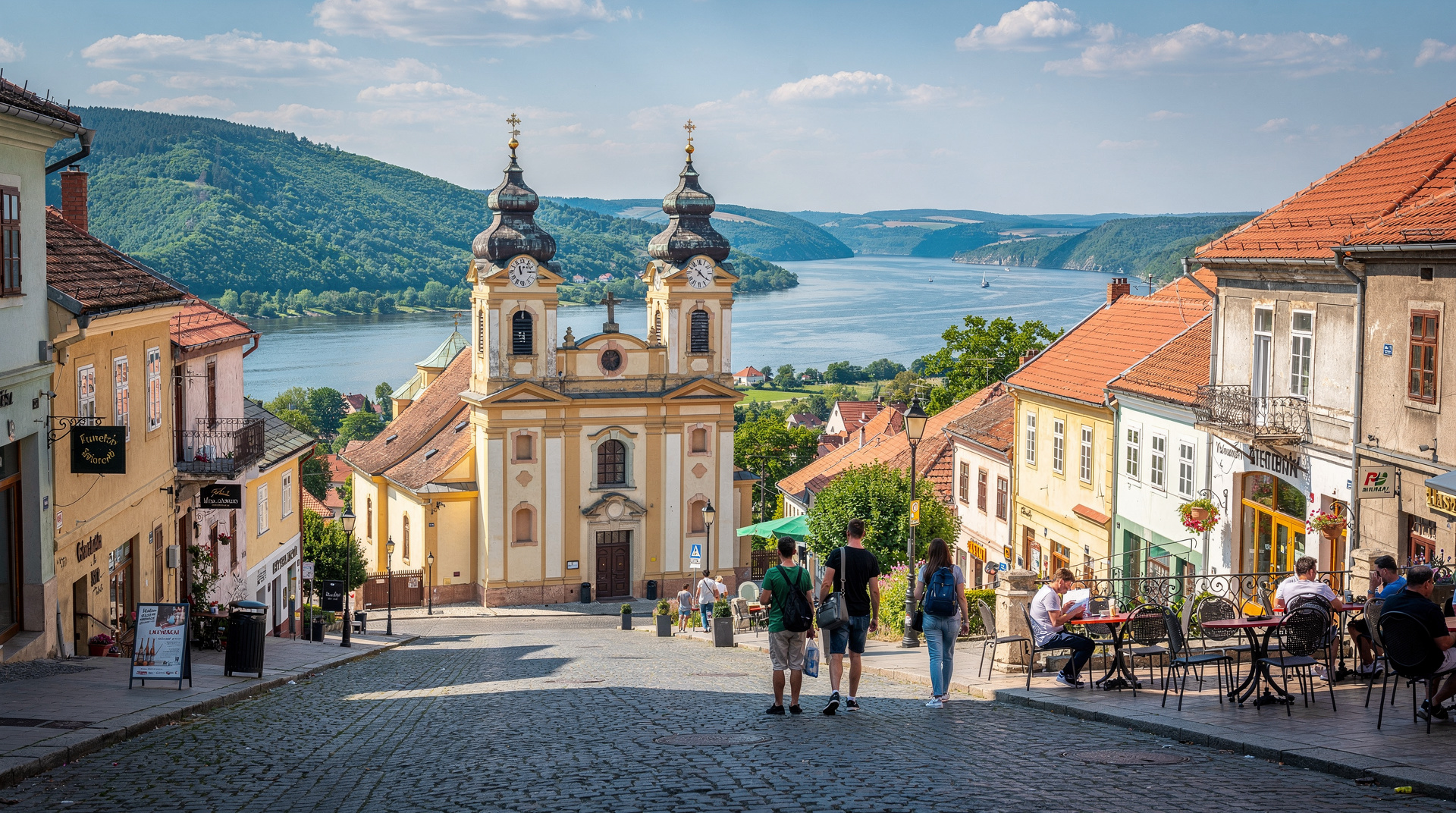
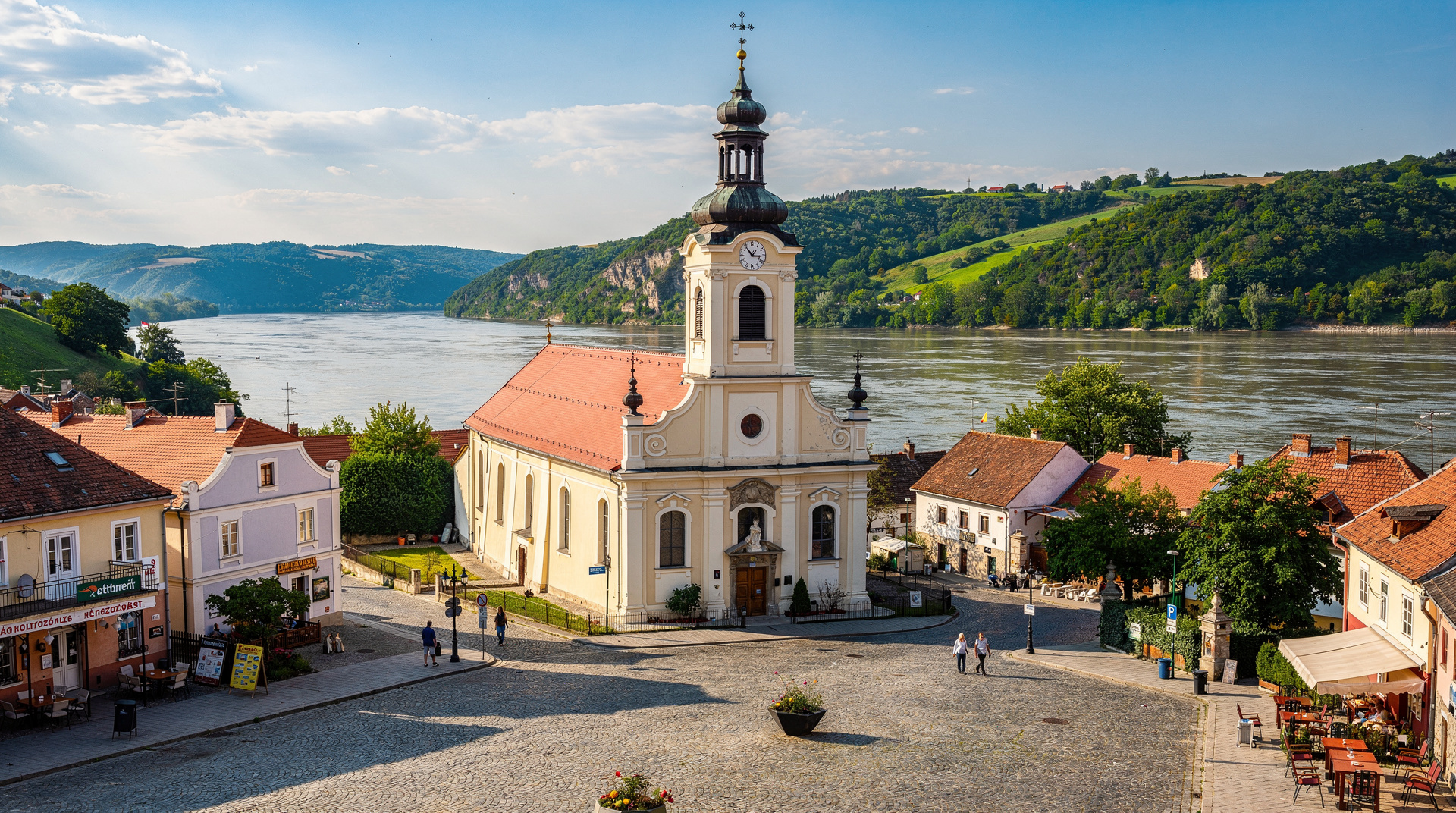
The town of Tokaj (population ~4 000) sits at the confluence of the Bodrog and Tisza rivers. It is a quiet, pleasant Hungarian market town with a main square of Baroque buildings, a Synagogue museum, and several wine bars and restaurants along the riverfront.
The Tokaj Museum (Bethlen Gábor utca 7) has exhibits on the region’s wine history and is worth a quick visit. The Rákóczi Cellar, a historic 16th-century cellar under the town, offers public tastings and is easily accessible without advance booking.
For lunch, restaurants along the riverfront serve straightforward Hungarian food — gulyás, fish dishes from the rivers, roast duck with red cabbage. Allow 2 500–4 500 HUF for a main course.
Combining Tokaj with Eger
If you have two days for a northeastern Hungary trip, combining Tokaj and Eger makes excellent sense. The towns are 80 km apart (about 1.5 hours by car via Miskolc). You could base yourself in Eger, visit the wine cellars in the afternoon and take a day trip to Tokaj the following morning.
By rail from Budapest, Eger and Tokaj are on separate lines, so a combined day trip without a car is difficult. The guided tours generally focus on one or the other unless specifically advertised as a combined itinerary.
The Eger guide covers Bull’s Blood wine and the town’s other attractions. The best day trips from Budapest page has the full comparison of all northeastern Hungary options.
Food that goes with Tokaj wine
Tokaj is not only for dessert. Dry furmint is a versatile table wine that suits river fish, roast poultry and richer cheeses, and many local restaurants pour it by the glass alongside classic Hungarian cooking. If you want to understand what that cooking looks like, the guide to traditional Hungarian dishes is a good primer, and the street food guide covers snacks such as lángos and chimney cake that you can try before or after the trip.
Aszú pairs in two directions. With foie gras or a blue cheese, its sweetness and acidity cut through the richness. With a fruit tart or a simple plain biscuit, it becomes a dessert in itself. Many visitors are surprised that a glass is best enjoyed in small sips rather than a full pour, since the flavour is so concentrated.
Making a longer trip of it
Tokaj sits well within a wider Hungarian wine itinerary. Many travellers pair it with the Bull’s Blood country around Eger, and the Eger day trip guide shows how that works. For a lighter excursion closer to the capital, the Danube Bend day trip and the Lake Balaton day trip offer scenery without such a long journey. If you prefer something hands-on in the city, a cooking class in Budapest pairs nicely with a wine-focused weekend.
Those who enjoy Hungarian spirits as much as wine can read the pálinka guide before leaving, since many cellars and restaurants in the region will offer a glass at the end of a meal.
Back in Budapest, plan the rest of your stay with the Budapest travel guide and the three-day overview, and read the first-time visitor guide if this is your first trip. For a seasonal angle, the blog post on autumn in Tokaj describes the harvest season, and the Budapest in autumn guide helps you plan around it.
What to bring back
The best Tokaj souvenirs to bring home are bottles of Aszú (5 or 6 puttonyos from a named producer) and a dry furmint from a serious estate. Both are dramatically cheaper at cellar door or in Budapest wine shops than in export markets.
Packing note: wine in a sturdy box (many wineries offer gift packaging) fits in checked luggage. EU residents face no import limits. Non-EU travellers should check their country’s customs allowance — the standard is 2 litres of wine per person.
For Budapest-based wine tasting before your Tokaj trip, wine tastings in Budapest has all the options. The Hungarian wine guide provides the full context on Hungarian wine regions and grape varieties. If your schedule doesn’t allow the trip out to Tokaj at all, a guided city tasting is a reasonable substitute for sampling the wine, even if it can’t replicate standing in the cellars themselves:
Budapest wine essentials tasting classPractical planning
For the door-to-door logistics — train times, tour options, and a realistic hour-by-hour plan — the Tokaj wine day trip guide is the one to follow. If northeastern Hungary as a whole interests you, the Eger day trip guide and the best day trips from Budapest overview put Tokaj in context against the region’s other options. For where Tokaj sits geographically and what else is nearby, see the Tokaj destination page.
Frequently asked questions about Tokaj wine region guide
How do you get from Budapest to Tokaj?
Train from Keleti station (Budapest) to Tokaj: ~2.5 hours, departures roughly every 2 hours, around 3 000–4 500 HUF return. Car: ~210 km via M3 motorway, 2–2.5 hours. A guided day tour is the easiest option — coach, guide and winery access included. Taxis from Tokaj town to the wineries are cheap (1 000–2 000 HUF).What is Tokaj Aszú and how does puttonyos work?
Tokaj Aszú is a noble-rot sweet wine made by pressing dried, botrytised furmint and hárslevelű grapes into a base wine. Puttonyos (3–6) indicates residual sugar: 3 puttonyos is lightly sweet; 6 puttonyos is intensely honeyed. Eszencia, the purest Aszú concentrate, can exceed 500–800 g/l residual sugar. Serious bottles age for 20–50 years.Which Tokaj wineries are open to visitors?
Royal Tokaji (Mad), Oremus (Tolcsva), Disznókő (Mezőzombor) and Patricius (Bodrogkisfalud) all receive visitors and offer English-language tours. Royal Tokaji and Oremus are the most polished visitor experiences. Booking 24–48 hours ahead is recommended in peak season.How much does Tokaj wine cost?
At winery cellar doors: dry furmint 2 000–5 000 HUF; 3–4 puttonyos Aszú 6 000–15 000 HUF; 5–6 puttonyos Aszú 15 000–35 000 HUF; Eszencia 50 000–150 000 HUF per half-bottle. Budapest wine shops (Bortársaság) stock the same wines at similar or slightly higher prices. Airport prices are 20–40% more expensive.
Top experiences
Bookable activities with verified prices and instant confirmation on GetYourGuide.