Budapest public transport tickets: prices, types and how to buy

What tickets do I need for Budapest public transport?
A single ticket costs 500 HUF when bought in advance (700 HUF from the driver). For a full day, the 24-hour travelcard (2,750 HUF) pays off from the sixth journey. For a 3-day visit, the 72-hour pass (5,750 HUF) is the best value. Validate every ticket immediately on boarding or face a 16,000 HUF fine.
Understanding the BKK fare system
Budapest’s public transport is managed by BKK (Budapesti Közlekedési Központ). The network covers metro, tram, bus, trolleybus, cogwheel railway, and suburban HÉV trains within the city boundary. All these modes use the same fare system, with one key exception: bus 100E (the airport express) requires a dedicated 100E ticket regardless of which pass you hold.
The fare system is a traditional paper-ticket model. There is no automatic fare-capping, no Oyster equivalent, and no single backend account. You buy a ticket or pass, validate it, and show it on demand. Inspectors in plain clothes board vehicles regularly — the system is enforced.
| Where | Any metro station, tram/bus stop, or the BudapestGO app |
| Cost | 500 HUF single, 5,750 HUF for a 72-hour pass |
| Time needed | buying and validating takes under a minute |
| Getting there | metro M1/M2/M3/M4, trams, buses, HÉV all use the same tickets |
| Best time | buy on arrival — travelcards can’t be pre-purchased abroad |
Choosing the right ticket for your trip length
| Trip length | Best-value option | Approx. cost |
|---|---|---|
| A few short hops | Single tickets (500 HUF each) | pay per journey |
| One full day of sightseeing | 24-hour travelcard | 2,750 HUF |
| Long weekend (3 days) | 72-hour travelcard | 5,750 HUF |
| Heavy sightseeing + museums | Budapest Card | from 17,990 HUF for 24 hours |
Ticket types and prices (2026)
Single journey ticket (vonaljegy)
Price: 500 HUF bought in advance, 700 HUF bought on board
Valid for one uninterrupted journey on one metro line or one surface vehicle (tram, bus, trolleybus). You cannot change metro lines on a single ticket. If you need to transfer between metro lines, you need a new ticket or a travelcard. BKK also sells 30-minute (600 HUF) and 90-minute (850 HUF) tickets, and a 10-ticket book for 4,500 HUF.
Note: the cogwheel railway up to Széchenyi-hegy uses standard BKK tickets. The funicular (sikló) from the Chain Bridge to Castle Hill is a separate tourist attraction with its own pricing — not covered by BKK tickets.
24-hour travelcard (24 órás Budapest-bérlet)
Price: 2,750 HUF
Unlimited transport across the entire BKK network for 24 hours from first validation. This pays off from your sixth journey of the day. For most tourists sightseeing across Budapest, it is the right everyday ticket.
72-hour travelcard (72 órás Budapest-bérlet)
Price: 5,750 HUF
Unlimited transport for 72 hours. For a 3-day visit with moderate transport use, this is almost always the best-value option. Calculate: three days of 24-hour passes would cost 8,250 HUF; the 72-hour pass saves 2,500 HUF.
30-day pass (havi bérlet)
Price: 8,950 HUF
Unlimited transport for 30 days. Only worth considering for stays of several weeks; for a normal trip, a 24-hour or 72-hour pass is better.
Budapest Card (optional)
The Budapest Card is not a BKK product but includes unlimited BKK transport alongside more than 30 free visits and activities. Prices start at 17,990 HUF for 24 hours; 72 hours costs 29,990 HUF. See the Budapest Card guide and run the numbers with the Budapest Card calculator before buying.
Airport 100E ticket
Price: 2,500 HUF
A dedicated ticket valid only on bus 100E (BUD Airport → Deák Ferenc tér). No other BKK ticket or pass covers this service. Buy it at the machine at the BUD bus stop outside arrivals. The airport transfer guide covers all options.
Where to buy tickets
BKK ticket machines: Yellow machines at every metro station and many tram stops. They accept cash and credit/debit cards. Interface is available in English. They sell all ticket types including travelcards.
Newsagents (trafik): Small tobacco-and-news kiosks throughout the city. They stock single tickets and sometimes travelcards. Useful when machines are busy; you may need to know the Hungarian names.
BKK customer service offices: At Keleti, Kelenföldi and Deák metro stations. Open during working hours. Staff speak English. Sell all ticket types and can resolve BKK Card issues.
BudapestGO app: The official BKK app allows you to buy and store digital tickets on your phone. This is increasingly convenient and eliminates the need for validation machines — the digital ticket activates on purchase. Verify current availability for your ticket type in the app, as the digital rollout has been gradual.
Online/in advance: BKK travelcards cannot be purchased far in advance and do not ship internationally. Buy on arrival.
How to validate
Validation is mandatory and must happen before or immediately upon boarding. Inspectors board vehicles without warning and issue fines (16,000 HUF / ~€40) on the spot — no warnings, no exceptions.
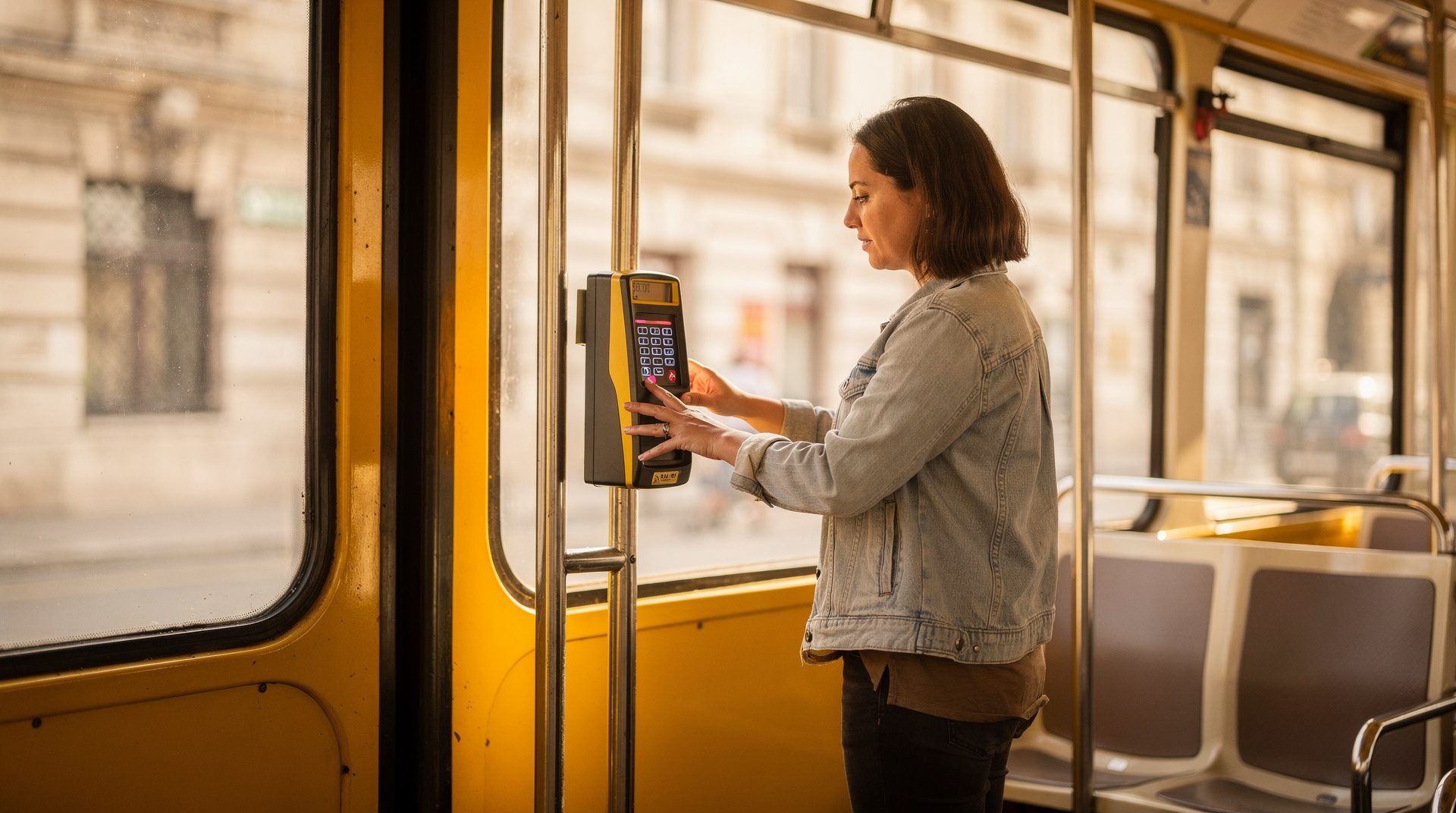
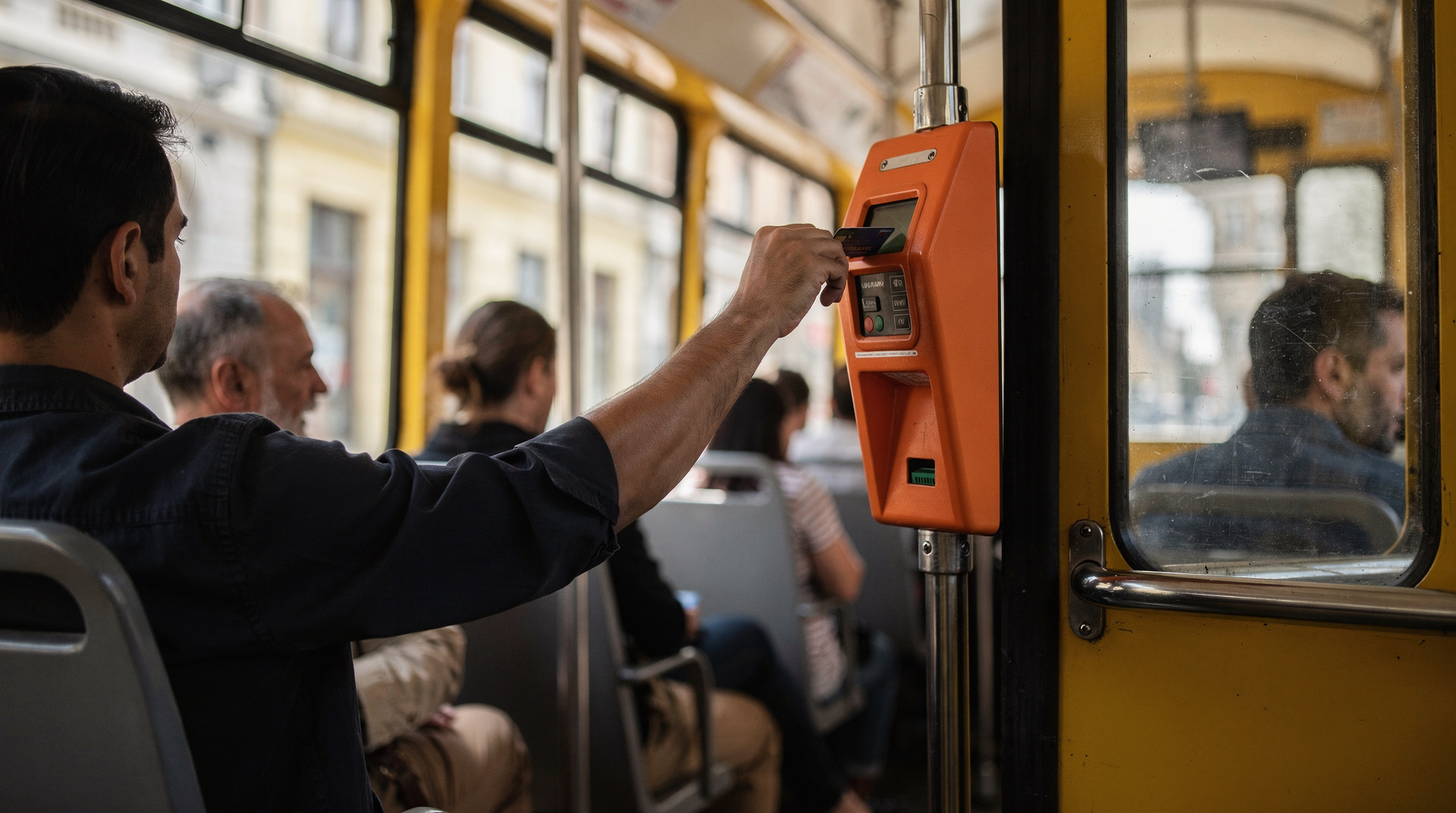
On trams and buses: Yellow validators are mounted at the door entrances. Insert your single ticket until you hear a click and see the punched hole. For travelcards (first use), insert until the machine stamps the date/time; the validator shows a green light.
On metro M2, M3, M4: The yellow validators are at the entry gates before the barriers. Insert your ticket to pass through. Travelcards are shown to the barrier sensor.
On metro M1: No barriers. Validators are inside the station. Validate before boarding even though no barrier enforces it.
For digital tickets: No physical validation needed — the ticket activates in the app on purchase and is shown to inspectors on your screen.
Golden rule: Validate at the start of each journey, not when you arrive or when you see an inspector. Inspectors check tickets throughout the journey, not just at boarding.
The inspection system
Budapest’s ticket inspectors (ellenőr) work in both uniform and plain clothes. On metros, they sometimes board in groups and check every passenger simultaneously. On trams and buses, a single inspector may walk the vehicle. All inspectors carry electronic verification devices and can check the ticket’s validation timestamp.
The fine is 16,000 HUF (around €40). It can be paid on the spot or at a BKK office within 30 days at a reduced rate. If you dispute on the spot, the inspector can call police. The system exists and is enforced — the fine easily exceeds the cost of a full 72-hour travelcard.
Children, seniors and student concessions
- Children under 6: Free on all BKK services, no ticket needed
- EU citizens aged 65+: Free — show a valid EU ID or passport with date of birth
- Students with Hungarian student ID: Discounted fares — not applicable to tourist visitors
- Non-EU seniors and students: Standard fares apply
Hungary does not extend public transport concessions to foreign tourists regardless of age, except for EU citizens over 65.
Tickets vs the Budapest Card: a quick gut check
If your itinerary is mostly walking between the Castle District, Pest riverfront and a couple of thermal baths, a plain BKK travelcard is cheaper and simpler than the Budapest Card — you’re not visiting enough paid museums to make the bundled discounts pay off. If your plan includes several paid visits and heavy transport use across multiple days, the Budapest Card guide and the Budapest Card calculator are worth checking before you commit either way. For visitors who’d rather skip the ticket-buying logistics entirely for at least one day, a hop-on-hop-off pass is a separate, simpler alternative worth considering.
Budapest Card — transport and more than 30 free visits bundledFirst-time mistakes with the BudapestGO app
The BudapestGO app is genuinely useful but has a learning curve worth knowing before you rely on it. Account setup requires a working local or international phone number for SMS verification, which occasionally fails for some foreign carriers — have a backup plan (a physical single ticket from a machine) if the app won’t verify on arrival. Digital tickets need to be “started” or activated at the right moment, not just purchased in advance, since some ticket types begin their validity window on activation rather than purchase — check the in-app instructions for your specific ticket type. Keep your phone charged: a dead battery when an inspector checks is treated the same as no ticket at all, so carrying one physical backup ticket is sensible even if you plan to use the app for everything else.
Matching tickets to a typical sightseeing day
Most visitors fall into a few patterns, and the ticket follows from the pattern. On a Castle District morning followed by an afternoon in Pest, you will probably ride a bus or tram up to the hill and the metro back down, which is exactly the kind of day where a travelcard removes the need to think. Our Buda Castle guide and the Castle District destination page show how the hill connects to the rest of the city, and the Fisherman’s Bastion guide is a natural stop on the same route.
A thermal bath day is different. Many bath complexes sit on a metro line or a short tram ride from the centre, so you may only need a couple of journeys. If a bath is the centrepiece of your day, a few single tickets can be enough, and you can book the entry separately, for example a day of soaking in the city’s best-known thermal bath (see the Széchenyi baths guide). Our best thermal baths overview helps you pick which one to plan around.
For a slow day on foot in the centre, the walking-friendly districts covered in the Downtown Pest destination page and the Jewish Quarter destination page may not need any transport at all. Do not buy a pass for a day you plan to spend entirely on foot.
Planning your transport around your itinerary
The simplest way to avoid overspending is to look at your itinerary before you reach the ticket machine. Count the days on which you will cross the river more than once, and the days you will stay in one district. The 3-day Budapest itinerary and the Budapest weekend break both show how days tend to cluster, which makes it easier to decide between one pass or a handful of single tickets. If you are travelling with children, the Budapest with kids guide explains how to pace the days so that transport does not become the main event.
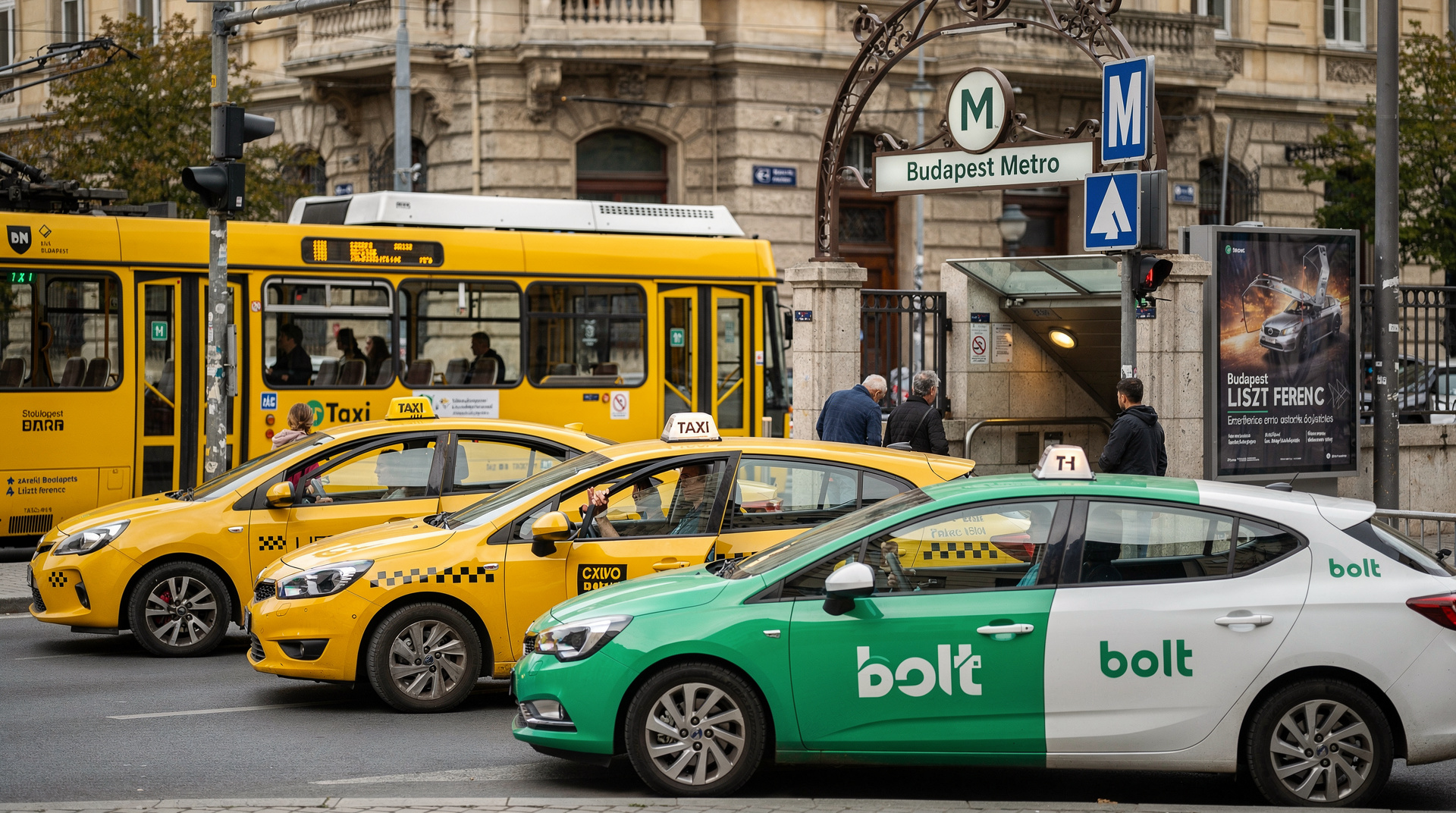
Late evenings deserve a thought of their own. If your plans include bars and a night out, the late-night Budapest guide and the Budapest metro guide are worth reading together, so you know your options for getting back to your accommodation before you go out. When public transport is not the right fit, Bolt and taxis are the alternative, and the taxi scams guide explains what to avoid.
Keeping the cost under control
Transport is one of the smaller lines in a Budapest budget, but small habits still matter. Keep your ticket somewhere you can reach quickly, validate every time without exception, and treat the fine as a cost you never want to meet. For the bigger picture of what a trip costs, read the daily budget guide and the budget travel guide, then compare the totals against the Budapest Card versus single tickets comparison before you decide how much sightseeing you want bundled.
If you are still deciding when to travel, the best time to visit Budapest guide explains how the seasons change the way you move around, and the first-timer overview pulls the practical basics into one place.
HÉV suburban railways
The HÉV (Helyiérdekű vasút) suburban railways extend the BKK network to areas beyond the city boundary. The key tourist routes:
HÉV H5: From Batthyány tér (M2) to Szentendre — popular for a Danube Bend day trip and visits to the artists’ village. BKK passes are valid within the Budapest city boundary (to Békásmegyer station); you pay a supplement for the section to Szentendre.
HÉV H8: From Keleti to Gödöllő — route to the Royal Palace (Grassalkovich Castle). Same boundary rule applies.
For the full picture on passes and when each is worth buying, the BKK travel passes guide goes deeper. And for current HUF/EUR exchange rates before you plan your budget, use the currency converter.
Frequently asked questions about Budapest public transport tickets
How much does a single bus or metro ticket cost in Budapest?
A standard single ticket (vonaljegy) costs 500 HUF when bought in advance (700 HUF on board). This covers one uninterrupted journey on one vehicle or one metro line. Children under 6 and EU citizens over 65 travel free; youth aged 6–14 travel free with a valid Hungarian school ID (not applicable to tourists).What is the difference between a travelcard and a Budapest Card?
A BKK travelcard (24h, 72h, or 30-day) covers unlimited public transport only. The Budapest Card costs more but includes transport AND more than 30 free visits and activities. For a visit heavy on sightseeing, the Budapest Card often delivers better value. Use the /tools/budapest-card-calculator/ to run the comparison.Where can I buy Budapest transport tickets?
At any yellow BKK ticket machine (at metro stations and many tram stops), at BKK customer service offices (at Keleti, Deák, Kelenföldi stations), at newsagents (trafik shops), and via the BudapestGO app on your phone. The airport 100E ticket is sold at the dedicated machine at the BUD bus stop only.Do I need to validate a 24-hour travelcard?
Yes — the first time you use it. Insert the card into the validator once, and it activates your 24 hours from that moment. After that, you show the pass to any inspector but do not validate again. Keep it accessible at all times during your travel.Is contactless payment accepted on Budapest transport?
As of 2025, some BKK terminals accept contactless bank card tap. The rollout is ongoing — check BKK's official site or BudapestGO for current coverage. Using paper tickets or the BudapestGO app is more reliable until contactless is fully deployed network-wide.What happens if I lose my paper ticket or travelcard?
BKK does not replace lost paper tickets or travelcards — there is no refund or reissue system for physical tickets. This is one reason the BudapestGO app is worth using for longer stays: a digital ticket tied to your phone can't be physically lost the way a paper card can.Can one travelcard cover a group or family?
No — each traveller needs their own valid ticket or pass; travelcards are non-transferable and tied to spot checks by inspectors, not to a named person, but only one person can use a single physical card at a time. Children under 6 travel free with no ticket needed, so only paying travellers in your group need their own pass.