Budapest food tour review: market to tavern with 14 tastings (2026)

Eating your way through Budapest: from market hall to tavern
Hungarian food doesn’t always get the attention it deserves. Budapest’s market-to-tavern food tour is one of the most effective ways to correct that. In three hours, you move from the Great Market Hall through the streets of central Pest to a sit-down tavern, accumulating 14 tastings along the way — enough to understand what Hungarian cooking actually is, beyond the gulyás stereotype.
The Budapest market to tavern food tour with 14 tastings is the most popular food experience in the city, and for good reason: the format is structured enough to be educational but relaxed enough to feel like a genuine eating morning rather than a school trip.
| Where | Starts at the Great Market Hall, Fővám tér |
| Duration | Around 3 hours |
| Cost | 16,000–20,000 HUF/person, incl. 14 tastings + drinks |
| Getting there | Metro M4 to Fővám tér, or tram 47/49 |
| Best time | Weekday mornings for a quieter market |
The route and what you eat
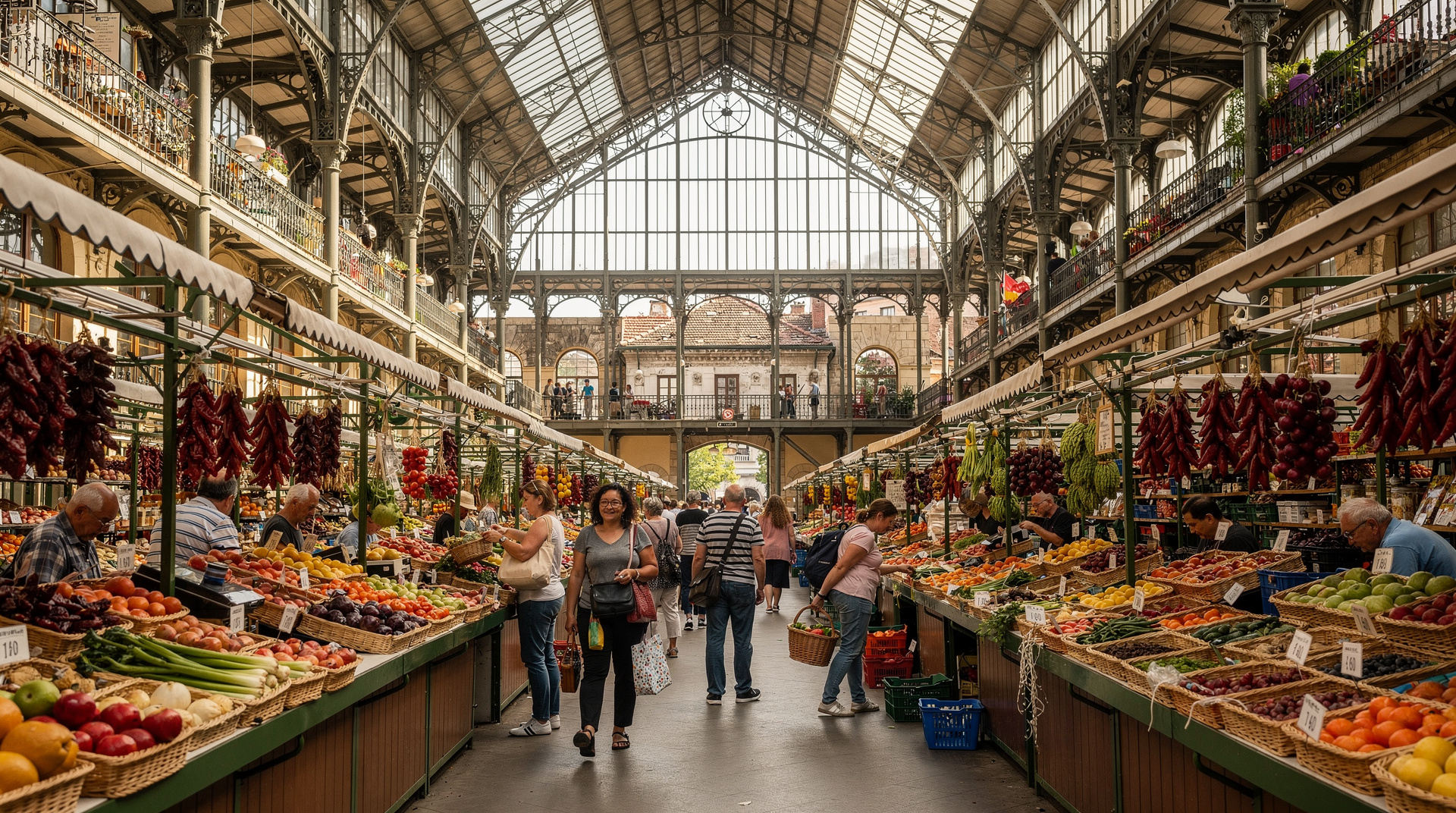
Stop 1: The Great Market Hall. The tour starts at the Central Market Hall (Nagycsarnok) on Fővám tér — a magnificent neo-Gothic iron structure from 1897. Ground floor vendors sell produce, paprika, salami, pickles, and fresh meat. Upstairs is the tourist layer (lángos stalls, souvenir embroidery). Your guide navigates you through both floors with context: what’s actually bought here by locals versus what’s sold at tourist markup.
Tastings here typically include:
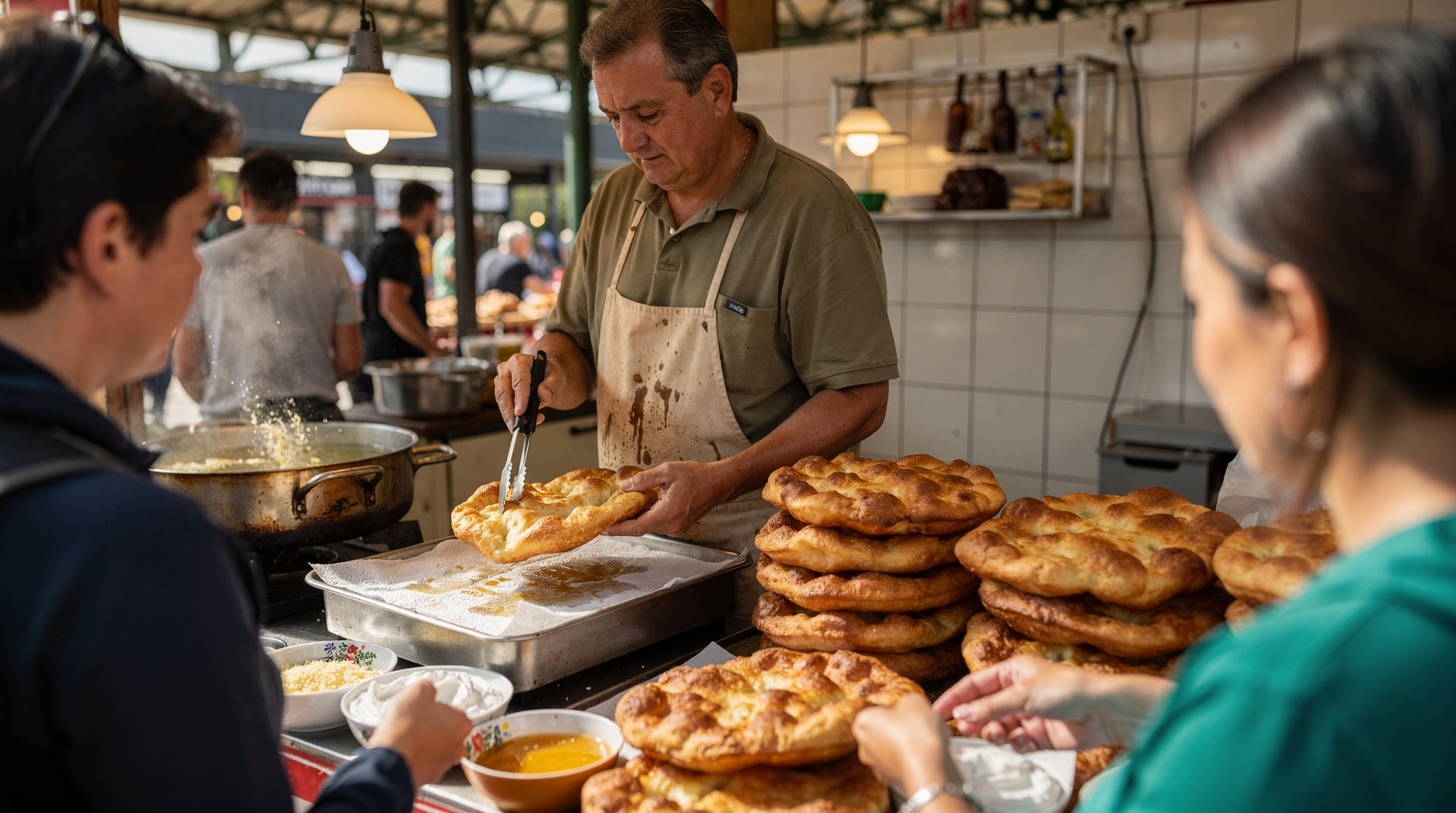
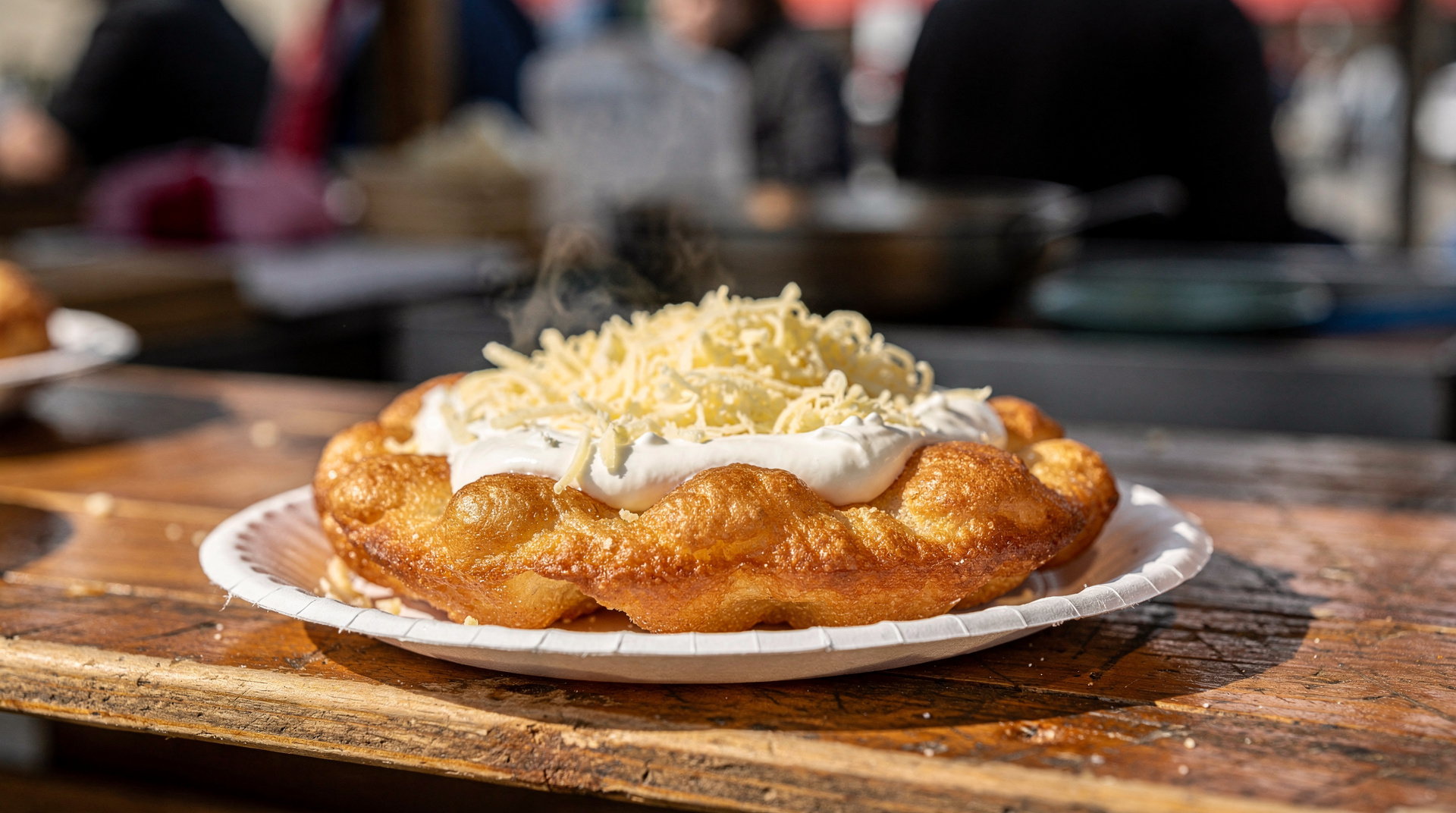
- Lángos — deep-fried flatbread with sour cream and cheese, the street food that defines Budapest morning markets. The version at the market is the benchmark.
- Hungarian salami and sausages — Pick salami (téliszalámi) from the Herz or Pick producers is the benchmark; your guide will explain the difference between the premium stuff and the tourist-grade shelves.
- Pickled vegetables — Hungarian pickled peppers, cabbage, and gherkins are an underrated gateway to the sour-salty balance that runs through the cuisine.
- Paprika tasting — sweet, hot, and smoked versions to understand the spectrum.
Street food stops. The tour moves through downtown Pest and the edges of the Jewish Quarter, stopping at bakeries and street vendors.
Tastings include:
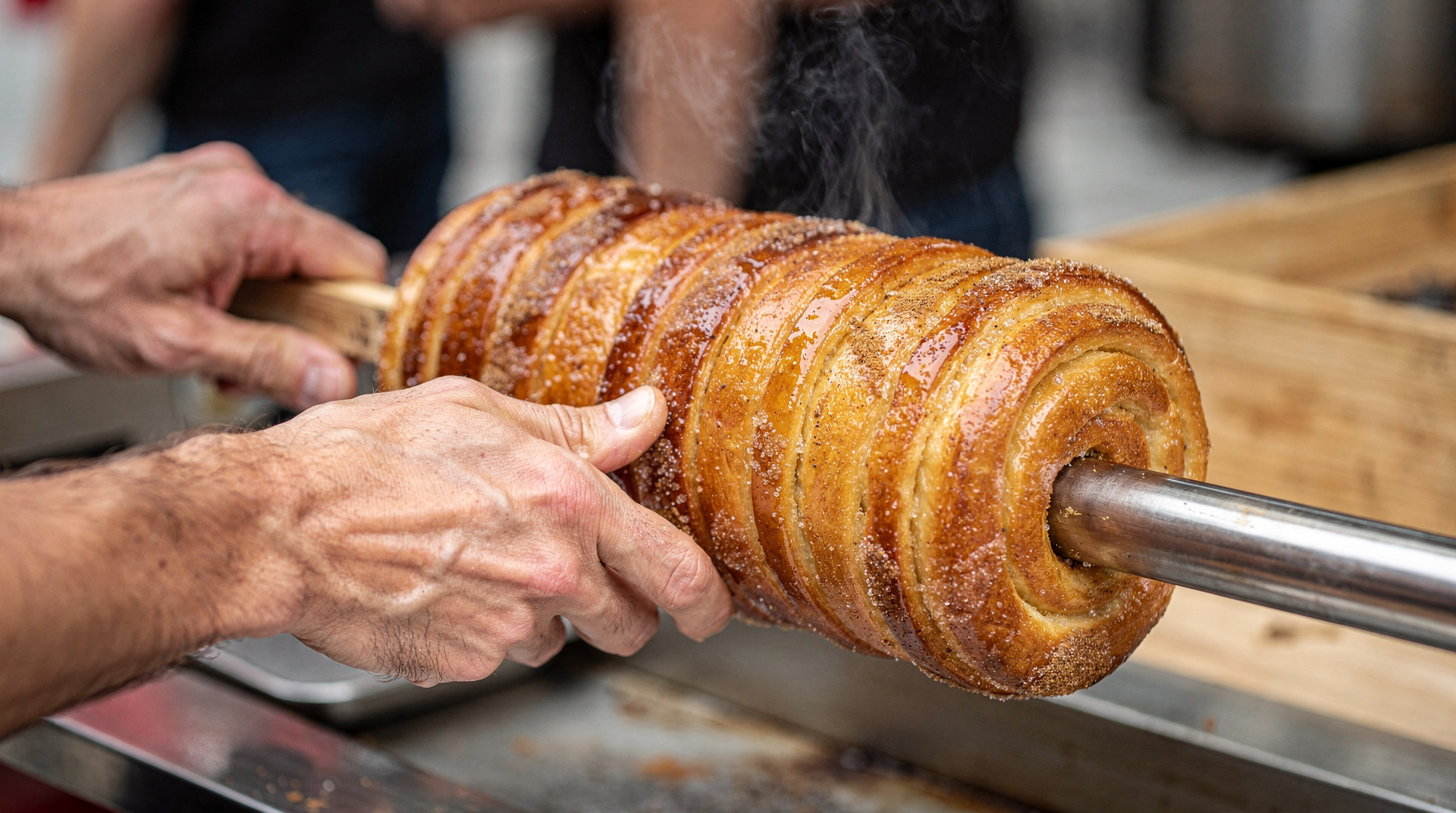
- Kürtőskalács — the chimney cake, a rolled and spiralled sweet dough cooked over charcoal, coated in sugar and cinnamon. The market version and the street stall version taste noticeably different; your guide explains which is worth the price.
- Langos variant — sometimes a second preparation with different toppings.
- A pálinka tasting — Hungarian fruit brandy, typically plum (szilva) or apricot (barack). It arrives in a small glass at approximately 40–50% ABV. Drink slowly.
The tavern sit-down. The final section is at a traditional vendéglő — a neighbourhood tavern of the kind that serves office workers at lunch. Not a tourist restaurant. This is where you get:
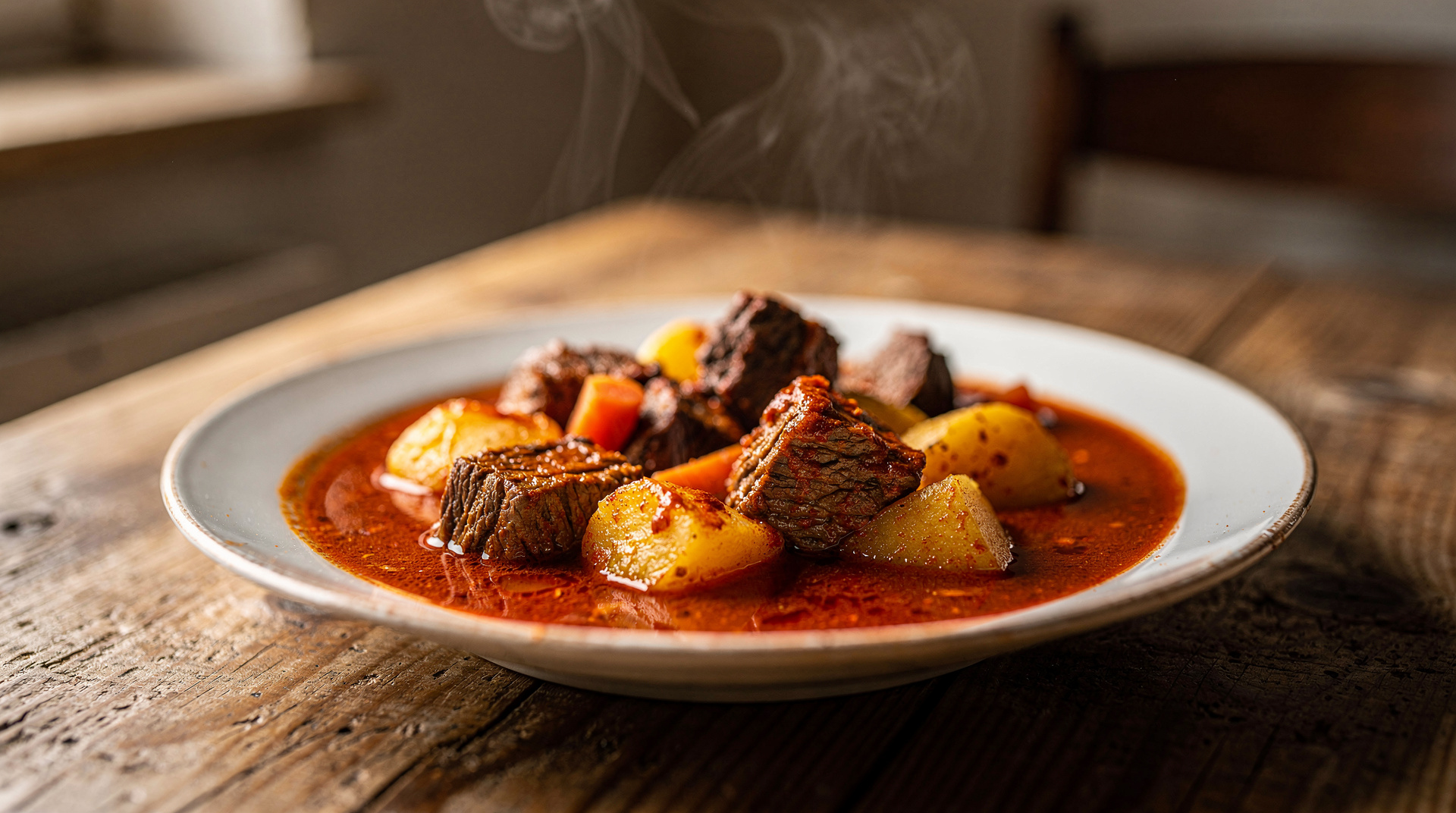
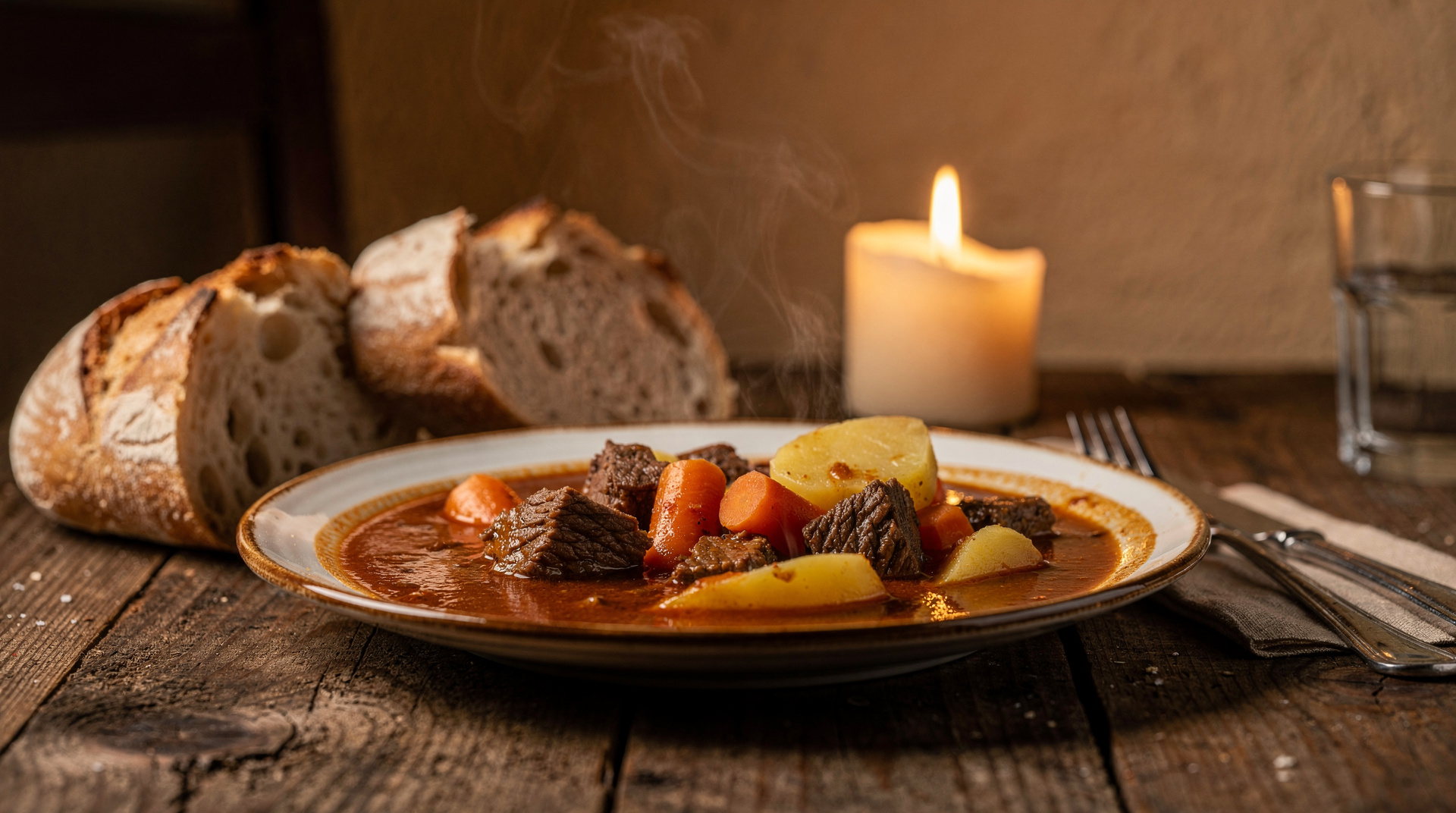
- A bowl of gulyás — the Hungarian beef and vegetable stew cooked with paprika. The authentic version is lighter and brothier than what’s served at tourist restaurants; thicker goulash is the German-influenced adaptation.
- A wine tasting — two small glasses of Hungarian table wine, typically a white Tokaji or Furmint and a red Egri Bikavér (Bull’s Blood from Eger).
- Sometimes a dessert tasting — túrógombóc (cottage cheese dumplings with sour cream) or rétes (strudel).
By the end, you’ve eaten the equivalent of a solid lunch. Most participants report not being hungry for dinner.
Price and what’s included
The market to tavern tour costs approximately 16,000–20,000 HUF per person (€40–50), including all 14 tastings and drinks. This is competitive with the cost of a restaurant lunch for one at a mid-range Budapest venue plus market snacks — you get substantially more food plus the cultural context.
Vegetarian note: The tour is meat-heavy by default. Most operators can adapt several items on advance request, but lángos, kürtőskalács, wine, and pálinka remain. The gulyás and sausage elements are the hard parts to substitute.
Group size: Tours cap at around 12 people, which keeps it conversational. You’ll likely share a table at the tavern with other participants.
What makes this format work
The value of the guided format isn’t just the food — it’s the context. Why do Hungarians eat gulyás this way and not the way German tourists expect it? What’s the difference between market paprika and supermarket paprika? Which market vendors are genuinely local versus tourist-oriented? A knowledgeable guide turns 14 tastings from an eating exercise into an actual introduction to Hungarian food culture.
This matters more in Budapest than in cities where the cuisine is well-documented in English. Hungarian food writing in English is thin; the tour fills the gap.
Practical details
The tour starts on Fővám tér, outside the Great Market Hall on the Pest bank. Metro M4 (Green line) stops directly at Fővám tér. Tram 47/49 from central Pest. From Castle District, cross the Elizabeth Bridge (10-minute walk) or take the tram.
Dress and footwear: You’ll walk approximately 2.5 km on cobblestones and market floors. Comfortable flat shoes are the right call. The market hall is covered; the street portion is exposed.
When to go: Saturday morning at the Great Market Hall is the most atmospheric but also the busiest. Weekday morning tours are quieter and the market vendors are more relaxed. Both formats are good.
How it compares to alternatives
The comparison table below shows three other food tour formats. Summary:
- Eat sip explore food walking tour — slightly different routing and format, fewer formal tastings but more casual street food focus
- Downtown food tour — concentrated in central Pest without the Great Market Hall start
- Culinary wine walk — stronger wine focus throughout, less food volume, more wine pairing context, see the culinary wine walk
For home cooks, the cooking classes guide covers the best options for learning to make gulyás, lángos, and chimney cake yourself.
For context before the tour, the traditional Hungarian dishes guide is the most comprehensive English-language overview of what you’ll encounter.
Eating on your own afterwards
The tour is a strong introduction, but it isn’t a substitute for the rest of Budapest’s food scene. For sit-down dining beyond the tavern stop, the best restaurants in Budapest guide and the street food guide cover where locals actually eat once you’re navigating independently. If lángos stuck with you, the where to eat lángos guide ranks the best versions across the city beyond the market stalls.
Fitting the tour into your itinerary
The tour works best in the morning, leaving your afternoon free for sightseeing on a full stomach. It slots naturally into a Budapest 3-day itinerary on the day you’re exploring downtown Pest and the Jewish Quarter, since the walking route overlaps closely with those neighbourhoods’ main sights.
Compare alternative tours
Frequently asked questions about Budapest food tour review
What do you eat on the market to tavern food tour?
The tour typically includes 14 individual tastings covering lángos (fried flatbread), kürtőskalács (chimney cake), gulyás, Hungarian sausages, pickled vegetables, cheese, pálinka, local wines, and traditional market produce. Specific items vary slightly by availability and season.How long does the food tour last?
Approximately 3 hours. The tour starts at the Great Market Hall, progresses through street food stops, and ends at a traditional tavern (vendéglő) with a sit-down tasting.How much does the Budapest food tour cost?
Prices run approximately 16,000–20,000 HUF per person (approx. €40–50). This includes all tastings and 2–3 drinks (wine/pálinka/beer). It's a full light lunch in practice — most people don't need dinner after.Is the food tour suitable for vegetarians?
Partially. Some tastings are meat-heavy (sausages, gulyás). Inform the operator at booking — most can substitute or adjust several items, but the tour is not fully vegetarian-friendly.What is the Great Market Hall?
The Central Market Hall (Nagycsarnok) on Fővám tér is Budapest's most famous food market: a neo-Gothic iron-and-brick hall built in 1897, with two levels of produce stalls, market vendors, and tourist souvenir stands upstairs. The tour starts here.Do I need to book in advance?
Yes. Groups are capped at 12 people for quality reasons. Weekend slots — particularly Saturday morning at the market — sell out several days ahead in peak season.Does the food tour replace lunch and dinner?
It typically replaces lunch entirely — most participants report feeling full afterwards. It's usually too much food to also want a big dinner the same evening, though a light snack later is fine for most appetites.Is alcohol included and can I opt out?
Yes, the pálinka and wine tastings are part of the standard tour, but guides are used to non-drinkers and will happily let you skip or substitute the alcoholic tastings for something else on request — just mention it at the start.