Széchenyi vs Gellért vs Rudas: which Budapest bath is right for you?

Which is better: Széchenyi, Gellért or Rudas baths?
Széchenyi is the most famous and beginner-friendly — big outdoor pools, lively atmosphere, easy to navigate. Gellért is more elegant and intimate, with Art Nouveau interiors. Rudas is the most atmospheric — a 450-year-old Ottoman dome — but smaller and quirky. For your first time, Széchenyi. For a special occasion, Gellért. For history and architecture, Rudas.
Budapest’s three great baths, honestly compared
Budapest has more than two dozen thermal baths, but three names come up in every conversation: Széchenyi, Gellért and Rudas. Each has its own character, its own crowd, its own reason for being the one you choose.
The problem is that most content about Budapest baths reads like a tour operator brochure — everything is “iconic” and “must-see” and the differences are glossed over. This guide is different. We compare all three honestly, tell you who each bath actually suits, and help you use the thermal bath finder to land on the right answer for your trip.
We also include Lukács throughout the comparison — it does not have the fame of the other three, but it often turns out to be the best choice.
Quick decision table
| Széchenyi | Gellért | Rudas | Lukács | |
|---|---|---|---|---|
| Atmosphere | Lively, social | Elegant, refined | Historic, atmospheric | Local, quiet |
| Architecture | Neo-Baroque (1913) | Art Nouveau (1918) | Ottoman dome (1566) | Eclectic (1894) |
| Outdoor pool? | Yes (large) | Smaller outdoor area | Rooftop pool | Yes |
| Entry price | ~€25–35 | ~€27 | ~€14–20 | ~€13 |
| Crowds | Very high | High | Medium | Low |
| Best for | First-timers, groups | Special occasions | History lovers, couples | Locals, quiet seekers |
| Open status 2026 | Fully open | Check before visiting | Open | Open |
Széchenyi baths: the iconic choice
Széchenyi is the face of Budapest thermal bathing — the one on every Instagram account, every travel magazine, every “48 hours in Budapest” article. That fame is justified, but it comes with caveats.
The case for Széchenyi:
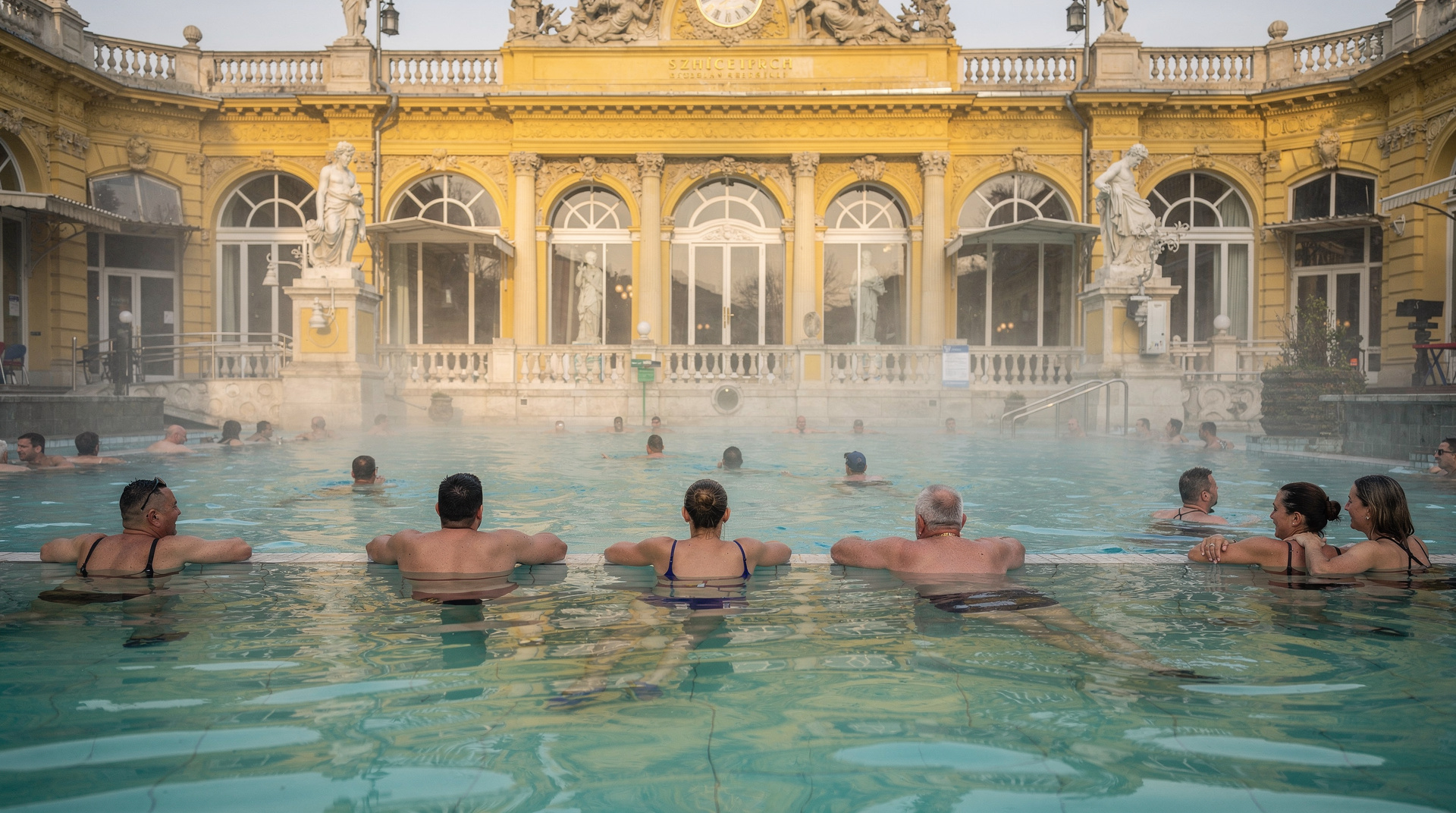
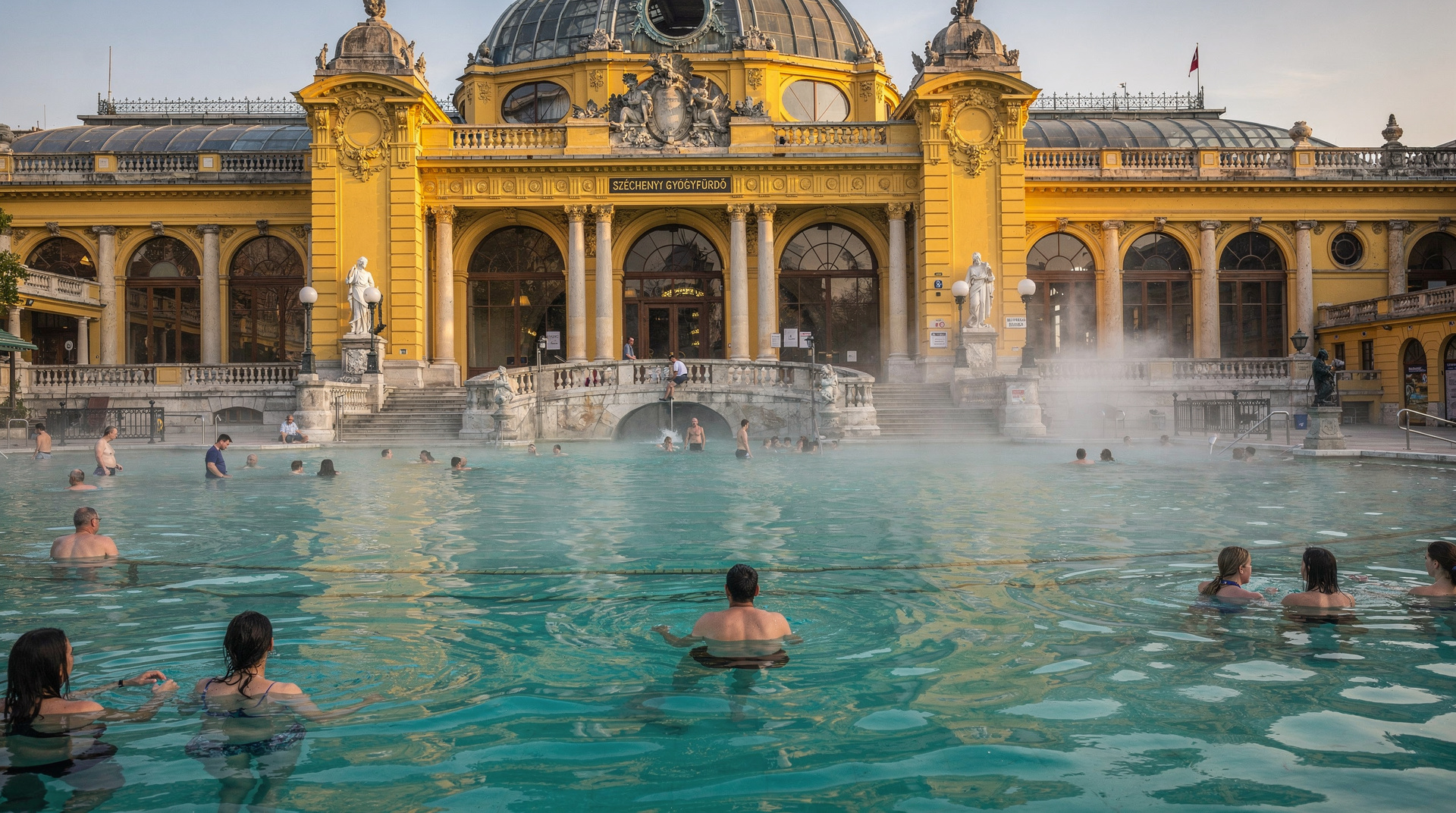
The complex is enormous. Three outdoor pools (the largest at 50 metres), 15 indoor pools, saunas, steam rooms, a whirlpool and a wellness centre. The main outdoor courtyard — Neo-Baroque yellow facades reflected in steaming 38°C water — is genuinely magnificent. On a winter morning, with steam rising and the air cold, it is one of the most memorable experiences in Central Europe.
The atmosphere is social and forgiving. First-timers navigate it relatively easily: lockers are signed, staff are used to tourists, the setup is intuitive. It is in City Park, which makes it convenient to combine with Heroes’ Square and the Museum of Fine Arts.
The honest caveats:
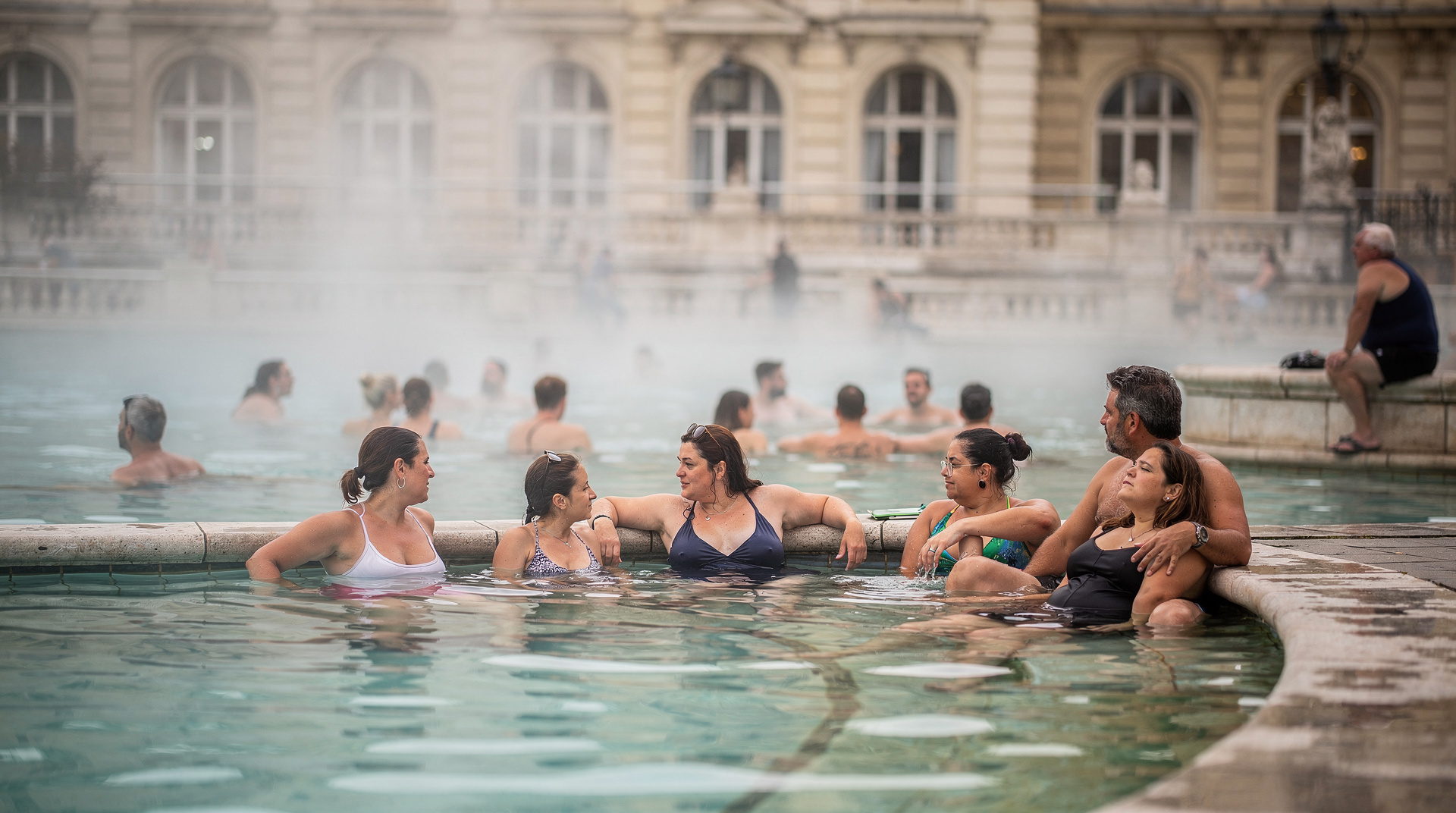
Széchenyi is the most crowded bath in Budapest, often dramatically so. In July and August, outdoor-pool sections can feel like a water park. Queues at the ticket desk can exceed an hour — book online.
Prices are the highest of the four baths we compare here. A full-day locker ticket runs 9,900–13,900 HUF (€25–35) depending on the day and type. This is still good value for 4–6 hours, but it is worth knowing before you arrive.
The bath has also become the centre of a reseller scam around its entrance — people outside on Állatkerti körút selling “discounted tickets” that are fake or overpriced. Only buy at the official desk or through a verified platform. See bath ticket mistakes for the full picture.
Book your Széchenyi full-day pass in advance to avoid the queue and guarantee your locker.
Gellért baths: Art Nouveau elegance
Gellért Baths sits inside the Gellért Hotel, a grand Art Nouveau building on the Buda bank of the Danube at the foot of Gellért Hill. If Széchenyi is Budapest at its most social, Gellért is Budapest at its most beautiful.
The case for Gellért:
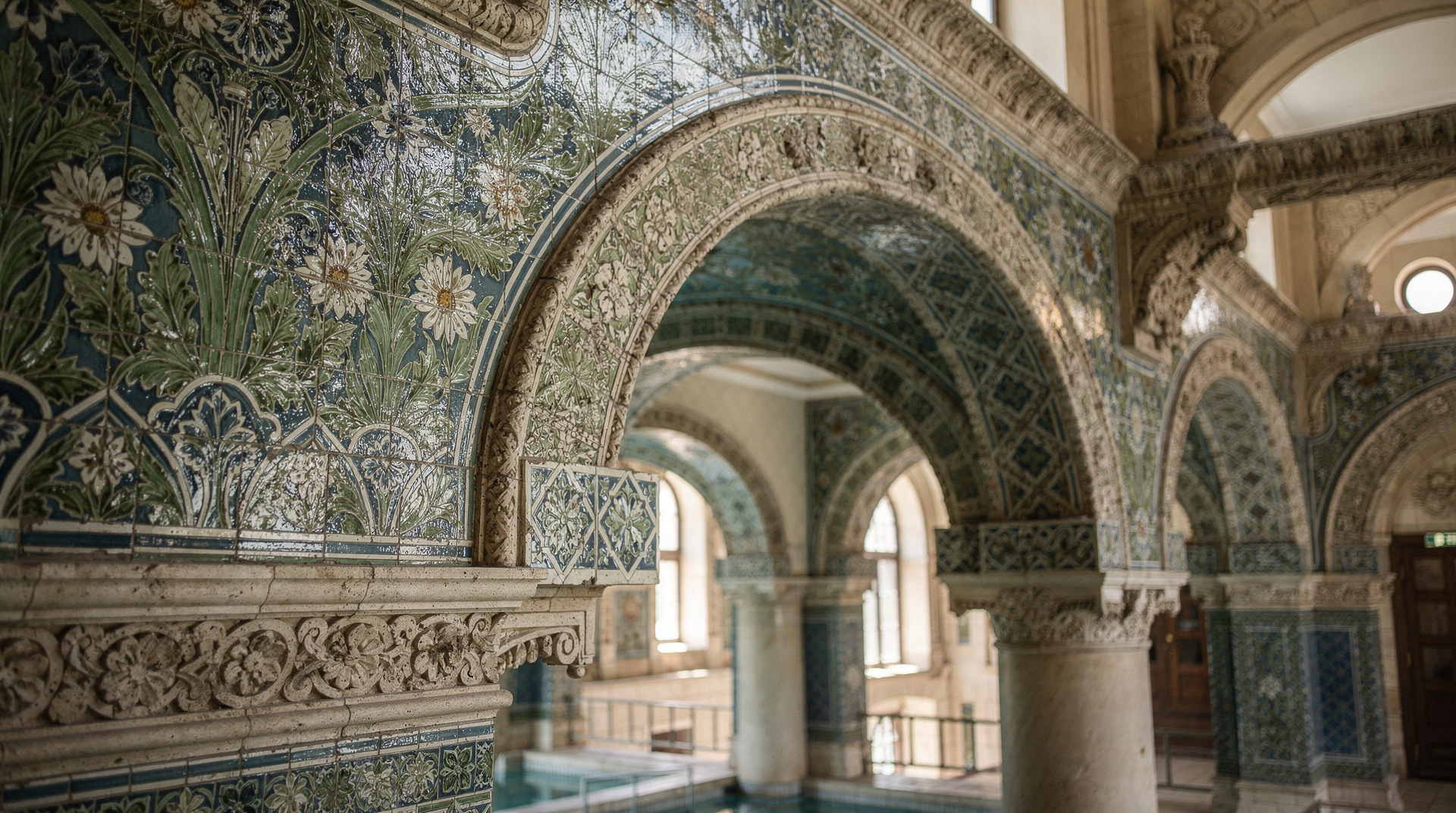
The interiors are extraordinary. Mosaic tiles, arched ceilings, marble columns — the main pool hall feels like a Roman bath designed by a Viennese architect at the height of the Secessionist movement. It is smaller than Széchenyi, which makes it more intimate.
The setting on the Danube bank is unbeatable. Gellért Hill rising behind it, the Danube a few minutes’ walk away — it is one of the best-located baths in the city.
The honest caveat:
Check current status before visiting. As of mid-2026, there have been reports of a possible renovation closure at Gellért Baths — the date is unconfirmed and the closure has not been officially announced, but the situation is fluid. Verify at the official Budapest spa authority website (furdok.budapestgyogyfurdoi.hu) before booking. The GYG ticket remains in our catalog, but confirm availability first.
While Gellért tickets are unavailable on GetYourGuide, Széchenyi thermal baths fast-track admission with locker is the closest alternative for a classic Budapest thermal bath day.
Rudas baths: 1566 and still running
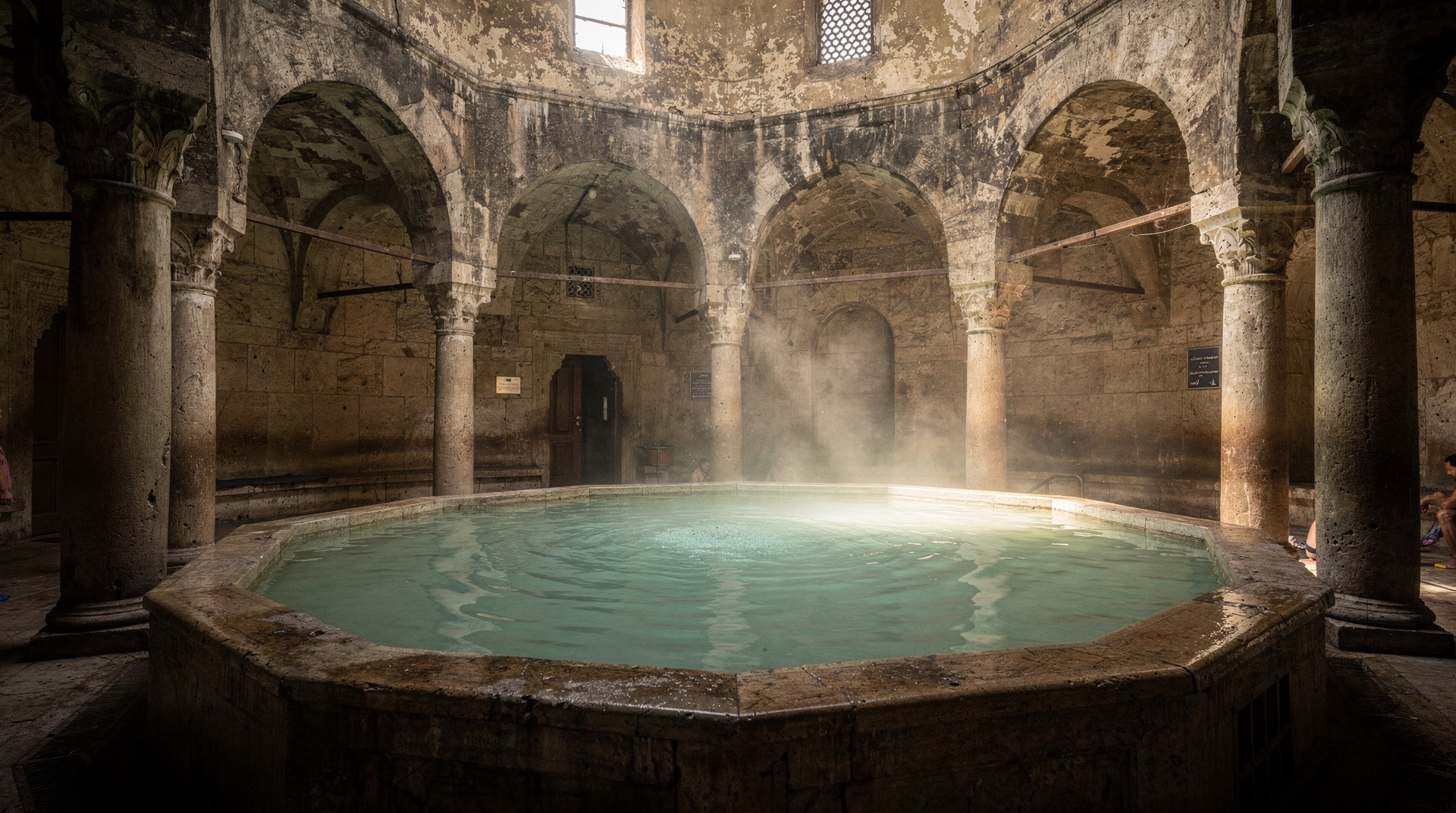
Rudas is the oldest of the three. The central dome room was built by the Ottoman Turks in 1566 — five and a half centuries of continuous bathing under the same stone ceiling. Nothing in Prague, Vienna or Warsaw approaches this.
The case for Rudas:
The dome room is unforgettable. Eight columns support a low stone dome pierced by coloured glass oculi — the light patterns change with the sun. Five pools of different temperatures ring the central hot pool. It is quiet, meditative and genuinely unlike any other spa experience in the city.
The rooftop pool is a secondary highlight: a circular pool with panoramic views over the Danube, the Chain Bridge, and both Buda and Pest. At night (Rudas has evening sessions), it is exceptional.
Rudas is also the best value of the three main baths. A spa-only weekday ticket runs around 5,500 HUF (€14). The spa-with-meal package — available through GYG — adds a three-course traditional Hungarian meal: the Rudas spa day pass with three-course meal makes for a full afternoon.
The honest caveats:
Rudas is smaller and can feel crowded in the dome room during peak weekend hours. It is also more confusing to navigate than Széchenyi — the layout is less intuitive and the changing rooms are not as clearly signed. First-timers sometimes find it stressful at first. Read thermal bath etiquette before you go.
Rudas has age restrictions: under-14s are not admitted on most days. It is not a family bath.
Lukács baths: the local’s honest pick
Lukács Baths in District II does not appear on many tourist maps, which is exactly why we include it in every comparison. It is the bath most recommended by Budapesters for visitors who want the real thing without the tour-group atmosphere.
The case for Lukács:
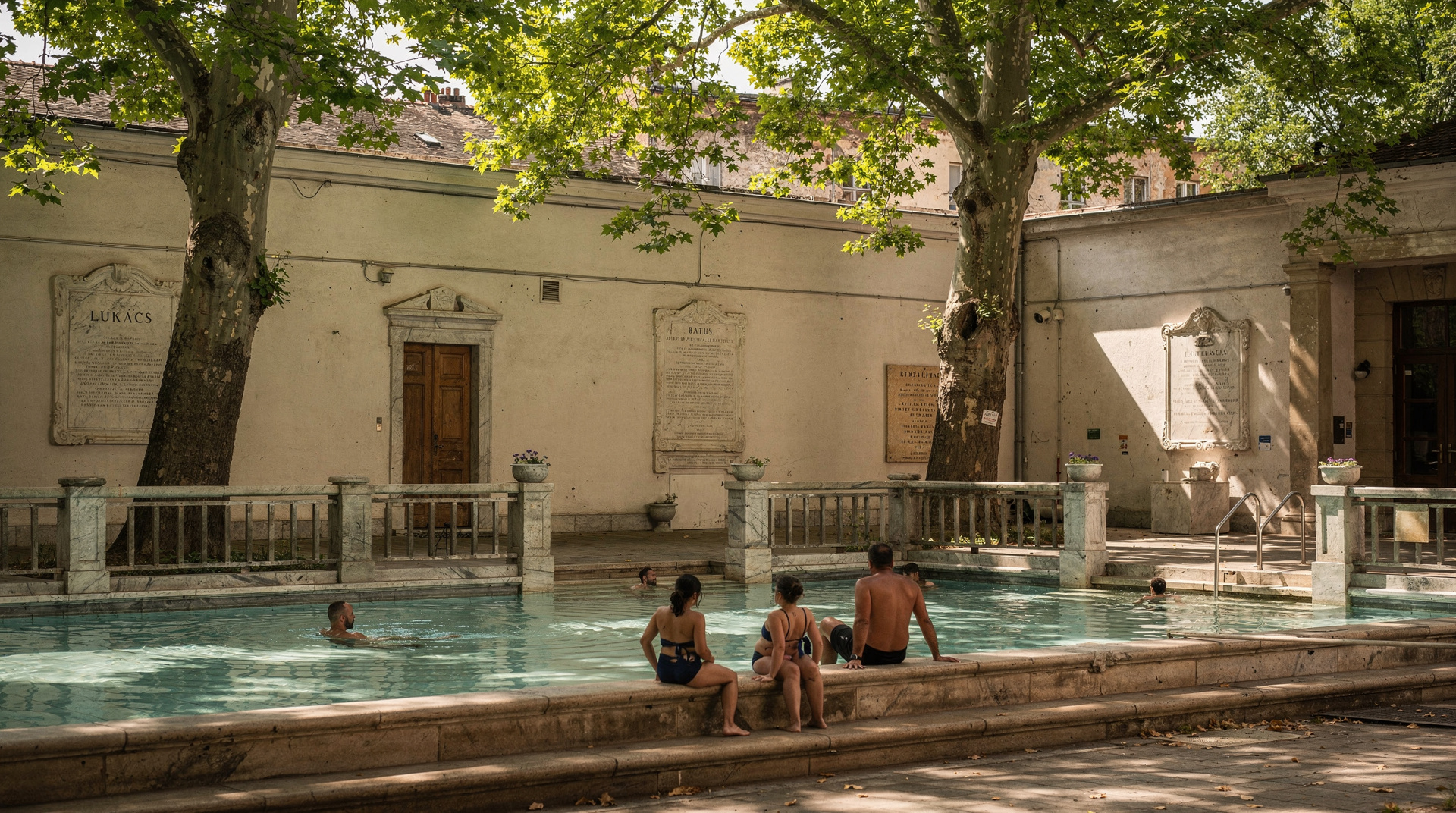
It is genuinely quieter. On weekday mornings, the clientele is local — retired residents in the courtyard mineral pools, families in the outdoor section, serious regulars using the medical pools. The price is the lowest of the major baths at around 5,300 HUF (€13) for a full day.
The complex has an outdoor pool with a sun terrace, indoor thermal pools and a covered section with commemorative plaques from grateful patients who were healed there — a small, slightly surreal Budapest detail that tells you this is not a tourist attraction first.
Book a Lukács full-day ticket if you want a quieter, more local bathing experience.
The honest caveats:
Lukács is less spectacular than the other three. The architecture is pleasant but not iconic. It is off the main tourist trail in Buda, requiring either the tram (line 19) or a 20-minute walk from Chain Bridge. For first-timers with limited time, Széchenyi remains the practical choice.
Head-to-head on the things that matter
For a first-time visitor
Széchenyi. It is the easiest bath to navigate, the most iconic setting, and the most forgiving of rookie mistakes. The outdoor pools in any season are extraordinary.
For couples or a special occasion
Rudas at night. The dome pools and rooftop jacuzzi under the stars is genuinely romantic. Gellért (if open) runs a close second for elegant, Art Nouveau beauty.
For history and architecture
Rudas. Nothing else in Budapest puts you in a room that has been continuously used for bathing since 1566. The Ottoman dome is the oldest intact thermal bath structure in Central Europe.
For avoiding crowds
Lukács (weekday mornings) or Rudas (avoid weekends). Both are significantly quieter than Széchenyi in peak season.
For budget travellers
Lukács at ~€13, or Rudas spa-only at ~€14 on weekdays.
For groups and social atmosphere
Széchenyi. The big outdoor pools and courtyard layout work well for groups. The Sparty (monthly pool party at Széchenyi) is the extreme version of this — see Sparty guide for what to expect.
For families with children
Széchenyi or Lukács. Rudas does not admit under-14s on most days. Gellért has a children’s splash pool. For a full family guide, see baths with kids.
What about Dandar, Veli Bej and the others?
Budapest has baths beyond the famous four. Dandar Thermal in District IX is the most local and off-the-radar. Veli Bej near Buda Castle is an Ottoman bath undergoing quiet revival. Mandala Day Spa offers a modern luxury wellness angle. The best thermal baths overview covers the full picture.
Before you go
Regardless of which bath you choose, a few universal tips:
- Book online. Széchenyi queues in summer exceed an hour. Others are faster but booking still saves time.
- Bring your own swimsuit. Mandatory everywhere. Rudas sells and rents, but bring yours.
- Flip-flops recommended. Wet tiled floors everywhere.
- Buy only at official desks or verified platforms. Resellers around Széchenyi entrance are a known scam.
- Towels are optional. Rental costs 1,000–2,000 HUF; bringing your own is fine.
Use the thermal bath finder if you are still undecided after reading this — it asks a few questions about your priorities and gives a personalised recommendation.
For prices, locker options and opening hours in detail, see Budapest baths prices and tickets.
A note on booking each bath
Booking friction varies more than most comparisons mention. Széchenyi’s online system is the most developed of the four, with timed-entry slots that genuinely reduce queueing in summer. Gellért and Rudas booking is simpler but less granular — you generally buy a day ticket rather than a timed slot. Lukács has the least demand for online booking since queues are rarely an issue, though booking ahead still guarantees your ticket type. If you’re planning a specific day around one bath, book Széchenyi earliest; the others have more flexibility.
What an hour-by-hour visit actually feels like
Numbers on a comparison table only tell part of the story. At Széchenyi on a weekday morning, you arrive to a calm courtyard, chess boards already occupied, and the pool fills gradually until by early afternoon it has the energy of a busy public pool with a Neo-Baroque backdrop — social, a little chaotic, genuinely fun. At Gellért (when open), the pace is slower from the start: the Art Nouveau hall encourages quiet admiration before you even get in the water, and the crowd skews toward couples and older visitors taking their time. At Rudas, the dome room sets the tone the moment you walk in — voices drop, the coloured light through the oculi becomes the main event, and even a Saturday crowd rarely feels loud. Lukács feels the most like joining a local routine rather than visiting an attraction: regulars greet each other, newspapers get read poolside, and the pace is unhurried all day.
Combining baths with the rest of your trip
If you want a dedicated soak-focused stretch rather than squeezing one bath into a sightseeing day, the Budapest thermal baths itinerary sequences two or three baths across a couple of days without over-scheduling. For a single well-rounded day that pairs a bath with city sights, see the 3-day Budapest itinerary or how many days in Budapest for the broader planning picture.
Frequently asked questions about Széchenyi vs Gellért vs Rudas
Which bath is the cheapest?
Rudas is the best value: a spa-only weekday entry runs around 5,500 HUF (€14). Lukács Baths is similarly priced at ~5,300 HUF (€13). Széchenyi costs more — around 9,900–13,900 HUF (€25–35) depending on day and locker type. Gellért is broadly similar to Széchenyi, roughly 10,900 HUF (€27). All prices vary by season and ticket type — book online to confirm current pricing.Which bath has the best outdoor pool?
Széchenyi has the most famous outdoor pool — three grand outdoor pools in a Neo-Baroque yellow courtyard in City Park. Rudas has a spectacular rooftop pool with panoramic views of the Danube and Buda Castle. Gellért's outdoor section is smaller. In winter, Széchenyi's steaming outdoor pools are a classic Budapest experience.Is Gellért baths currently open?
As of mid-2026, Gellért baths remains open but there have been reports of a possible renovation closure — date unconfirmed. Check the official Gellért website (furdok.budapestgyogyfurdoi.hu) for current status before booking. The Gellért day ticket is no longer listed on GetYourGuide, so check the official Gellért website for tickets and current status.Can I visit multiple baths in one day?
Technically yes, but most visitors find two to three hours in a single bath is plenty. Your skin prunes, you relax fully, and then you are ready for a meal and a nap. A multi-bath approach makes more sense over a two-day wellness itinerary — see /itineraries/budapest-thermal-baths-itinerary/ for a dedicated soak plan.Which bath is best for solo travellers?
Rudas is excellent for solo visitors — the Ottoman dome section has a meditative, contemplative quality. Széchenyi is easier for nervous first-timers because the setup is intuitive and the atmosphere is social. Gellért suits any profile but benefits from being explored slowly.Do I need to book online?
For Széchenyi, yes — queues in summer can exceed an hour. Online booking guarantees your locker and saves time. Gellért and Rudas tend to have shorter queues but booking still makes sense for peace of mind. Never buy from resellers outside the entrance — see /guides/bath-ticket-mistakes/ for why.Which bath is best for couples?
Rudas at night is arguably the most romantic bath in Budapest — the dome pools, candlelit ambiance and rooftop jacuzzi make it ideal. Gellért is more elegant. Széchenyi is fun but less intimate. See /guides/best-baths-for-couples/ for the full guide.Is Lukács worth including in the comparison?
Yes — Lukács Baths in District II is often overlooked in tourist content but it is genuinely excellent. It is quieter and more local, prices are among the lowest of the major baths, and it has a lovely outdoor pool. It is the honest-planner pick for avoiding crowds. Read /guides/lukacs-baths-guide/ for the full breakdown.Which bath should I choose if I only have time for one?
Széchenyi, for most first-time visitors — it's the most iconic, easiest to navigate and works well solo, as a couple or in a group. If history and atmosphere matter more to you than photogenic fame, choose Rudas instead. If quiet is your top priority, choose Lukács over all three.Do prices vary by day of the week at these baths?
Yes, slightly — weekend tickets typically cost a little more than weekday tickets at Széchenyi and Gellért, and Rudas' spa-only pricing is aimed at weekday visits (weekend and evening sessions, which are mixed rather than men-only, sometimes carry a different rate). Always check the current price at booking rather than relying on last year's figures.
Top experiences
Bookable activities with verified prices and instant confirmation on GetYourGuide.