Thermal bath etiquette in Budapest: what to know before you go

What do I need to know before visiting a Budapest thermal bath?
Bring your own swimsuit (mandatory). Shower before entering the pools — this is enforced. Follow gender schedules at Rudas. Rent a locker, not a cabin, unless you need privacy. Pay in HUF. Avoid buying tickets from touts outside the gate.
Visiting a Budapest bath for the first time: the honest briefing
Budapest’s thermal baths are magnificent — but they work by a set of rules and conventions that are not always clearly explained to first-time visitors. Missing them leads to confusion at the changing room, awkward moments by the pools, or in some cases getting turned away at the gate.
This guide covers everything you need to know before your first visit: what to bring, how the locker system works, shower requirements, gender schedules, tipping norms, and the specific things that annoy locals (and how to avoid them). Read this once before you go, and your visit will be smooth.
| Swimsuit | Mandatory everywhere; no nudity in mixed areas |
| Shower | Mandatory before entering the pools |
| Tipping | 10–15% for treatments; not expected for pool staff |
| Payment | Card widely accepted; carry some HUF as backup |
| Booking | Online in advance, especially for Széchenyi in summer |
Before you arrive
Book tickets online
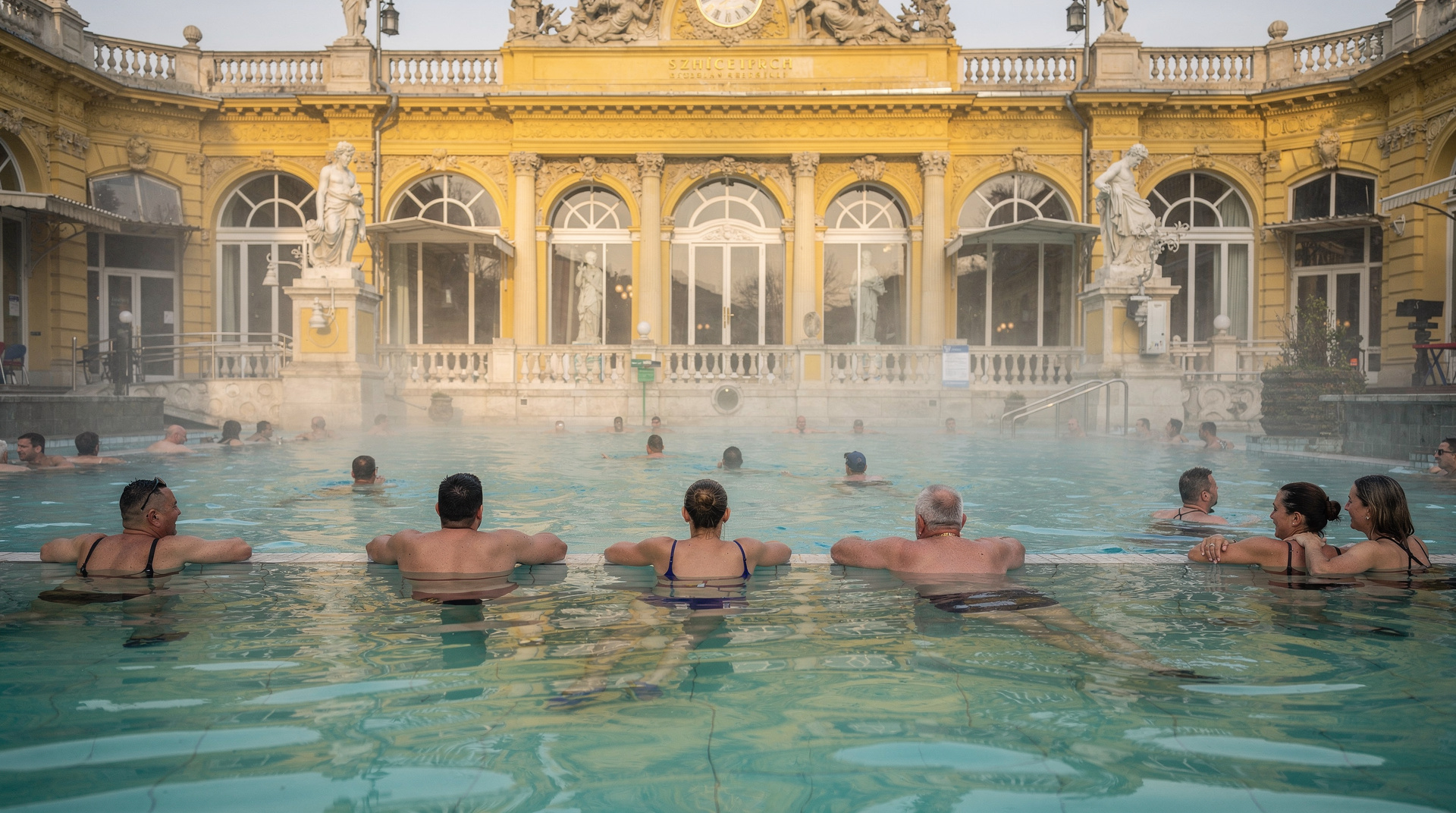
Walk-up queues at Széchenyi can exceed one hour on summer weekends and holidays. Online tickets cost the same as walk-up tickets at most baths, but allow you to skip the main queue. Book through the official bath website or a verified platform.
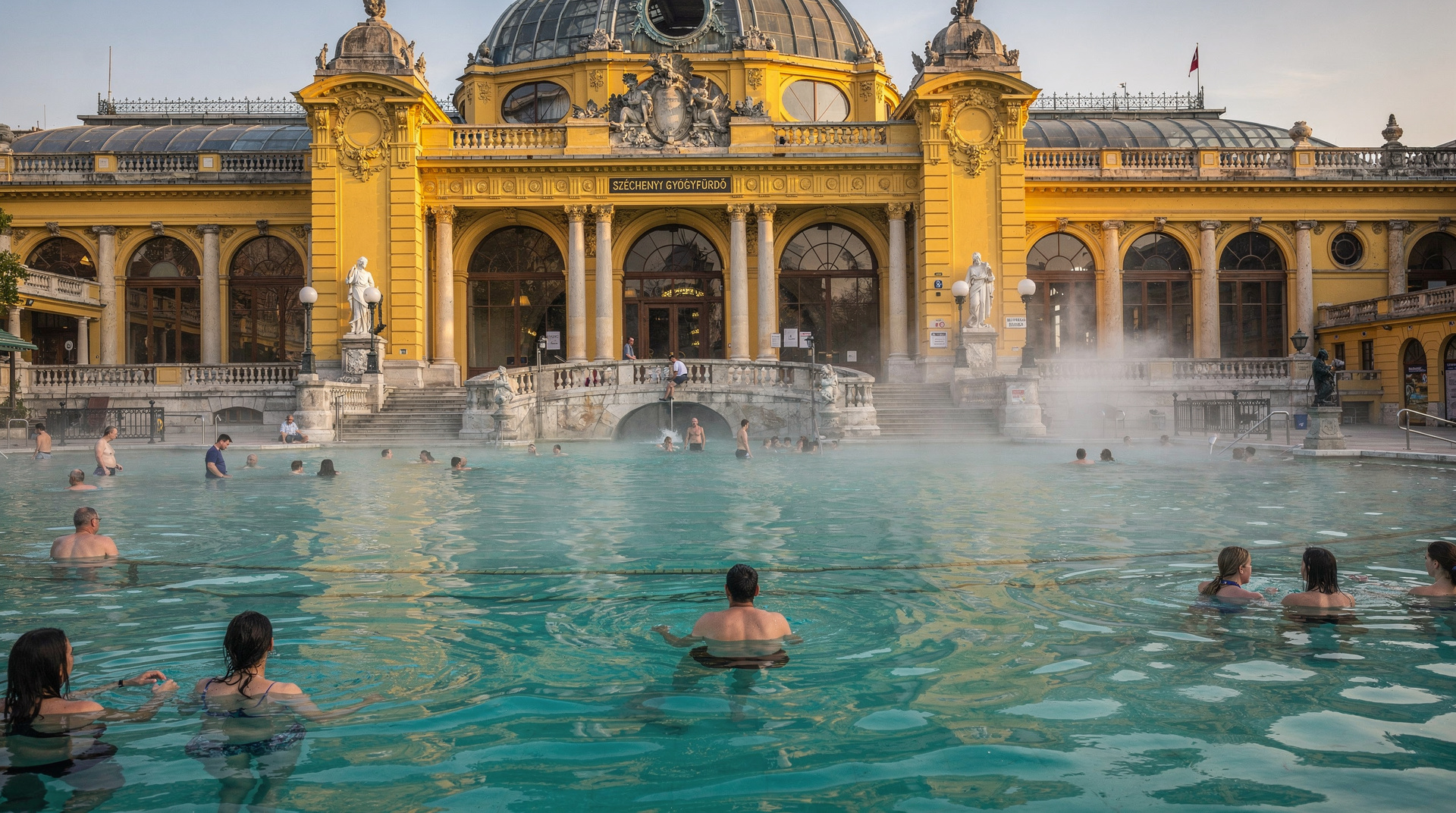
Ticket scam warning: People stand outside the Széchenyi entrance on Állatkerti körút offering to sell tickets. Do not buy from them. They charge inflated prices and may sell non-refundable or restricted-entry tickets. Always buy at the glass-fronted official ticket windows inside the gate, or online. This is the most consistent tourist trap at Budapest baths — see /guides/bath-ticket-mistakes/ for the full rundown.
The Széchenyi day pass via GYG is a reliable booking method with time slot selection.
Understand the gender schedule (Rudas particularly)
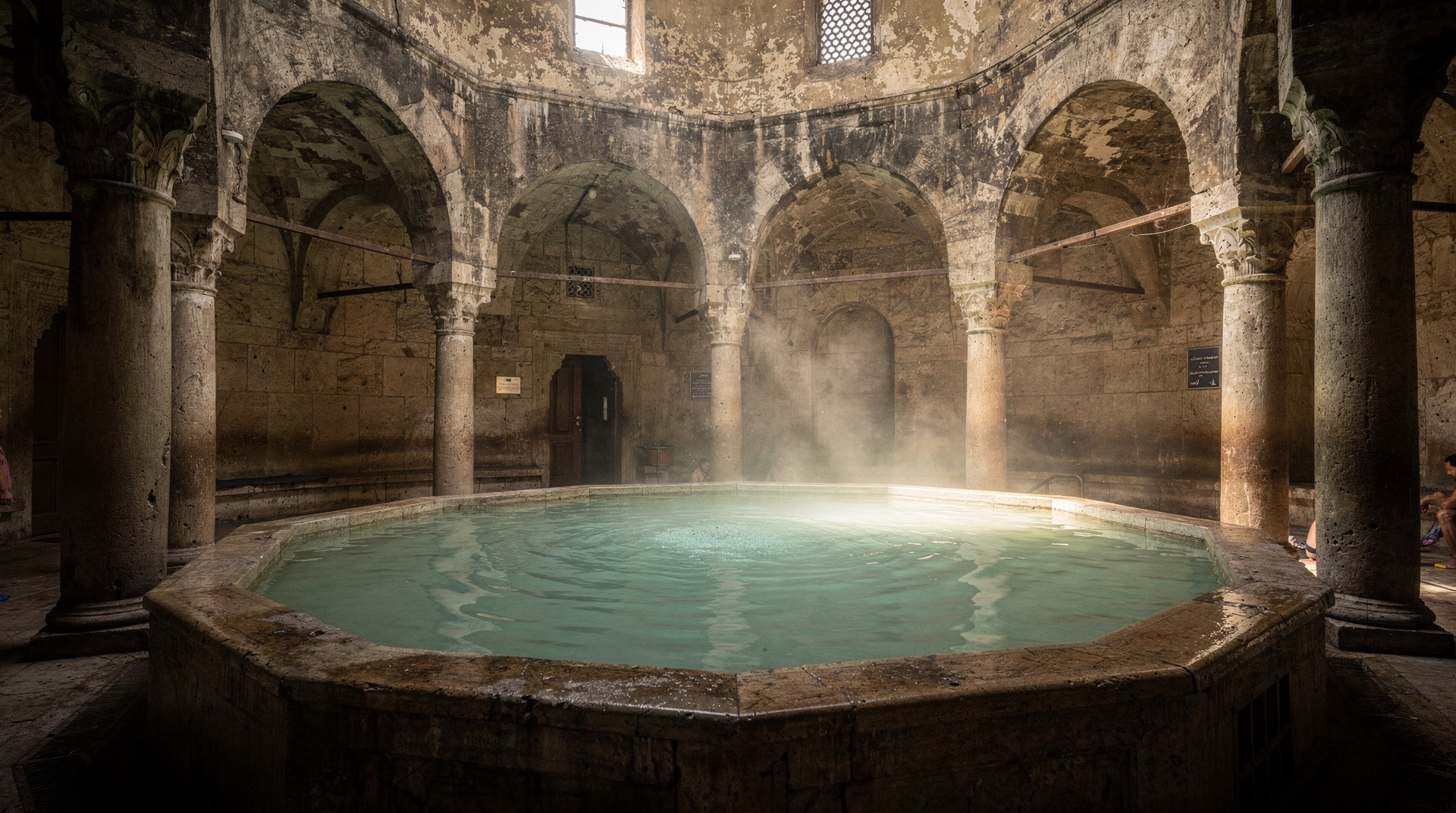
At most Budapest baths, gender mixing is unrestricted — both men and women use all facilities. The exception is Rudas, where the traditional Ottoman section operates on a segregated schedule: weekday daytimes are men-only; evenings and weekends are mixed (co-ed). The modern wellness section and rooftop at Rudas are always mixed.
If you are planning to visit Rudas as a couple or a mixed group during weekday daytime, you will only be able to use the separate sections, not the Ottoman dome together. Plan accordingly.
Cabin vs locker: what you actually need
Every bath sells two types of tickets: locker (öltözőszekrény) and cabin (kabin).
Locker: Access to a locker in a shared changing room. Shared benches, communal space, standard changing room. Most visitors use this. Cost is the base ticket price.
Cabin: A small private changing cubicle — typically just a bench, a hook, and a lock — within a cabin zone. More privacy for getting changed. Costs an additional 1,500–3,000 HUF above the locker price.
Unless you specifically need privacy, the locker is fine. The pools themselves are the same regardless of which you choose.
At the bath: what to do on arrival
Step one: the ticket desk
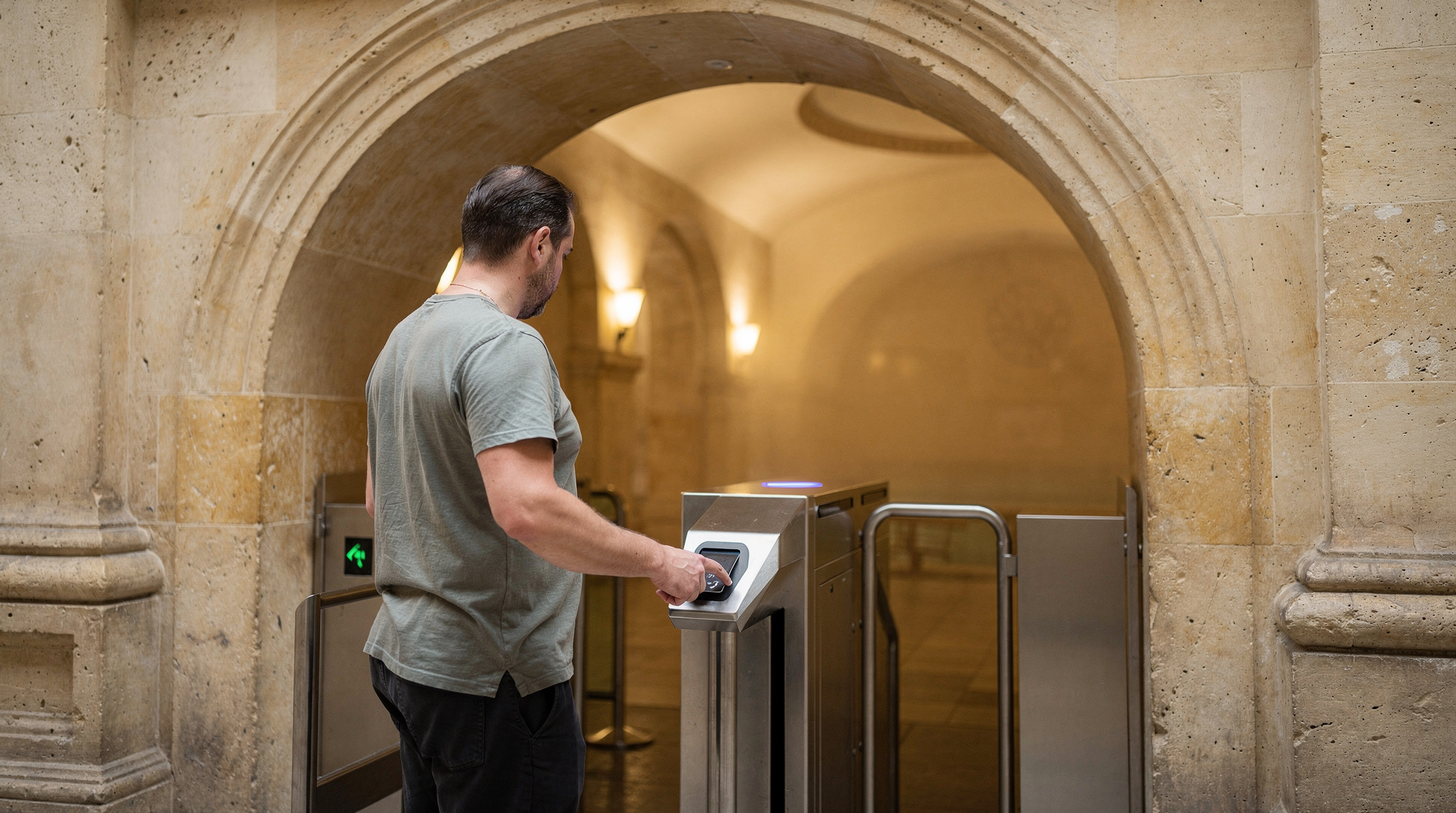
Present your online booking QR code or purchase a walk-up ticket at the glass windows. Staff issue your wristband — a waterproof electronic band that operates your locker and the pool entry turnstiles. Keep it on your wrist at all times.
Step two: the changing room
Find your locker (the wristband number matches your locker number). Change into your swimsuit. Leave valuables in the locker — your clothes, shoes, and bag go in here. Take only what you need by the pools (towel, flip-flops, water bottle, sunscreen if outdoor).
Close and lock the locker by pressing the wristband against the sensor pad. The locker will beep and lock. Same process to open.
Step three: the shower (mandatory)
This is non-negotiable. Just outside the changing room, before the turnstile into the pool area, are mandatory showers. Stand under a hot shower for at least 20 seconds. Soap is not required, but rinsing is. Bath attendants watch the shower zone and will send people back who try to skip it. Do not skip it — it is good hygiene and a deeply ingrained part of bath culture here.
Step four: enter the pools
Pass through the turnstile with your wristband. You can now move freely between pools, saunas, and outdoor areas. The wristband also allows you to re-enter after stepping outside (for a break, snack, or to use the outdoor terrace separately from the indoor section at some baths).
By the pools: unwritten rules
Noise level
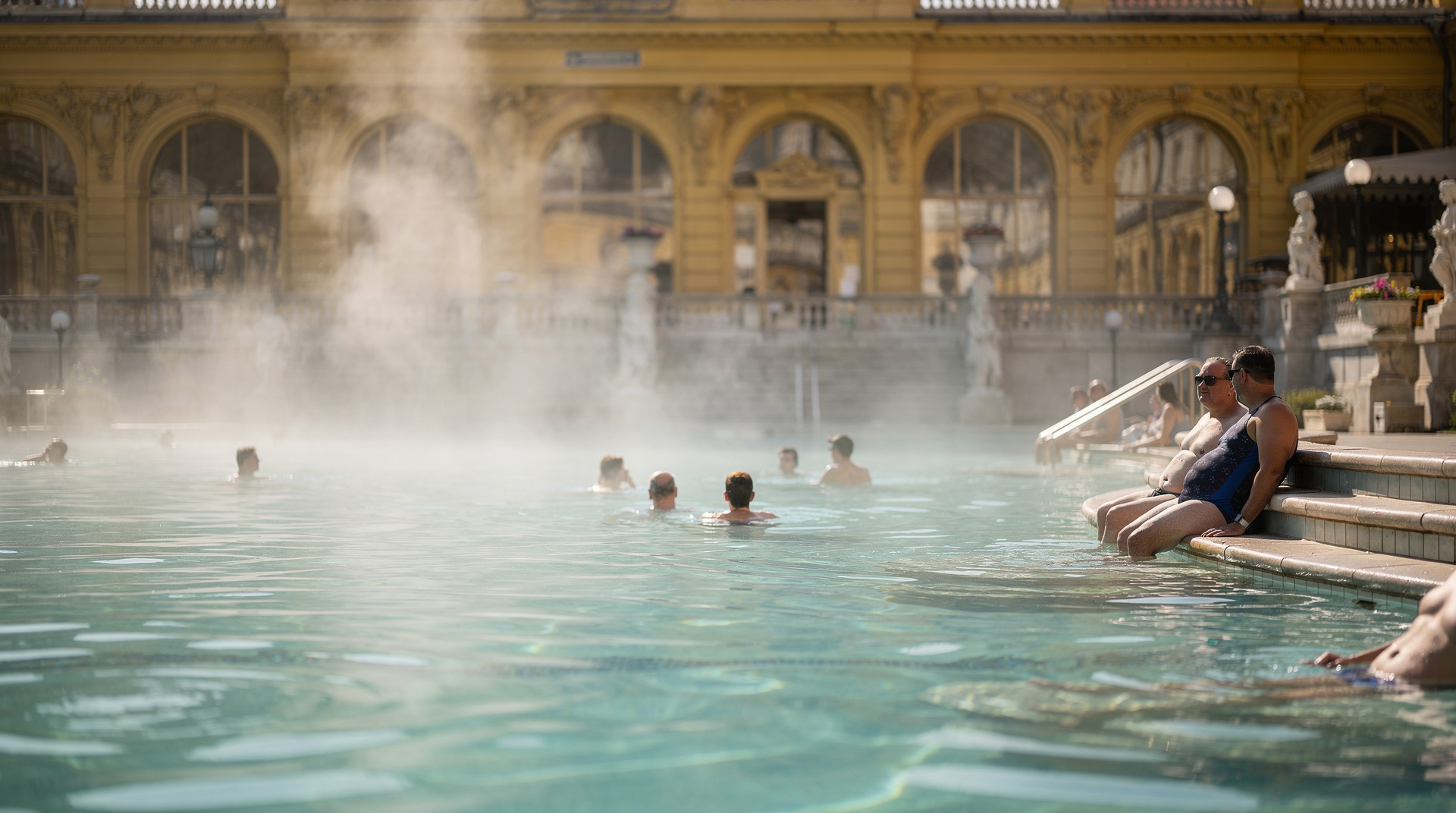
The thermal pools — particularly the smaller hot-water pools and indoor sections — are quiet zones. Budapest bath culture is social but not loud. Speaking in a normal conversational tone is fine. Playing music from a phone speaker without headphones is not. Shouting, splashing aggressively, or roughhousing are not done in the thermal sections (the swimming pools are more relaxed on this front).
The chess players at Széchenyi
The chess players in the outdoor main pool at Széchenyi are a genuine longstanding tradition — not a performance for tourists. They play on floating boards anchored in the water. Watch if you like; do not disturb the game or ask to photograph them up close without permission.
Photography
Generally tolerated outdoors. Inside changing rooms, obviously not. In some indoor thermal sections, photography is politely discouraged by staff. When in doubt, ask the nearest attendant.
Locker security
Leave expensive electronics (laptops, expensive cameras) at your hotel. The lockers are secure, but shared changing areas exist in most baths and anything left outside a locked locker is at your own risk.
What to bring and wear
Swimsuit: Mandatory at all Budapest baths. Any standard swimsuit or swimming trunks. Speedos (briefs) are fine. Bikinis are fine. G-strings are generally not allowed. Avoid white swimwear — thermal minerals can cause discolouration.
Towel: Not mandatory (you can rent one for roughly 1,500–2,000 HUF), but recommended. The rental towels are functional but small. Bring a medium-sized beach towel from your hotel.
Flip-flops or pool sandals: Strongly recommended. The changing room floors and pool surrounds are wet and can be slippery. Wearing sandals also saves your soles from the mineral-heavy surfaces.
Water bottle: Thermal pools are warm and you will perspire more than you realise. Bring water and drink regularly. Every bath has drinking fountains. Some also sell mineral water at the café.
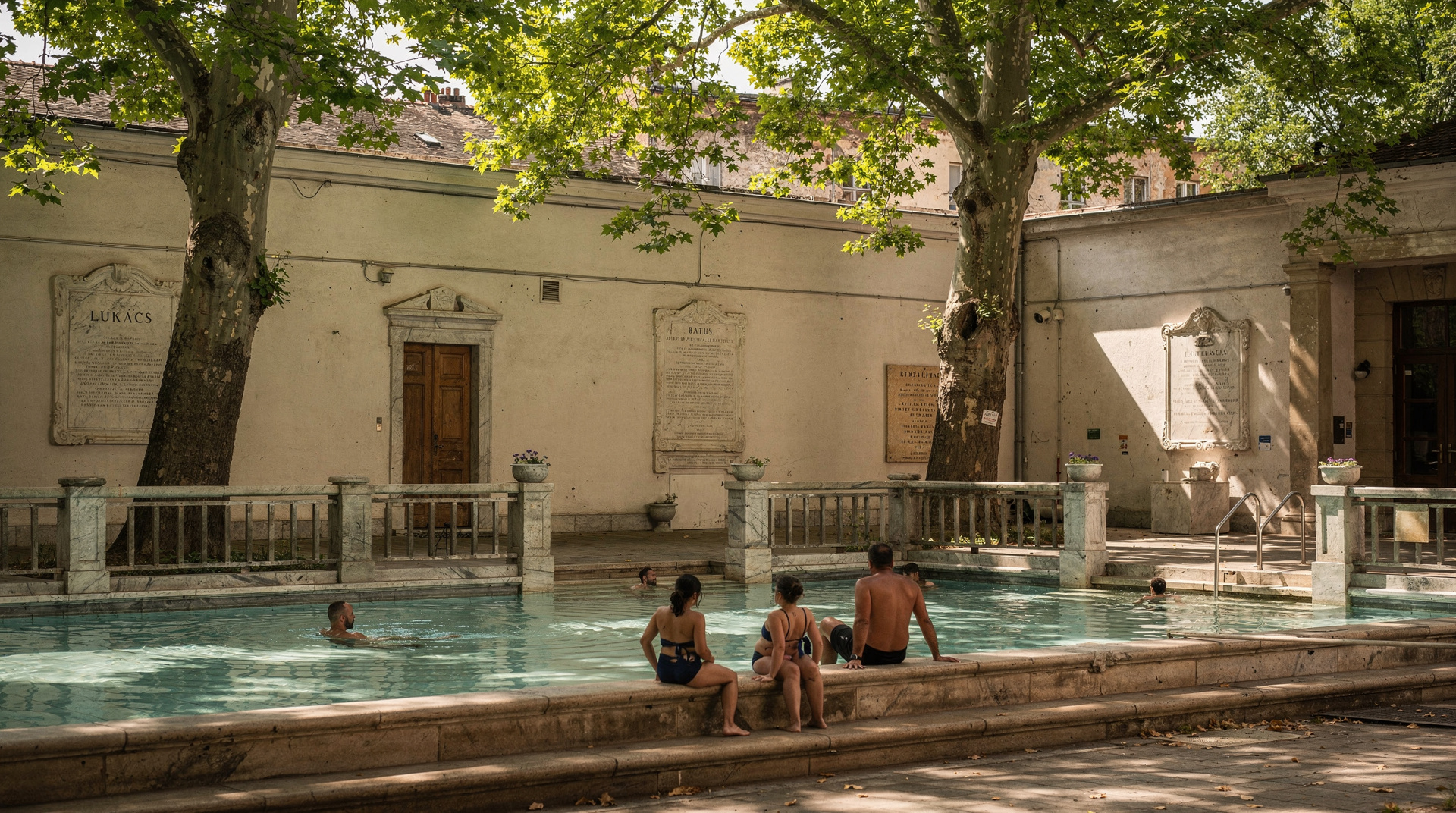
Sunscreen: For outdoor pools in summer. The outdoor areas of Széchenyi, Gellért, and Lukács can have significant sun exposure on clear days.
Swim cap: Required in the swimming pool at Széchenyi (provided free). Not required in thermal soaking pools.
Cash in HUF: Most baths accept cards, but ATMs near any major bath are preferable for small purchases or if you encounter a card issue. Hungary is not in the eurozone — paying in euros at the desk will cost you more due to currency conversion.
Health and safety basics
The heat: Thermal pools in the 38–42°C range are genuinely warm. Stay hydrated, limit time in the hottest pools to 15–20 minutes, and step out if you feel dizzy or overheated. These are medical-grade thermal waters, not a hot tub.
Medical contraindications: Cardiovascular conditions, hypertension, and pregnancy are standard contraindications for very hot pools. If you have any of these, consult your doctor before a thermal bath visit and stick to cooler pools (generally below 36°C).
Children: Kids are welcome at most major baths. The /guides/best-baths-with-kids/ guide covers which baths are most appropriate. Rudas has age restrictions (under 14 in some sections).
Alcohol before soaking: A beer after a soak is fine. Significant alcohol before getting into a 40°C pool is a poor idea — the heat amplifies impairment. The Sparty is designed for this combination, but that is a managed commercial environment.
Tipping at Budapest baths
For massage and physiotherapy: Tip 10–15%. Treatments at Gellért, Lukács, and Rudas are carried out by trained staff; tipping in line with Budapest service norms is appropriate.
For changing room attendants: Small tip appreciated (200–500 HUF) if they assist with the locker system or look after your belongings, but not required.
At the café: Standard restaurant/café tip of around 10% for table service.
Pool staff: No tipping expected.
After your visit
Most baths have a café or snack bar. The food is rarely exceptional but fills the post-soak gap. For a better meal after Széchenyi, the restaurants along Városligeti fasor or in the City Park area are reasonable. After Rudas or Gellért, the Buda side of the Liberty Bridge has local options on Bartók Béla út.
The best thermal baths in Budapest gives the full comparison of all major baths. The Budapest baths prices and tickets has the current price table. The outdoor baths in winter guide covers the specific experience of soaking outdoors in cold-weather months.
The Lukács full-day ticket is one of the easiest baths to visit as a first-timer — smaller, quieter, and a more manageable introduction to Budapest bath culture than the weekend crowds at Széchenyi.
Etiquette differences between the baths
Not every rule applies identically everywhere. Rudas keeps a gender-segregated schedule for its historic Ottoman section on weekday daytimes, which is unusual by Széchenyi or Gellért standards where mixing is unrestricted at all times. Lukács has a noticeably older, more local clientele than Széchenyi, so a quieter, more reserved demeanour fits the room better there than the social energy typical of a Széchenyi weekend afternoon. If your plans involve more than one bath, the Széchenyi vs Gellért vs Rudas comparison explains how each bath’s culture and rules differ, so you’re not caught out switching between them.
Which bath is easiest for a nervous first-timer
If the etiquette in this guide feels like a lot to remember, choose a bath that makes it easy to relax into. Lukács and Rudas are both smaller and less overwhelming than Széchenyi’s scale, though Rudas requires checking the gender schedule first if you’re visiting as a mixed group. For families specifically, baths with kids covers which locations are set up for a more relaxed, forgiving first visit with children.
Pacing your visit like a regular
Locals rarely treat a bath as a race through every pool. They move slowly, alternate hot and cooler water, step out to rest, and come back. Copy that rhythm and you will feel the benefit far more than if you sprint between pools for a photo. Sit on the edge for a few minutes when you feel warm, drink some water, and let your body settle before the next soak.
It also helps to decide in advance what you want from the day. A quiet morning soak, a long afternoon with a book, and an evening session under the lights all feel different, and the etiquette is easier when you match your mood to the room. The thermal baths itinerary shows how to fit a soak into a wider plan without rushing.
Etiquette for couples and groups
Budapest baths are shared spaces, so a group that spreads across a narrow stairway or blocks the entrance to a hot pool quickly annoys everyone else. Agree on a meeting point before you split up, since phones stay in the locker and the wristband is your only key. Keep conversation at a conversational volume and leave the loud games for the swimming pool.
Couples are welcome to relax together in the mixed pools, but the usual public-space manners apply: keep displays of affection modest, and do not take over a small seating area for your own photo session. If you are planning something romantic, best baths for couples and the couples spa experiences guide suggest where the atmosphere suits it. For a wider look at the city, romantic Budapest for couples pairs well with a bath day.
If you travel on your own
Solo visitors are completely at home in the baths. Nobody will think twice about someone soaking alone, and the wristband system means you never need to hand your valuables to a stranger. Keep your locker number in mind, and ask an attendant if anything is unclear — they have answered every first-timer question before. Our solo travel in Budapest guide covers the other practicalities of travelling alone.
Small courtesies that locals notice
- Walk, never run, on wet floors, and give people soaking at the pool edge some space.
- Do not reserve loungers or seats with a towel and then disappear for a long time.
- Rinse sand, sunscreen and creams off before you get in; heavy lotion left on the skin does the water no favours.
- Return any borrowed items and keep your belongings tidy in the changing room.
- Respect the quiet in the indoor thermal sections, where many regulars come for their health routine.
- Listen to attendants: if one asks you to move, shower, or leave a section, a smile and a quick yes is the easiest reply.
Common first-visit worries, answered honestly
Many visitors fear that they will do something wrong in front of the locals. In practice, the baths are used to tourists and staff are patient, as long as you shower, wear a swimsuit and keep your wristband on. Most of the confusion comes from the locker system and the gender schedule at Rudas, both covered above. If you are heading to a specific bath, the individual guides for Széchenyi, Gellért and Lukács cover its layout, so you know where the pools and changing rooms are before you arrive. If it is your first trip to the city, first time in Budapest helps you place the baths within a wider plan, and the biggest Budapest mistakes is worth a skim too.
Frequently asked questions about Thermal bath etiquette in Budapest
Do I need to shower before getting in the pools?
Yes — this is mandatory at every Budapest bath. Hot showers are provided just outside the changing rooms. Bath staff will redirect you to shower if you go straight to the pool. Think of it as standard practice, not an inconvenience.Can I wear any swimsuit?
Any standard swimsuit is fine. Bikinis and swimming trunks are standard. Some baths (Rudas traditional section, men-only days) provide a loincloth instead of expecting a swimsuit. G-strings are not allowed at most baths. Avoid white swimwear — thermal minerals can discolour it.Is tipping expected at Budapest baths?
For massage and physiotherapy treatments, tip roughly 10–15% — similar to the general Budapest tipping norm. For standard locker attendants, a small tip (200–500 HUF) is appreciated but not obligatory. Do not tip pool staff.Can I bring food and drinks to the pools?
Sealed water bottles are generally allowed. Outside food is allowed in garden areas but not at pool-side at most baths. Alcohol is not permitted in thermal pools (the Sparty is a commercial exception). Cafés inside every major bath sell snacks.What happens with the locker system?
You receive a waterproof wristband that controls an electronic locker. Keep it on your wrist at all times — it also operates the entry turnstiles. The wristband is set up at the cashier desk; staff will show you to your locker area.Is nudity expected at any Budapest bath?
No — swimsuits are mandatory at all mixed-gender areas at every major Budapest bath, including Széchenyi, Gellért, Lukács and the mixed sessions at Rudas. This differs from some German or Austrian saunas where nudity is standard; in Budapest, always wear a swimsuit unless specifically told otherwise by staff.What should I do if I lose my wristband?
Tell staff immediately at the information desk or nearest attendant. They can verify your locker assignment through other means (ticket record, ID) and issue a replacement, though this can take a few minutes and occasionally a small fee applies. Don't try to force a locker open — ask for help.
Top experiences
Bookable activities with verified prices and instant confirmation on GetYourGuide.