Is a Danube cruise in Budapest worth it? Honest answer

Is a Danube cruise in Budapest worth it?
For most visitors, yes — the river view of Budapest is genuinely one of Europe's great city panoramas, and a one-hour sightseeing cruise is good value. Dinner cruises are worth it if food quality is your priority; check reviews carefully before booking premium options. Skip if you prefer walking tours.
The honest case for and against a Danube cruise
Every Budapest visitor is offered a Danube cruise. They are advertised at every hotel reception desk, on every tourist map, and at every pier along the Vigadó tér waterfront. The question visitors ask is whether they represent genuine value or tourist-trap filler.
The honest answer: it depends on which cruise, at what time, at what price.
| Basic cruise cost | Around 5,000–7,000 HUF for a 1-hour sightseeing loop |
| Dinner cruise cost | Around 25,000–35,000 HUF per person |
| Time needed | 1 hour (sightseeing) to 2–3 hours (dinner) |
| Best time | 1–1.5 hours before sunset |
| Booking | Book the day before at minimum; 3–5 days ahead for sunset/dinner slots in July–August |
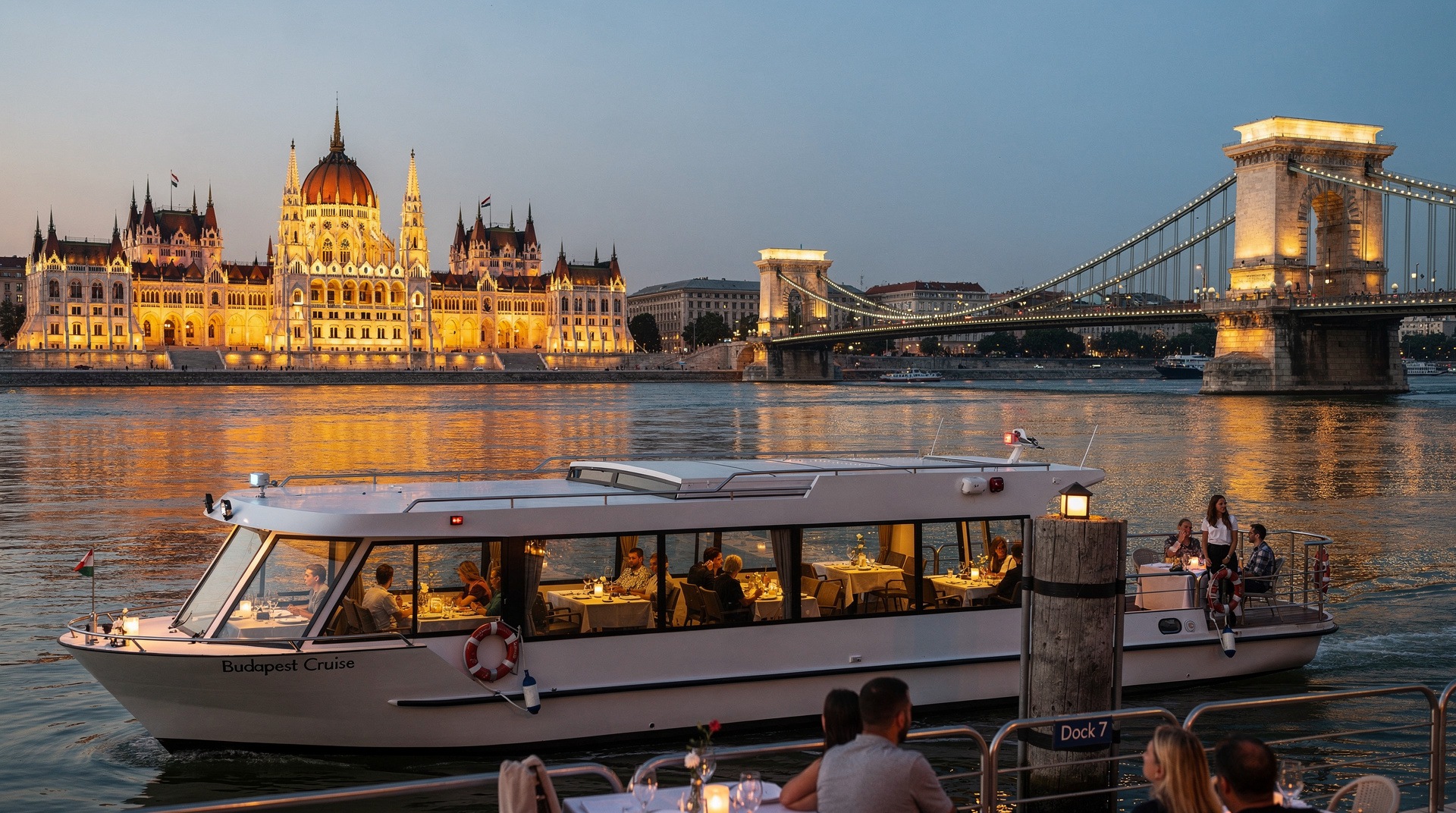
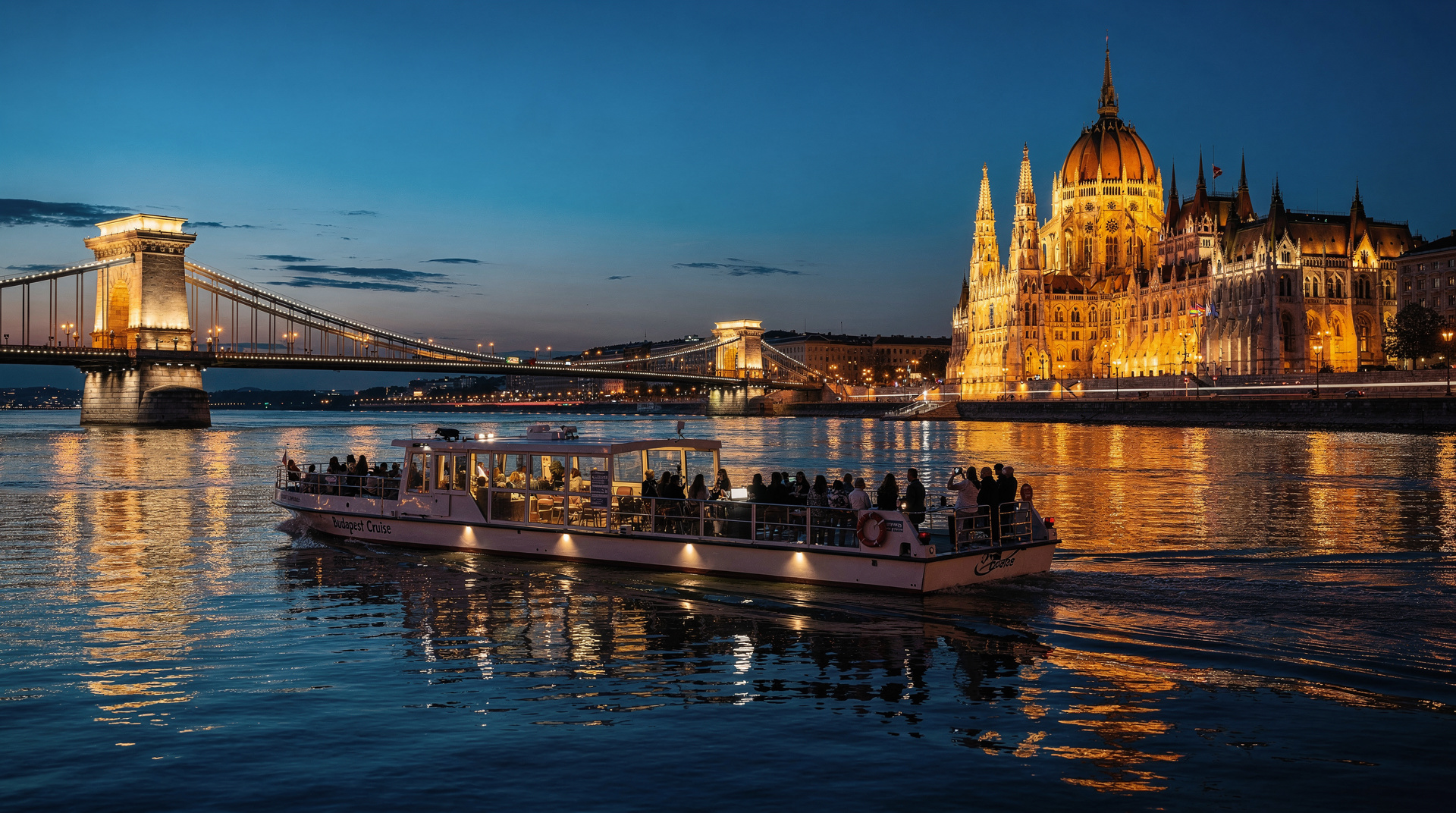
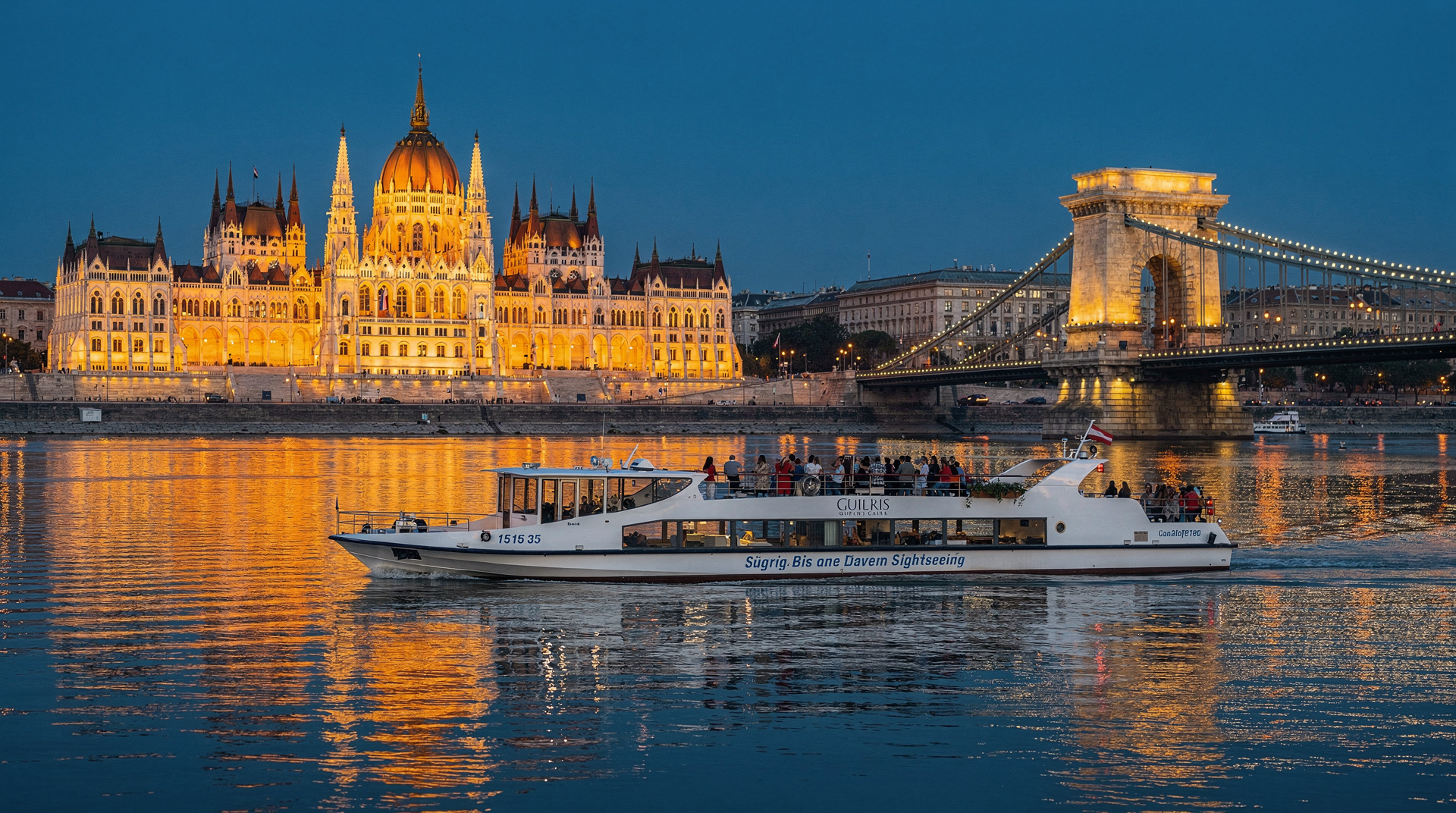
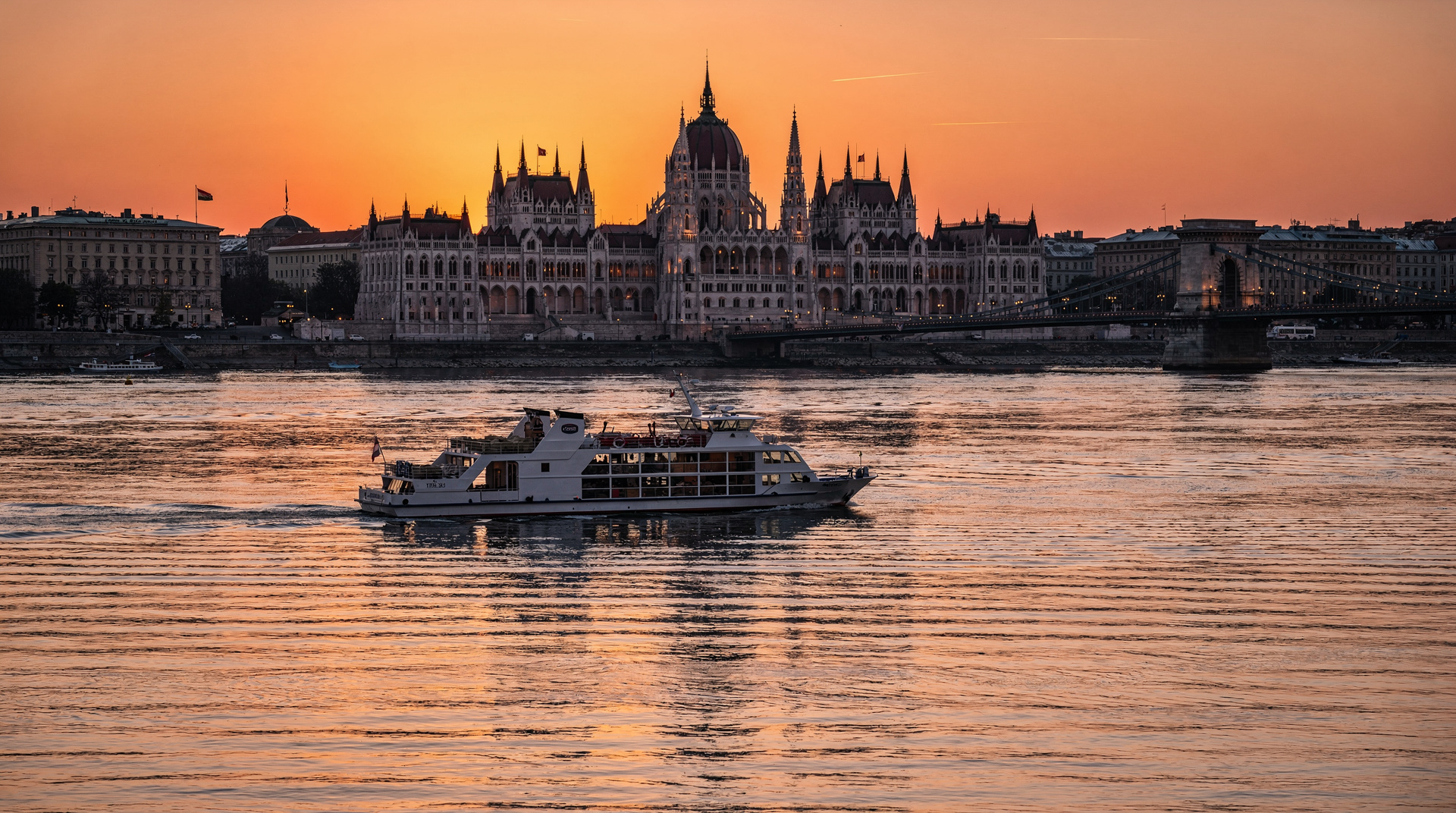
The river perspective on Budapest is not just another angle — it is the best angle for understanding the city’s structure. The Hungarian Parliament, seen from the water at dusk, is one of the most architecturally impressive sights in Europe. Buda Castle on the hill above the river, with the Chain Bridge in the foreground, forms the image that makes Budapest one of the most photographed cities in the world. From the street, you see this in fragments. From the Danube, it assembles.
A basic one-hour sightseeing cruise for 5,000–7,000 HUF (€13–18) is, for most visitors, genuine value. A dinner cruise at 25,000–35,000 HUF (€63–87) per person requires more scrutiny.
What you actually see
The Parliament
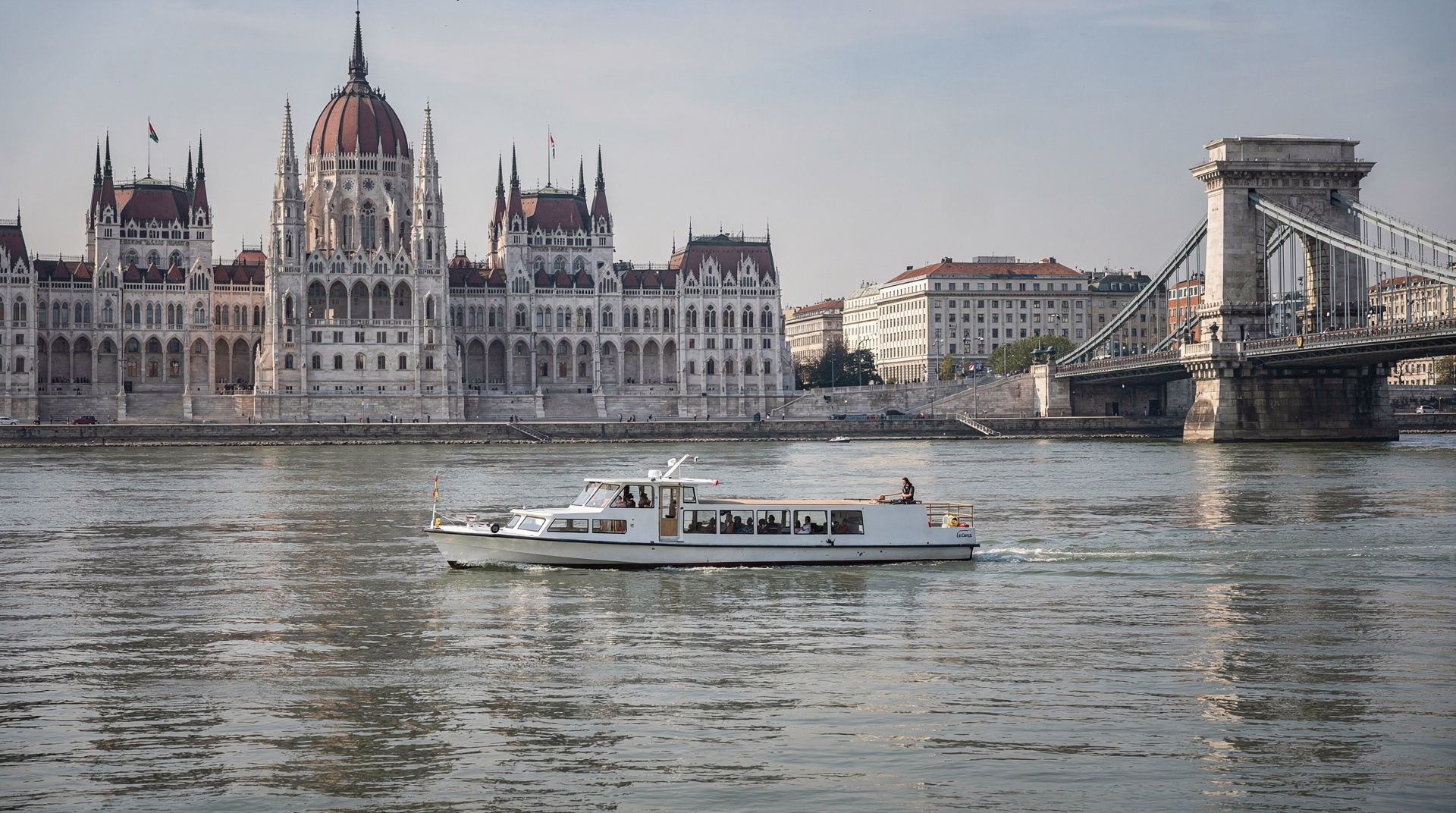
The Hungarian Parliament building on the Pest bank is the centrepiece of any Danube cruise. Seen from the river at close range, its neo-Gothic spires, 691 rooms, and 268-metre façade are genuinely imposing in a way that is difficult to appreciate from the embankment directly in front of it.
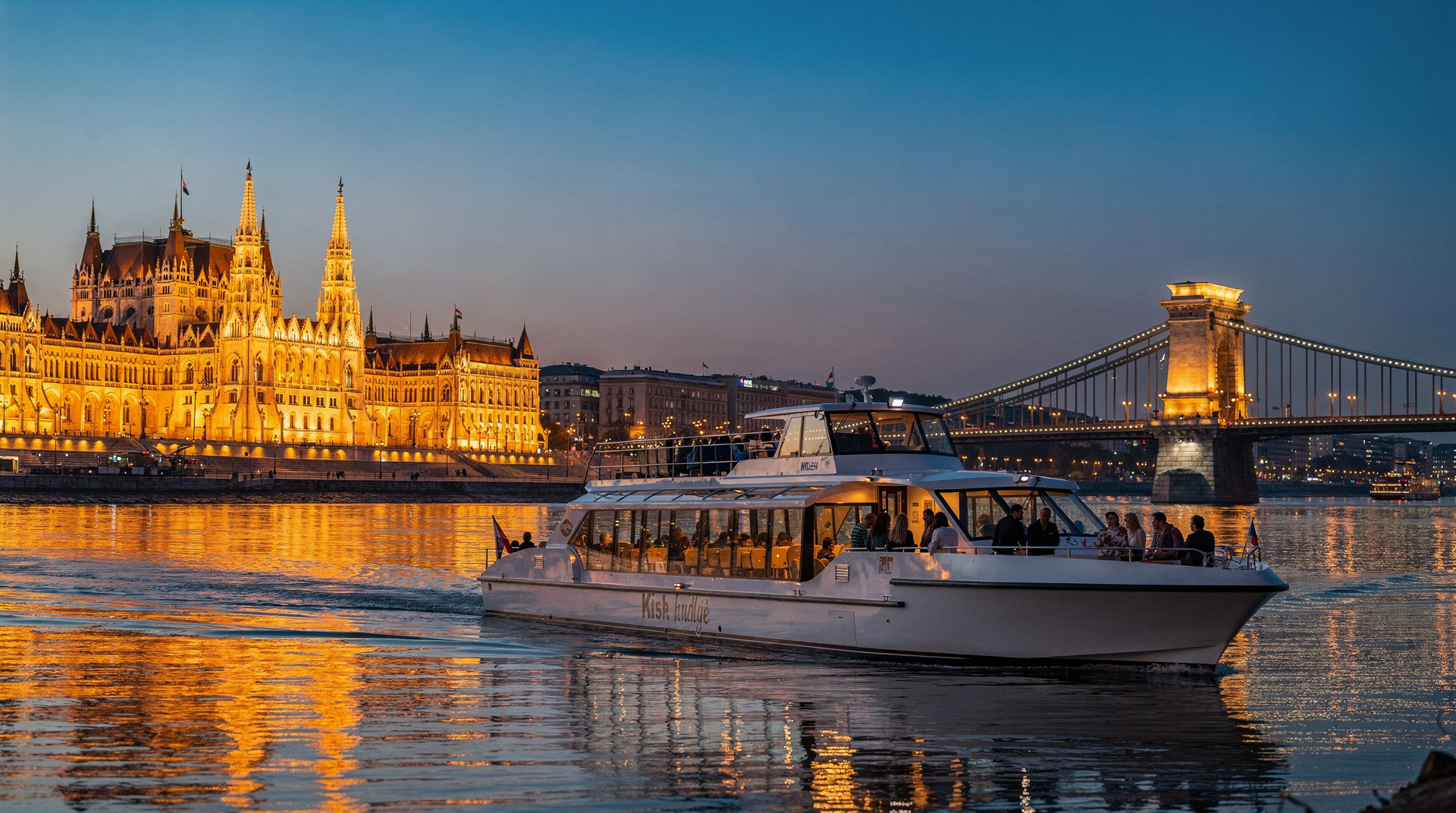
From the water in late afternoon, the building turns from grey stone to warm gold as the sun drops. Floodlit at night, it is white and sharp against a dark sky. Either version is excellent; the transition between them — during a sunset cruise — is the best.
A dedicated guide to the Parliament is worth reading for those who want to combine the river view with an interior visit.
Buda Castle and the bridges
From the river between the Chain Bridge and the Elizabeth Bridge, Buda Castle dominates the western bank. The chain of bridges themselves — their different styles and eras, from the classical Chain Bridge to the more austere Elizabeth Bridge — is seen best from the water.
Gellért Hill and the waterfront baths
Gellért Hill rising steeply from the river, the Liberty Statue at the top, the Gellért Hotel and Rudas Baths at the base — the sequence of the southern Buda bank reads clearly from the water in a way that walking it does not convey.
When a cruise is genuinely worth it
At sunset: Start 1–1.5 hours before local sunset. In summer (June–August), this means departures around 19:00–20:00. In spring and autumn, around 17:00–18:00.
For the Parliament at night: If the floodlit night image is your priority, an evening cruise departing after 21:00 (when darkness is complete) gives you the full illumination effect. The Budapest by-night cruise with welcome drink is timed for this.
For the value-conscious visitor: The city highlights sightseeing cruise delivers the core river view at the best price point. This is the right option if you want the experience without a significant budget commitment.
For a dinner experience: Book only the dinner cruises that reviewers consistently describe as having good food and professional service. The dinner cruise with folk music performance has genuine folk show elements rather than canned music, which makes the premium more justified.
When a cruise is not worth it
At midday in summer: Flat white light, hot deck, no dramatic cityscape effect. The river view still works but does not deliver what makes the Danube cruise special. If midday is your only option, a daytime sightseeing cruise is still fine as an orientation — just not the peak experience.
As a substitute for walking: The cruise shows you the exterior of Budapest from the river. It does not show you the castle district’s cobblestones, the Jewish Quarter’s courtyards, or the ruin bars of District VII. If your Budapest time is limited, prioritise the walking tours and treat the cruise as an addition.
The cheapest options from street touts: Pier hawkers on Vigadó tér sometimes offer discounted tickets to less reputable operators with older, less comfortable boats. The discount is rarely worth the quality difference. Book online through a reputable platform or check the best Danube cruises recommendations.
Budget trips where every euro counts: The basic cruise at 5,000–7,000 HUF (€13–18) is not expensive, but if you are on the budget Budapest plan and need to cut something, the cruise is more substitutable than the baths or a full-day itinerary. The is Budapest expensive page covers the full budget picture.
An honest note on dinner cruise quality
Dinner cruises in Budapest range from genuinely excellent to mediocre. The best ones serve traditional Hungarian food — hideg gyümölcsleves (cold cherry soup), halászlé (fish soup), marhapörkölt (beef stew), töltött káposzta (stuffed cabbage) — cooked properly, with attentive service.
The worst serve uninspired buffet food with lukewarm goulash, overloud music on a small PA, and a sense of industrial throughput. At 25,000–35,000 HUF (€63–87) per person, the difference matters.
Read recent reviews (GYG shows current customer ratings, filter by English reviews from the past 12 months) before committing to a premium dinner cruise. The folk-show option tends to justify its premium more consistently than dinner-only options, because the entertainment adds independent value regardless of food quality.
The full dinner cruise comparison is in the dinner cruises guide.
Summary: the cruise decision tree
- Budget under 8,000 HUF (€20) per person → basic sightseeing cruise; still worth it.
- Evening with a drink included, 6,000–10,000 HUF (€15–25) → evening drink cruise; consistently good value.
- Sunset + cocktails, 10,000–15,000 HUF (€25–38) → sunset cocktail cruise; best photographic experience.
- Full dinner experience, 20,000–35,000 HUF (€50–87) → folk show dinner cruise; check reviews, book the better operators.
- Special occasion → private yacht; see the private boat hire guide.
For your cruise in the context of a full Budapest itinerary, see the 3-day itinerary and the weekend break itinerary.
Comparing the main cruise formats
| Format | Rough cost | Best for |
|---|---|---|
| Basic sightseeing (1hr) | 5,000–7,000 HUF | Budget-conscious, first orientation |
| Evening with a drink | 6,000–10,000 HUF | Good value, relaxed pace |
| Sunset cocktails | 10,000–15,000 HUF | Photography, romantic evenings |
| Dinner with folk show | 20,000–35,000 HUF | Special occasions, full evening out |
| Private yacht | Custom pricing | Groups, celebrations, full control of timing |
Who should skip the cruise entirely
If your Budapest time is under 48 hours and you have to choose between a cruise and one of the city’s other signature experiences — the Castle District on foot, a proper sit-down meal in the Jewish Quarter, or a thermal bath — skip the cruise first. The river view is genuinely worth seeing, but it is the most substitutable of Budapest’s classic experiences: you can still glimpse the Parliament and Castle Hill for free from the Chain Bridge or the Buda embankment at night, which recovers a meaningful part of the experience without spending on a ticket.
Choosing the right boat and the right seat
Not every vessel on the river gives the same experience, and the difference is often about comfort rather than route. Open upper decks give the clearest views and the best photographs, but they are also exposed to sun, wind and cooler evening air. Covered lower decks are more comfortable in poor weather but look out through glass, which can add reflections, especially after dark. If you plan to take photographs, aim for the open deck and arrive early enough to claim a spot along the rail before the boat fills.
Think about which side of the boat you want, too. The route passes the Pest bank and the Buda bank in turn, so you will see both, but the best moments come when the Parliament and the Castle are on your side. Moving around the deck is usually possible, and a relaxed attitude to shifting position makes for a better trip than guarding one spot for an hour. Bring a light layer even on warm days: the river is breezy once the boat is moving, and the evening cools quickly after the sun drops.
How a cruise fits into a Budapest day
The cruise works best as a punctuation mark rather than the main event. A sensible day pairs a morning or afternoon on foot with a late-afternoon or evening departure. You might spend the day in the Castle District or exploring Downtown Pest, then finish on the water as the light changes. The cruise rewards tired legs: after hours of walking, sitting on a deck and watching the city slide past is a welcome change of pace.
If you are building a full plan, the first time in Budapest guide shows where a river outing sits among the other essentials, and the how many days in Budapest page helps you decide whether you have room for it at all. Visitors with a longer stay can treat the cruise as a relaxed evening, while those with only a day can look at the one-day itinerary and decide whether a short river loop is worth the slot.
Pairing the river with other experiences
The Danube view pairs naturally with the city’s other signature pleasures. A bath in the morning, such as one of those compared in best thermal baths in Budapest, followed by an evening on the river makes for a restful, very Budapest sort of day. Couples looking for an easy romantic evening will find the cruise slots neatly into romantic Budapest for couples, and anyone planning a longer trip together can see how it fits in the romantic Budapest three-day itinerary.
Evening cruises also sit comfortably beside a dinner on land. If you would rather eat at a restaurant and then take a short boat ride afterwards, you keep control over the food while still getting the illuminated skyline. The best restaurants in Budapest guide is a good starting point for the meal, and the cruise becomes a gentle way to end the night rather than the entire plan.
Travelling with others
Groups with different tastes are often the easiest to please with a cruise, because everyone can sit, look and talk without needing to agree on a destination. Families with children usually find the format forgiving: there is no queue, no ticket for individual attractions, and the moving scenery keeps younger travellers interested. The Budapest with kids guide covers wider options if you want to build a family day around it. Anyone with limited mobility will find that boarding is straightforward compared with many of the city’s hillside sights, and the accessible Budapest guide explains more about getting around comfortably.
Solo travellers also do well on the water. A cruise is a relaxed way to see the city without the awkwardness of a restaurant table for one, and the shared deck makes it easy to strike up a conversation. The solo travel guide has further ideas for evenings out on your own.
How to compare a cruise with other ways to see the city
If you are still weighing the river against other formats, the cruise vs walking tour page sets them side by side. The short version: a cruise offers a view, a walking tour offers a story, and a hop-on-hop-off bus offers flexibility. Each answers a slightly different question about how you like to travel. If you value commentary and detail, a guided walk will do more for you; if you value atmosphere and a good photograph, the river wins. The hop-on-hop-off guide describes the bus option for those who want a loose, self-paced overview.
For the best sense of the city, many visitors do both a walk and a cruise on different days, treating one as the detail and the other as the big picture. Read the daytime sightseeing cruises guide if you want the river in daylight, or the night cruise Parliament lights page if the illuminated skyline is what draws you. For a drink in hand at golden hour, the sunset cocktail cruises guide covers that format in more detail.
Practical tips before you board
Arrive at the pier a little before departure so you are not rushing, and keep your confirmation handy. Check the weather the day of your cruise: a clear evening transforms the experience, while heavy rain or low cloud flattens it, and it is perfectly reasonable to rebook if conditions are poor and your plans are flexible. Keep valuables close on a crowded deck, and if you carry a camera, a strap is a sensible precaution near the rail.
If you are unsure about the wider city, the Budapest travel guide pulls the essentials together, and the best time to visit Budapest page explains how the seasons change the river experience, from bright summer evenings to crisp, quiet winter sailings. Whatever the season, a little planning is enough to make the cruise one of the highlights of the trip rather than a box ticked.
Frequently asked questions about Is a Danube cruise in Budapest worth it? Honest answer
What do you actually see on a Danube cruise?
The full circuit covers the Hungarian Parliament, Buda Castle, Gellért Hill and the Citadella, five major bridges (Chain, Elizabeth, Liberty, Margaret, Petőfi), the Rudas baths, the Gellért Hotel, the Pest waterfront promenade, and the Margaret Island profile from the water. The Parliament from the river is the standout sight.Is a sightseeing cruise better than a walking tour?
Different, not better. A cruise gives you the river perspective and sees things invisible from street level (the waterfront profile of Buda Castle, the bridge sequence). A walking tour goes inside buildings and covers neighbourhood texture. Ideally, do both — the river view complements the street view. If forced to choose, the walking tour delivers more depth.Are dinner cruises worth the extra money?
It depends on the operator. The best dinner cruises deliver genuine Hungarian cuisine (cold cherry soup, goulash, stuffed cabbage), live music that enhances rather than intrudes, and good service. The worst deliver buffet mediocrity with tinny PA systems. Read recent reviews carefully and book reputable operators. Check /guides/dinner-cruises-budapest/ for the comparison.What time of day gives the best Danube cruise experience?
Sunset and dusk. The Parliament turns from stone-grey to golden to floodlit white over the course of an hour. Midday is the flattest light. Nighttime is dramatic for the illumination but lacks the sunset colour. A cruise starting 1–1.5 hours before sunset is the ideal timing.Can you do a Danube cruise without booking in advance?
Walk-up tickets exist at the main Vigadó tér pier, but availability is uncertain in summer for specific departure times. Dinner and sunset cruises frequently sell out days in advance. Book online at minimum the day before; 3–5 days ahead for popular evening cruise slots in July and August.
Top experiences
Bookable activities with verified prices and instant confirmation on GetYourGuide.