Daytime sightseeing cruises in Budapest: what to expect

Is a daytime sightseeing cruise in Budapest worth doing?
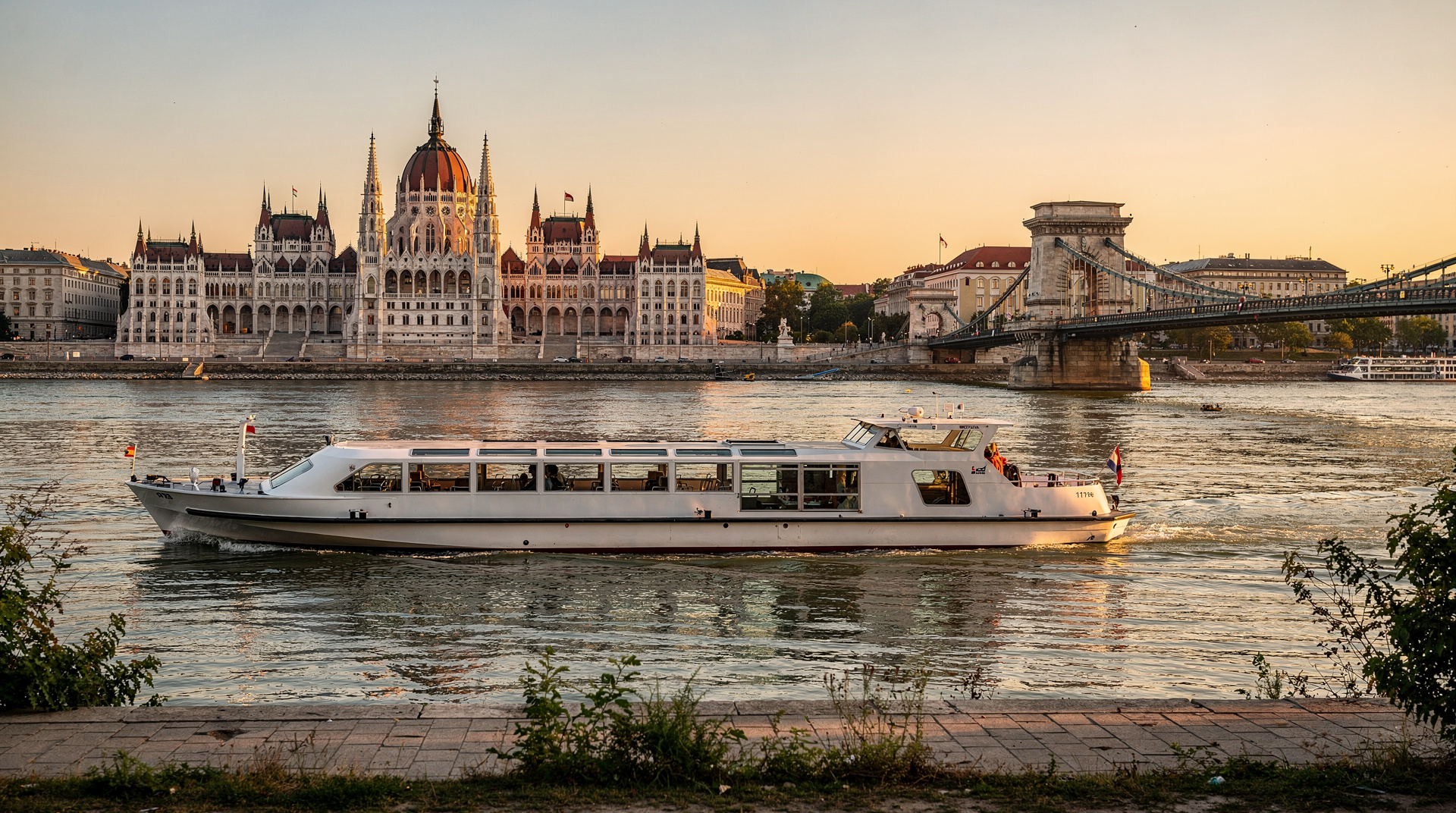
Yes, particularly for orientation on your first day. A 60–90 minute daytime cruise shows you the Hungarian Parliament, Buda Castle, and all five central bridges from the river — the best way to understand Budapest's geography quickly. Evening light is more dramatic, but daytime is practical for families and early-risers.
Daytime cruises: the best way to understand Budapest’s layout
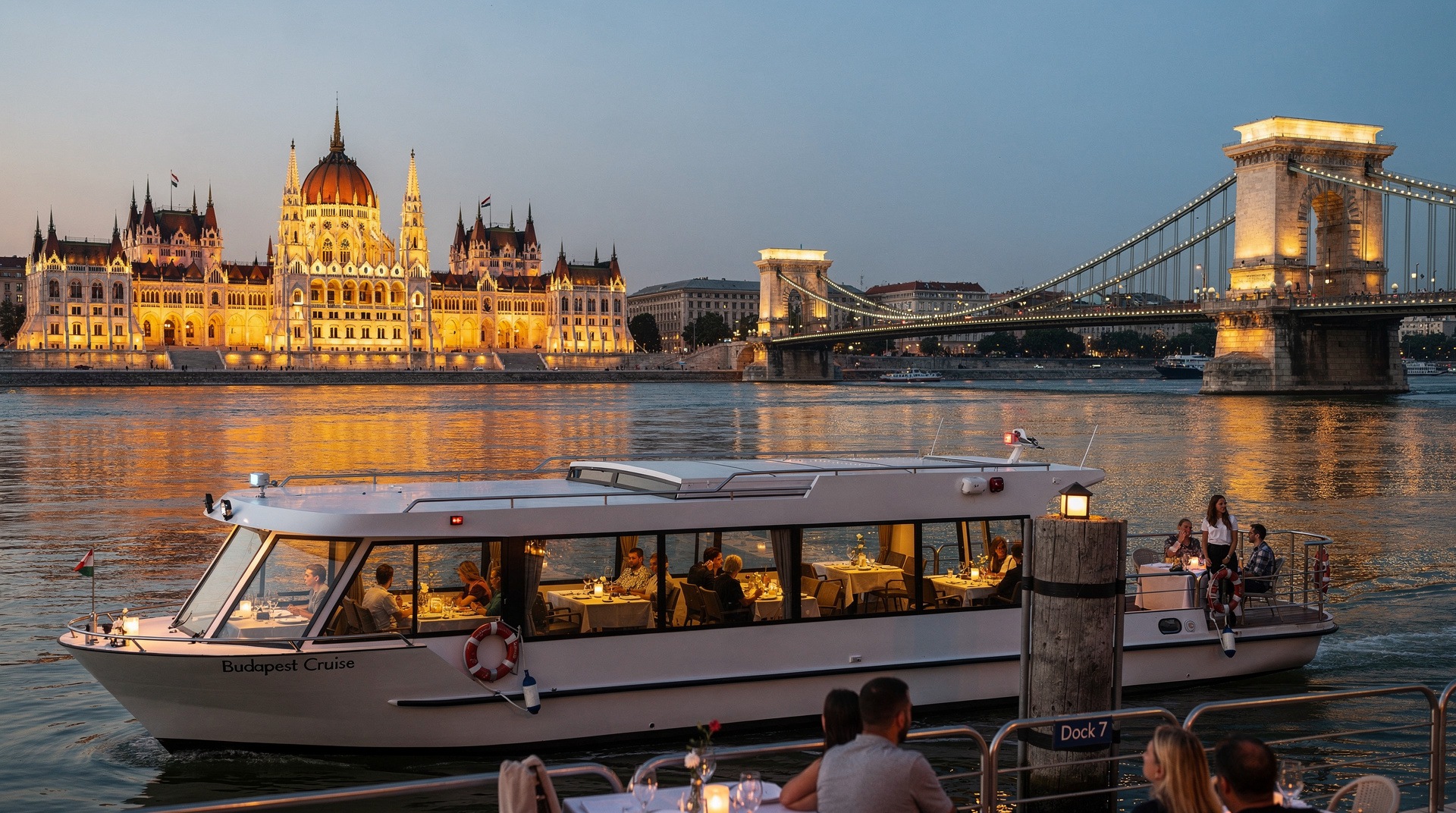
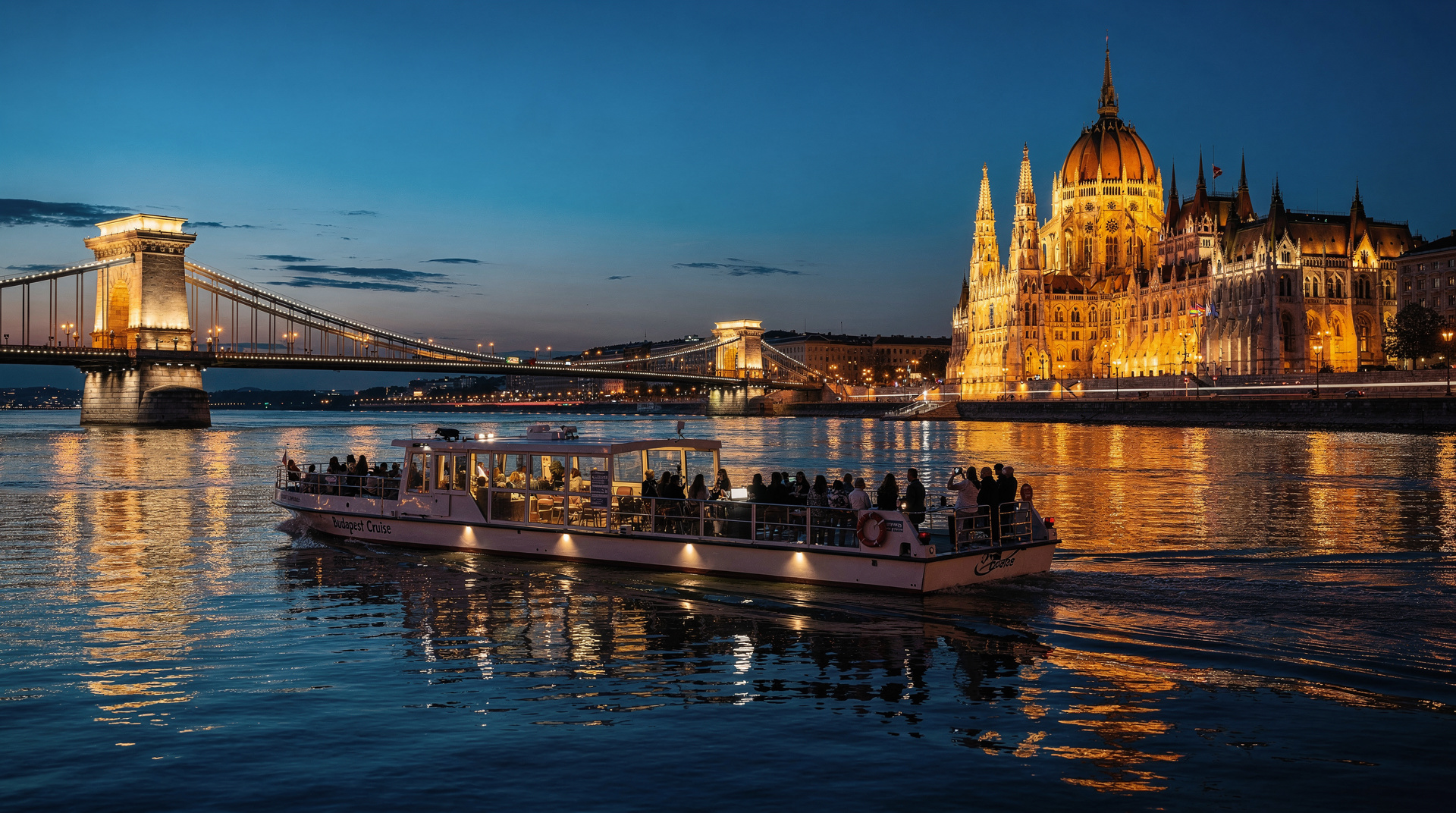
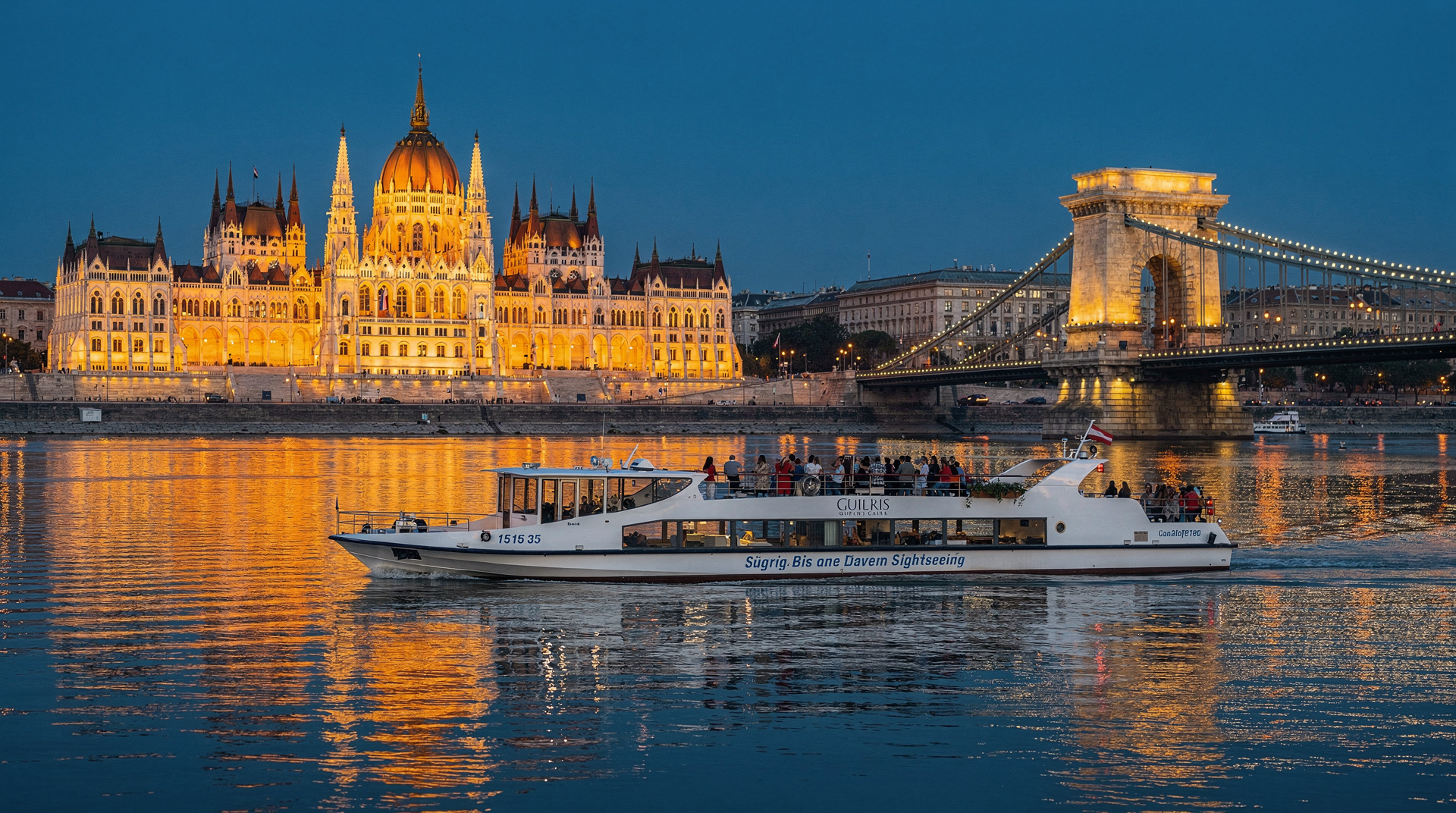
Budapest is a city that reveals itself slowly. The Hungarian Parliament is visible from dozens of vantage points on the Pest bank, but its relationship to Buda Castle across the river, the sequence of bridges linking the two halves of the city, and the way Gellért Hill defines the southern skyline — these spatial relationships only become clear from the water.
A daytime sightseeing cruise is the fastest orientation tool available to a first-time visitor. In 60–90 minutes, you see the city’s main landmarks in their river context, understand the Buda-Pest geographical divide, and identify which areas to explore on foot on subsequent days. It is not the most dramatic way to experience the Danube (evening and sunset cruises win on atmosphere) but it is the most useful for trip planning.
| Where | Departs Vigadó tér pier, Pest bank, between Chain Bridge and Elizabeth Bridge |
| Cost | Around 4,500–13,000 HUF/person depending on format |
| Time needed | 60–90 min (fixed circuit) or full day (hop-on-hop-off) |
| Getting there | Walk 10 min south along the waterfront from Chain Bridge |
| Best time | Morning departures for clearest light and least crowding |
The city highlights cruise
The Budapest city highlights sightseeing cruise is the core daytime offering: a 60–90 minute circuit of the central Danube, covering the Hungarian Parliament, Buda Castle, the main bridges, Gellért Hill, and the waterfront landmarks on both banks. Audio commentary in English and other languages runs throughout.
This is the right choice for visitors who want:
- A first-morning orientation to the city layout
- The river perspective without evening timing constraints
- A family-appropriate, all-ages experience with no drinks pressure
- A tick-box view of the main landmarks before heading out on foot
Departure: Multiple times daily from Vigadó tér pier, Pest bank. Duration: 60–90 minutes. Price: Approximately 4,500–7,500 HUF (€11–19) per person.
The hop-on-hop-off river cruise
The Budapest Danube river hop-on-hop-off sightseeing cruise is a different format: rather than a fixed circuit, you purchase a day pass that allows you to board and disembark at multiple landing points along both banks.
Stops typically include Batthyány tér (Buda), Vigadó tér (Pest), Petőfi tér, the Castle Bazaar, and Margaret Island. You can disembark at Buda to walk up to the Castle District, reboard later, cross to Pest, disembark at Margaret Island, and so on.
This makes the hop-on-hop-off cruise the most flexible sightseeing option in Budapest — closer to an unlimited-use river taxi than a fixed cruise experience.
Best for: Those who want to combine river views with landing at landmarks (Castle District, Margaret Island). Families with older children who want structured flexibility. Those planning a full-day river-based itinerary.
Duration: Valid all day (check operating hours on the specific day). Price: Approximately 8,000–13,000 HUF (€20–33) for a day pass.
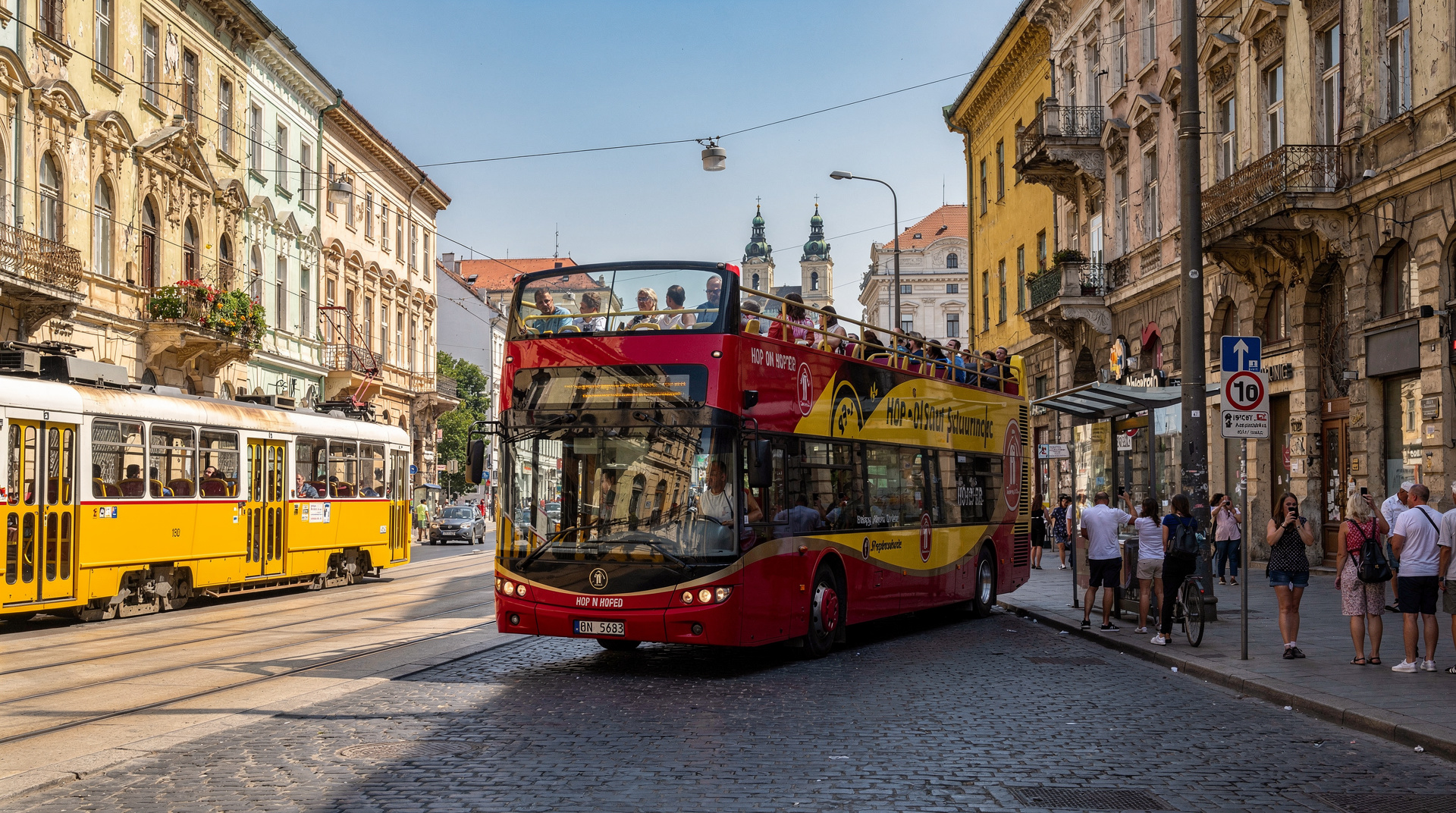
Note that the hop-on-hop-off river cruise is distinct from the hop-on-hop-off bus — the land bus (covered in /guides/hop-on-hop-off-budapest/) operates on streets, while the river version operates on the Danube. The bus covers more central Pest street-level landmarks; the river covers the waterfront and landing points.
Daytime vs evening: the honest trade-off
The question most first-time visitors ask is whether to go during the day or in the evening. The honest answer depends on priorities.
Daytime advantages:
- Better for photography in clear, even light (no shadows, no backlight issues)
- More departure time options throughout the day
- Easier for families with children (no late-evening logistics)
- Better for seeing architectural details of buildings in full light
- No sell-out pressure on most daytime departures
Evening/sunset advantages:
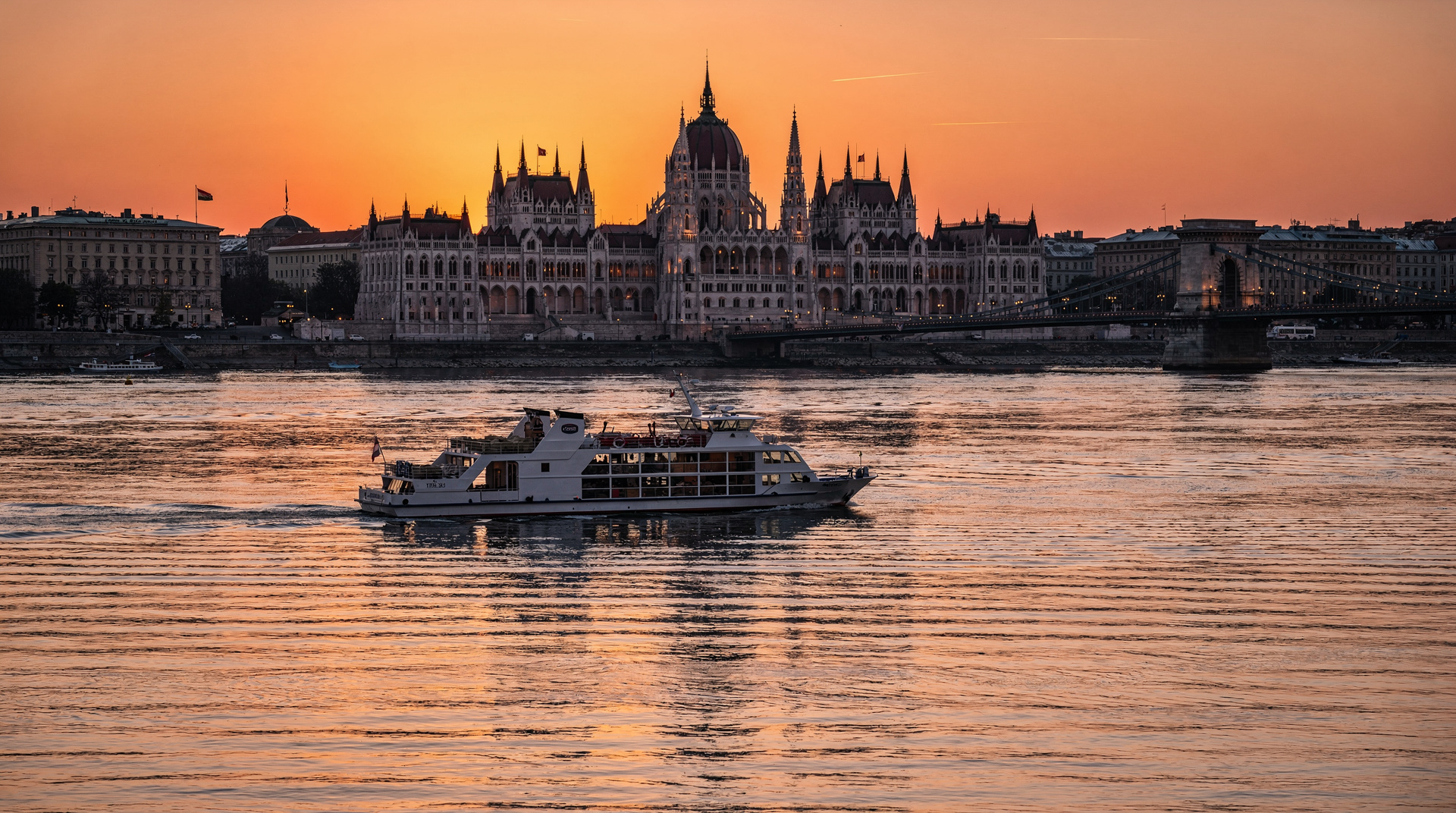
- Dramatically better atmosphere — the Parliament in golden-hour light or floodlit at night
- More memorable as an experience
- Cocktail and drink options add social dimension
- The transition from golden hour to dusk to night (on a longer cruise) is genuinely spectacular
If you can only do one: choose the sunset cruise. If you are on a multi-day itinerary that allows both, book the daytime on Day 1 for orientation and the sunset cruise on Day 2 or 3 for the atmospheric experience.
What the cruise commentary covers
Most audio-guided sightseeing cruises cover the following in order of sighting:
- Margaret Bridge and the north end of the Danube circuit
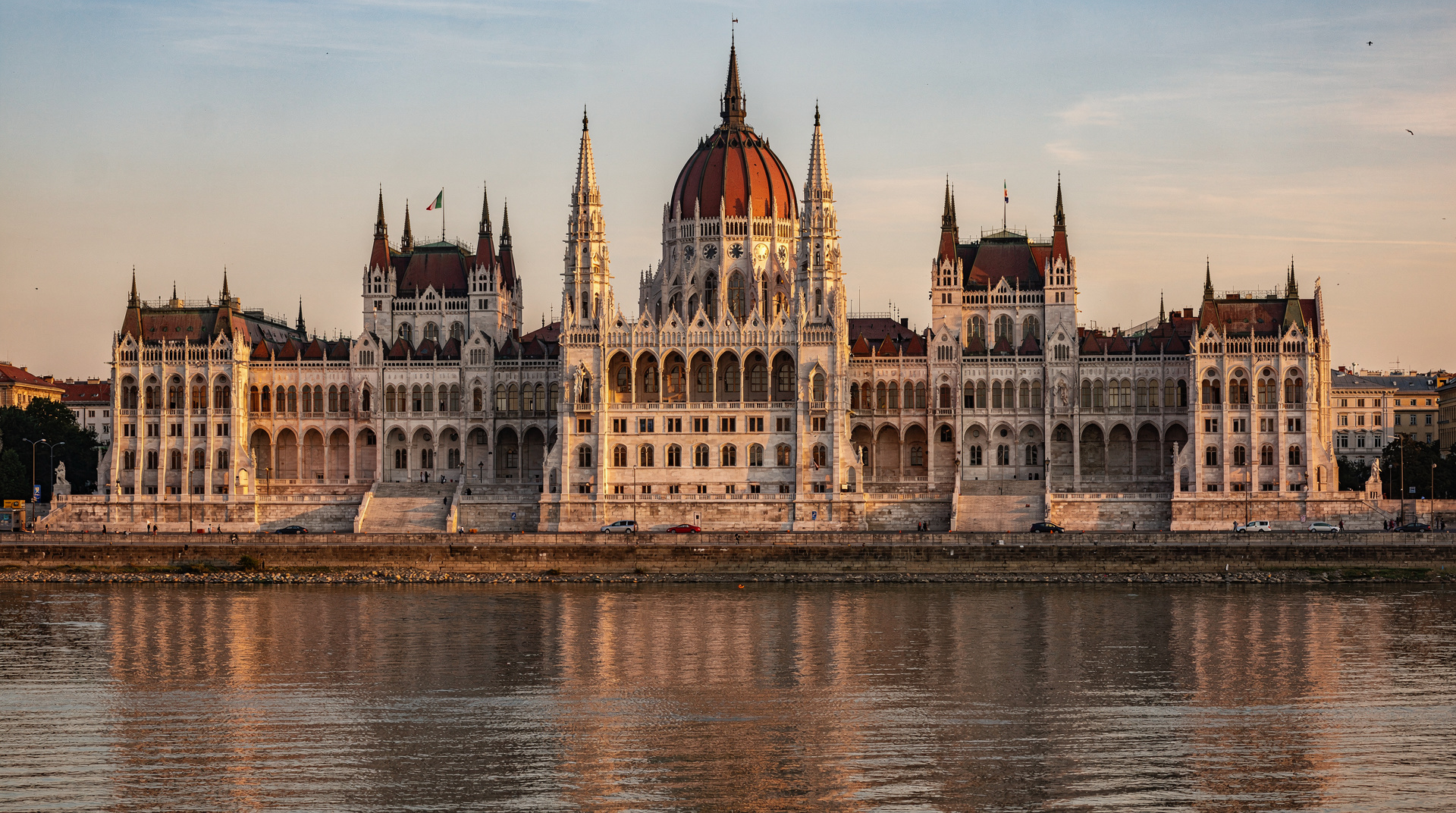
- The Hungarian Parliament (Pest bank) — history, construction, dimensions, the Tuesday sessions schedule
- Buda Castle hillside and the Castle District above
- The Széchenyi Chain Bridge — first permanent bridge linking Buda and Pest, 1849
- St. Stephen’s Basilica (visible behind the Pest embankment)
- The Elizabeth Bridge and the statue of Queen Elizabeth of Hungary
- Rudas Baths at the base of Gellért Hill
- The Gellért Hotel and Liberty Bridge
- The Liberty Statue on Gellért Hill
- The Citadella fortifications
A good audio guide gives historical context without overwhelming. The better operators have updated their commentary to acknowledge that the Parliament tour and the Buda Castle tour should be done on foot separately — the river view is the context, not the substitute.
Practical logistics for daytime cruises
Departure point: Vigadó tér pier on the Pest bank, between the Chain Bridge and Elizabeth Bridge. Walk along the waterfront from the Chain Bridge for about 10 minutes south. The pier is marked with cruise operator signs and a ticket window.
Frequency: Multiple departures daily — roughly every 30–60 minutes depending on operator and season.
Booking: Daytime cruises have more walk-up availability than evening options, but booking online the morning of your cruise ensures your preferred departure time. Useful link: /guides/budapest-baths-prices-tickets/ for comparative HUF budgeting.
Children: All ages welcome. No drinks pressure on standard sightseeing cruises. Life jackets are available for children. The hop-on-hop-off format works well for families with active children who need to move between points.
Budapest Card: A sightseeing cruise is not among the card’s officially listed inclusions, so plan to book one separately. See /guides/budapest-card-guide/ for what the card does cover.
Combining a daytime cruise with other activities
Daytime Danube cruises pair naturally with an afternoon in the /destinations/castle-district/ (accessible by funicular or on foot from the Chain Bridge) or an afternoon visit to the /destinations/downtown-pest/ waterfront (Parliament, Basilica, food market).
For a structured one-day itinerary that incorporates a sightseeing cruise, see /itineraries/budapest-1-day/. For a two-day plan, the /itineraries/budapest-2-days/ uses the first morning cruise as the orientation tool for everything that follows.
The Budapest by-night cruise with welcome drink is the natural follow-up for those who do a daytime cruise on Day 1 and want the floodlit version on a later evening — the full Parliament illumination experience not available during daylight.
Choosing between the two daytime formats
| City highlights cruise | Hop-on-hop-off river cruise | |
|---|---|---|
| Format | Fixed 60–90 min circuit | Day pass, board/disembark freely |
| Best for | Quick orientation, families with young kids | Combining sightseeing with landing at the Castle District or Margaret Island |
| Price | 4,500–7,500 HUF | 8,000–13,000 HUF for the day |
| Flexibility | None — one continuous trip | High — reboard as many times as you like |
If your priority is simply understanding the city’s layout before exploring on foot, the fixed circuit is the more efficient choice. If you want the river to double as transport between the Castle District and Downtown Pest, the hop-on-hop-off format earns its higher price.
Getting the most from your seat on deck
Where you sit changes what you see. On most boats the open upper deck gives the widest, unobstructed view of both banks, while the enclosed lower saloon is the better refuge if the weather turns or the wind off the water is sharper than expected. If you care about photos, choose the upper deck and arrive at the pier a little early so you are among the first aboard, rather than settling for whatever is left once the boat has filled.
Because the boat turns along the river, the sights switch sides as you go. Buda’s castle hillside is on one hand for part of the trip and the Pest embankment, with the Parliament, on the other. Rather than trying to photograph everything, pick one side for the outbound leg and move across for the return. That way you are not scrambling for a view each time the commentary announces a new landmark.
Bring a light layer even in summer: the river breeze can feel cooler than the streets, and the open deck has little shelter. Our packing guide for Budapest covers what works across the seasons, and when to visit Budapest explains how the light and the crowds change through the year, which matters for both comfort and photography.
Landmarks worth a closer look afterwards
A cruise is a preview, and the best use of it is to note which of the sights made you want to get closer. A few natural follow-ups:
- The Chain Bridge guide is the place to start if the bridges caught your eye: you pass beneath several, and this one is the most walkable on foot.
- The Buda Castle guide helps you plan the hillside you saw from the water, including how to explore it at a relaxed pace.
- Margaret Island is the green stretch in the middle of the river, and an easy place to spend an unhurried afternoon, especially if you chose the hop-on-hop-off format and have a landing stage nearby.
- The Gellért Hill and Citadella guide covers the viewpoint above the southern bridges, a good complement to seeing the same hill from below.
Treat the commentary as a menu rather than a lecture. If a particular building or story stuck with you, that is a signal for what deserves time on foot over the following days, and it keeps the rest of your itinerary driven by your own interests rather than a generic checklist.
Is a cruise or a walking tour better for orientation?
Both do the same job of helping you understand the city, but in different ways. The cruise gives you the big picture quickly and effortlessly, with no walking at all, which suits anyone travelling with small children, older relatives or tired legs after a long journey. A walking tour gives you street-level detail, stories and the chance to ask a guide questions, but covers less ground. Our comparison of a cruise versus a walking tour lays out the trade-offs in more depth, and the best walking tours page helps if you decide to pair the two.
Many visitors find the combination works best: the cruise on the first morning to see how the city fits together, then a guided walk through a single district once you know where you are. If you are still weighing up whether to spend the time and money at all, is a Danube cruise worth it gives a frank answer, and the overview of the best Danube cruises in Budapest compares every format side by side.
Traveling with children or in a group
A daytime sightseeing cruise is one of the easier activities to do with a family. There is no late-night timing to manage, children can move around within the limits of the boat, and the changing scenery tends to hold attention better than a static museum visit. The hop-on-hop-off format adds structure for older children, who often enjoy deciding where to get off. For more ideas on keeping a family itinerary balanced, see our guide to Budapest with kids.
For groups of friends or extended family, the main practical point is to book together so that you are all on the same departure, and to agree beforehand which format you want. Splitting between a fixed circuit and a day pass tends to create confusion at the pier.
When the evening version makes more sense
If the daytime format does not quite appeal, the evening alternatives are a different experience rather than a lesser one. The sunset cocktail cruises page covers boats timed for golden hour with a drink in hand, and the night cruise guide to the Parliament lights explains what the illuminated riverfront looks like after dark. Choosing between day and evening is mostly a question of whether you want information and practicality or atmosphere, and, as above, many itineraries have room for both.
Where this fits in your itinerary
A daytime cruise works best on your first morning, before you’ve built a mental map of Buda and Pest. The 1-day Budapest itinerary opens with exactly this sequence, and the logic carries over to longer stays too — see how many days in Budapest for how a cruise slots into a 2-, 3-, or 4-day plan. Afterwards, most visitors head straight to the Hungarian Parliament for a closer look at the building they just saw from the water, since the cruise itself only passes it rather than stopping.
Frequently asked questions about Daytime sightseeing cruises in Budapest
What does a Budapest sightseeing cruise cost?
Basic sightseeing cruises run 4,500–7,500 HUF (€11–19) per person. The hop-on-hop-off river cruise costs around 8,000–13,000 HUF (€20–33) for a day pass. Online booking is the same price or slightly cheaper than walk-up, and guarantees a specific departure time.How long is a typical Budapest sightseeing cruise?
Most sightseeing cruises run 60–90 minutes. The hop-on-hop-off option is valid for the whole day (with reboarding). Audio guide commentary is included on most sightseeing cruises in multiple languages.Is audio commentary available in English?
Yes — most Budapest sightseeing cruises include audio commentary in English and several other languages via headset or built-in speakers. Live commentary (in Hungarian and sometimes English) is available on some operator's guided cruises. The hop-on-hop-off river option has multilingual recorded commentary.What is the best Budapest cruise for first-timers?
The city highlights sightseeing cruise is the best orientation option — 60–90 minutes covering all major landmarks with commentary. For those who want to combine the river view with flexibility to get off at landmarks, the hop-on-hop-off river cruise is the better choice.Can I use the Budapest Card for a sightseeing cruise?
The Budapest Card does not list a sightseeing cruise among its included programmes, so book a cruise separately. See /guides/budapest-card-guide/ for details.
Top experiences
Bookable activities with verified prices and instant confirmation on GetYourGuide.