Folklore shows in Budapest: Hungarian folk dance, music and dinner
Are folklore shows in Budapest worth attending?
Yes, if you want an evening that combines Hungarian culture, food and entertainment. The better shows feature genuine folk dance troupes performing regional dances with live musicians. Expect 1.5–2 hours of performance, optional dinner (3 000–8 000 HUF for food), and ticket prices of 8 000–20 000 HUF per person.
Hungarian folk culture on stage
Hungarian folk music and dance survived communism — actually thrived through it, since the regime promoted folk culture as an expression of authentic national tradition (selectively, of course). The táncház (dance house) movement that emerged in the 1970s brought urban Hungarians back to traditional music-making in an act of cultural recovery that outlasted the Soviet era.
Today, Budapest has a range of folklore performances aimed at tourists and also at Hungarians who value the tradition seriously. The quality varies. This guide tells you which shows are worth attending and what to expect.
| Where | Hungarian Heritage House (Castle District) or dinner-show theatres in central Pest |
| Cost | Around 8,000 HUF concert-only to 20,000–25,000 HUF with dinner |
| Time needed | 1.5–2 hours performance, longer with dinner |
| Getting there | Walkable from central Pest or a short tram/metro ride to the Castle District |
| Best for | A cultural evening, families, and couples who want an alternative to ruin bars |
What you are watching: Hungarian folk dance
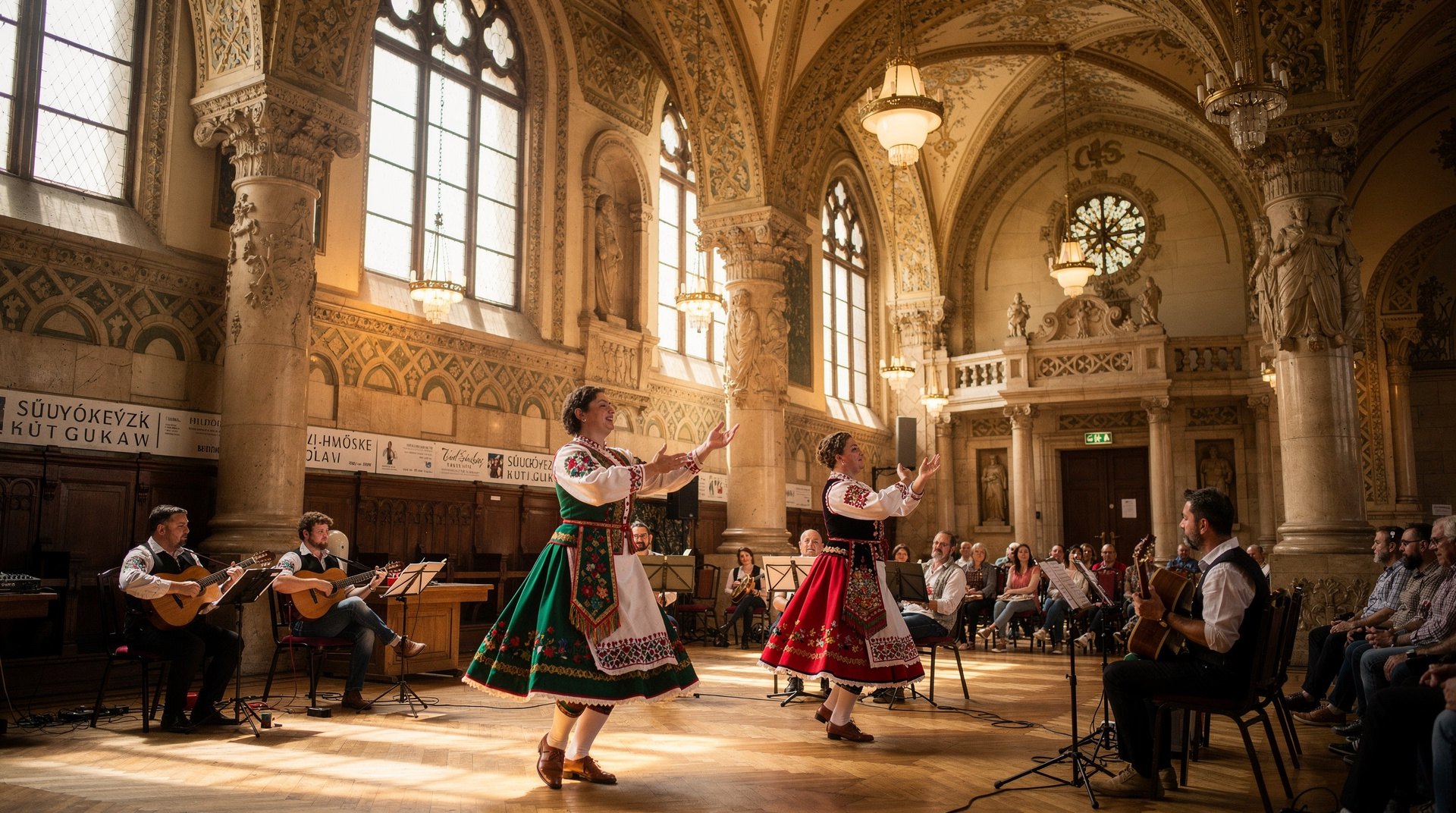
Hungarian folk dance is not a unified tradition — it reflects the regional diversity of the old Hungarian kingdom, including Transylvanian, Bukovinai, Slovakian and Great Plain styles. What tourist shows present is a curated selection of the most visually striking dances from across these traditions.
Key elements to notice:
Csárdás: The defining Hungarian couple dance — quick, turning, with heel-clicking from the men and flowing skirts from the women. The name comes from the csárda (roadside inn) where it was traditionally danced.
Legényes: A Transylvanian solo men’s dance from the Kalotaszeg region, improvised in structure, showing off individual virtuosity. Often considered the most technically demanding Hungarian folk dance.
Körtánc: Circle dances, common throughout the Carpathian Basin, in which the whole community participates.
Ugrós: “Jumping dances” — archaic forms that predate the csárdás, featuring complex footwork and occasional acrobatics.
The musical instruments: violin (first and second), double bass, viola (three-string), and cimbalom (a hammered dulcimer unique to Central and Eastern Europe). The cimbalom’s sound — cascading metallic notes — is instantly recognisable as specifically Hungarian.
The Hungarian Heritage House
Corvin tér 8, District I (near the Castle District). A short walk from the Buda side of the Chain Bridge.
The Hungarian Heritage House (Magyar Örökség Háza) is the most prestigious venue for folk performances in Budapest, operating under the aegis of the Hungarian National Dance Institute. The regular programme includes performances by the Hungarian State Folk Ensemble, one of the world’s leading professional folk dance companies with a repertoire developed over 70+ years.
These performances are aimed at a mixed audience of tourists and Hungarians interested in the art form. The production quality is high; the dance technique is professional rather than tourist-grade. Tickets are 4 000–10 000 HUF depending on the programme and seating.
The venue also runs táncház evenings where audience participation is encouraged — these are for visitors who want to try the dances themselves rather than watch. No prior experience needed; the atmosphere is informal and genuinely enjoyable.
Dinner-show venues
For visitors who want the folklore experience plus a traditional Hungarian dinner, the dinner-show format is well-established in Budapest. The better ones feature professional ensembles; the lesser ones lean toward folklorised entertainment rather than genuine tradition.
The Hungarian folklore dance show with dinner option combines approximately 1.5 hours of performance with a traditional Hungarian dinner — gulyás soup, main course (typically roast pork or stuffed cabbage), and a complimentary glass of pálinka or wine. The performance includes multiple regional styles and a csárdás finale that sometimes invites audience participation.
The Budapest folk dinner show with live music and unlimited wine takes a revue format — broader programme, longer dining period, and unlimited wine throughout the evening. Better suited to groups who want a festive atmosphere than to visitors specifically interested in folk dance as a cultural form.
What to look for in a quality show: Live music rather than recorded accompaniment is the key indicator. Ask specifically when booking. A professional ensemble with five or more musicians playing acoustic instruments is a good sign; prerecorded music is not.
Hungarian folk dance was collected and codified in the twentieth century by the same movement that collected the music, so the show and the concert repertoire come from one source: a Hungarian folklore concert with a Danube night cruise keeps them together instead of splitting the evening.
The Danube cruise option
The folklore cruise combines the Danube night-cruise experience with folk performance on board. It is not the most intimate setting for folk music, but the combination of the river scenery, the lit Parliament, and the music creates an experience that is genuinely memorable even if the performance is abbreviated compared to a theatre show.
For visitors who want to see the river at night and experience some Hungarian culture in the same evening, the cruise-plus-folklore combination is an efficient way to do both. The best Danube cruises guide covers the cruise options in more detail; the cruise-folklore combination sits at the overlap.
The táncház movement
Beyond tourist shows, Budapest has a living folk dance scene. The táncház evenings — dance houses — run in various venues throughout the city, typically on weekends. These are not performances but participatory events where Hungarians and interested visitors dance together to live music. The most established is the Fonó Music House in Buda (Buda, Szokol utca area), which has been running táncház evenings since the 1970s.
Attending a táncház is free or very cheap (500–1 500 HUF door charge). You do not need to know how to dance — there are usually workshops earlier in the evening before the dancing starts, and the community is welcoming to beginners. This is the most authentic folk music experience Budapest offers.
Folklore in cultural context
Hungarian folk traditions were systematically collected and preserved from the late 19th century. Composers Béla Bartók and Zoltán Kodály were central figures — they recorded folk songs on wax cylinders in Hungarian, Romanian and Slovak villages from around 1905, using this material as the foundation for their concert music. The Bartók Archives in Budapest (Csalán út 29, District II) has archive recordings and documents related to this fieldwork.
The relationship between folk tradition and national identity is complicated in Hungary: the same traditions were deployed both by the communist state as evidence of Hungarian cultural vitality and by the táncház movement as cultural resistance to Soviet-era standardisation. The Hungarian history primer covers the political background that makes this complexity legible.
Comparing the formats
| Format | Best for | Typical cost | Authenticity |
|---|---|---|---|
| Hungarian Heritage House | Serious folk-dance interest | 4,000–10,000 HUF | Highest — professional state ensemble |
| Dinner-show theatre | An easy evening with food included | 8,000–25,000 HUF | Good, varies by venue |
| Danube folklore cruise | Combining river views with music | Included in cruise price | Moderate, abbreviated set |
| Táncház (dance house) | Hands-on, participatory experience | 500–1,500 HUF door charge | Highest — living local tradition |
None of these formats is objectively “better” than the others — they answer different questions. If your priority is dance technique and musicianship, the Heritage House wins. If your priority is a relaxed evening with dinner handled, the dinner-show format is the easier choice. If you want to participate rather than watch, the táncház is unmatched and also the cheapest option by a wide margin. For visitors who would rather spend the evening in the ruin bars or on a broader night tour of the city instead, a folklore show is easy to skip without missing the defining Budapest evening experience — it is a genuinely optional add-on, not a must-do.
How to watch a folk dance performance
A folk show rewards a little preparation. Before the lights go down, look at the stage rather than the programme: the musicians are part of the performance, and in the better productions they interact with the dancers instead of simply providing a soundtrack. Watch how the violin leads and the double bass keeps the pulse, and notice how the dancers respond to a change of tempo. A csárdás typically starts slowly and builds, and that gradual acceleration is the point of the form.
Pay attention to the costumes too. They differ from region to region, and the embroidery, boots and head coverings tell you which tradition a number is drawn from. If you know a little of the Hungarian history primer, you will understand why a Transylvanian dance and a Great Plain dance can feel so different even though both are called Hungarian. Dancers who are comfortable improvising, especially in the solo men’s numbers, are usually a sign that the company takes the tradition seriously.
If you would like more context before or after the evening, the best museums in Budapest guide points to places where material culture and folk art are part of the story, and the art nouveau guide shows how the same folk motifs found their way into the architecture of the city around 1900. Seeing both sides makes the performance feel less like an isolated show and more like one thread in a longer cultural story.
Eating and drinking around the show
Dinner shows serve a set menu, so the best way to enjoy it is to treat it as an introduction. If the food interests you, the traditional Hungarian dishes guide explains what you are eating and what to order afterwards on your own. The pálinka often served with the welcome is worth understanding before you drink it; the pálinka guide explains how it is meant to be sipped, and the Hungarian wine guide helps you make sense of the glass in front of you.
For a concert-only ticket, plan the meal separately. A relaxed dinner beforehand, followed by the show, makes for a smoother evening than eating in a rush. Afterwards, a late coffee in one of the city’s historic cafés is a gentle way to end the night; the coffee houses guide lists the options.
Pairing a folklore show with the rest of your evening
Because a folklore show is a self-contained block of time, it combines easily with other plans. Visitors staying in the Castle District can walk to the venue after an afternoon at the Castle District, while those based on the Pest side can make the short crossing by tram or metro. The Budapest metro guide helps with the route.
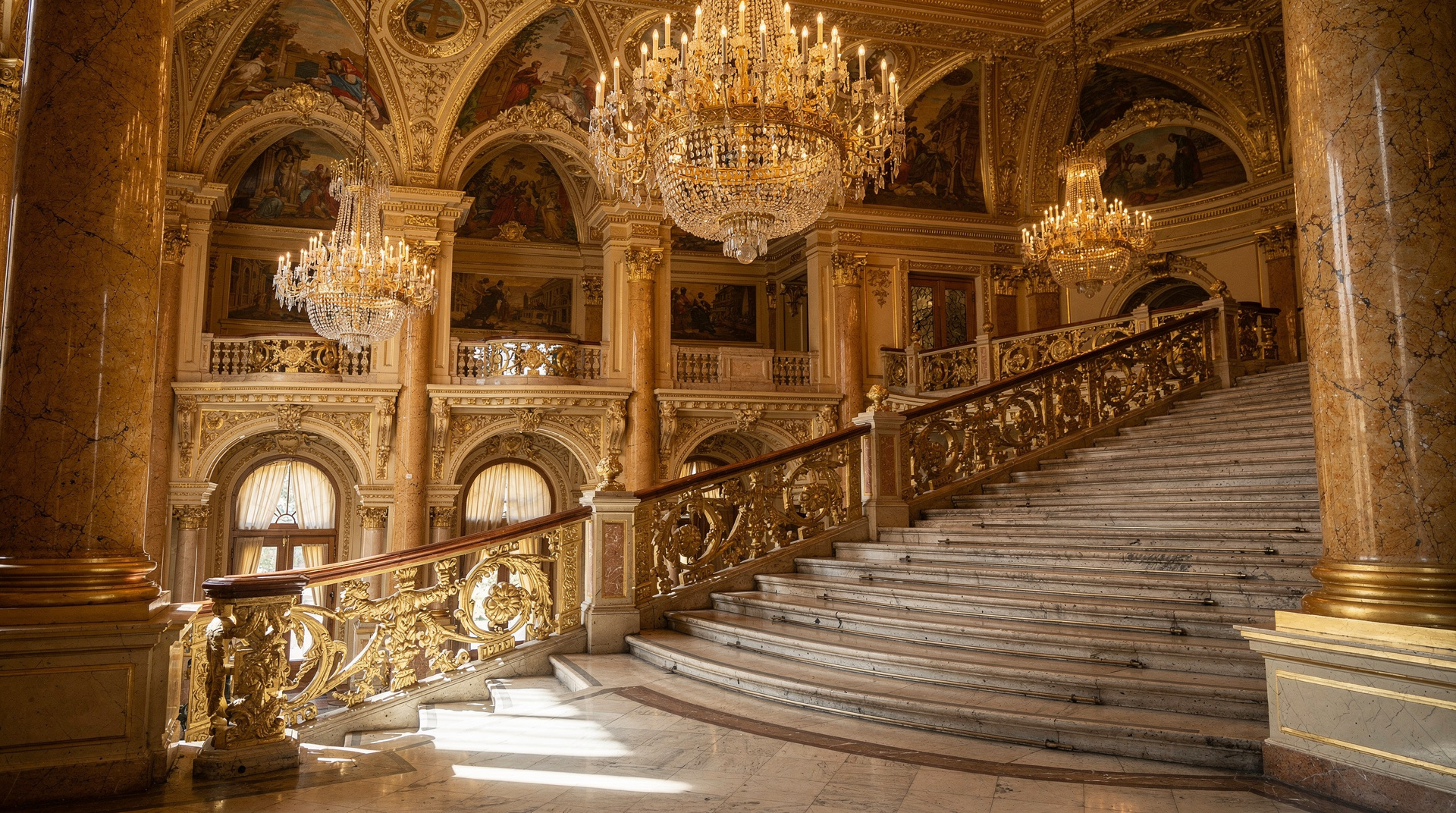
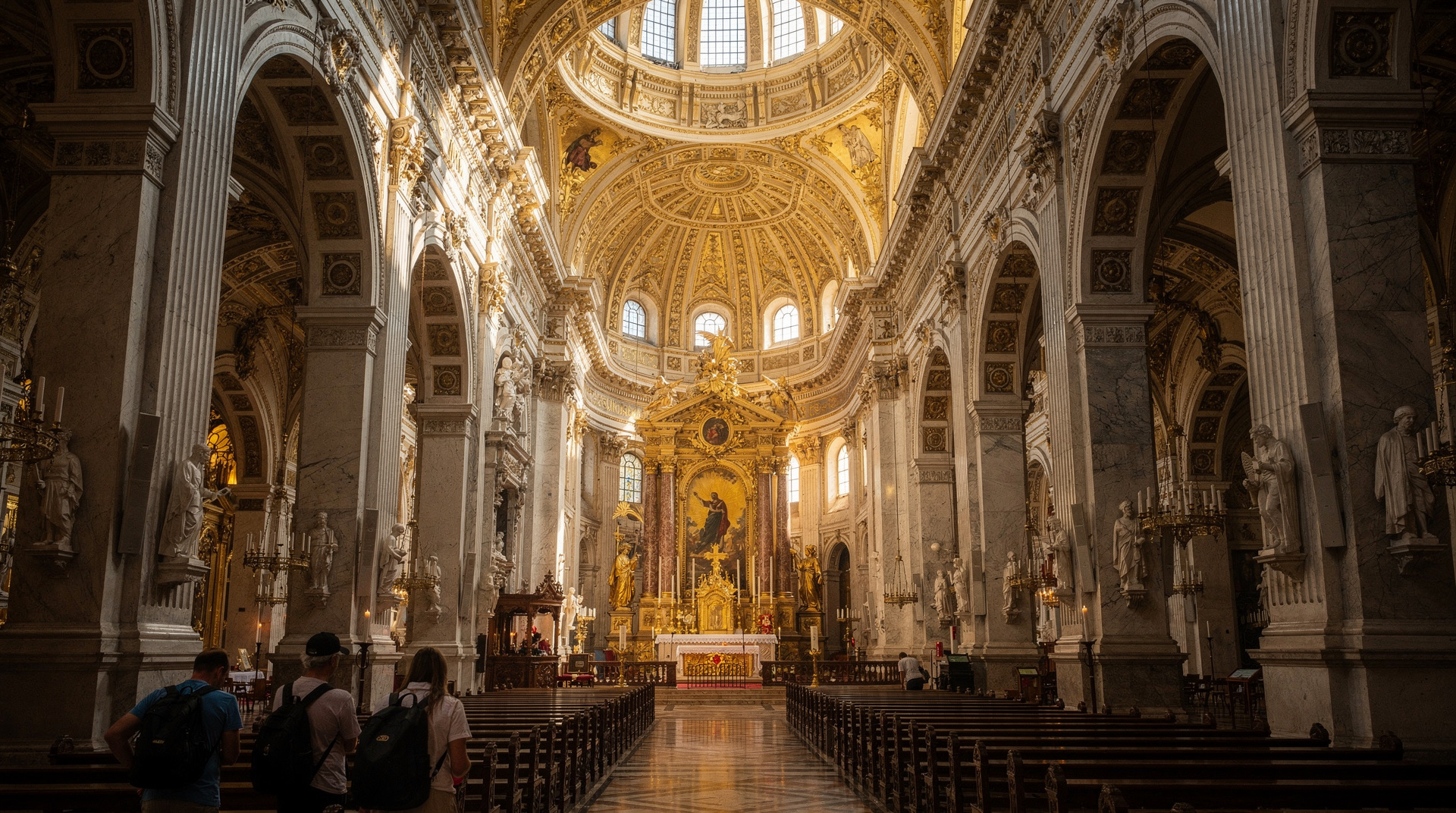
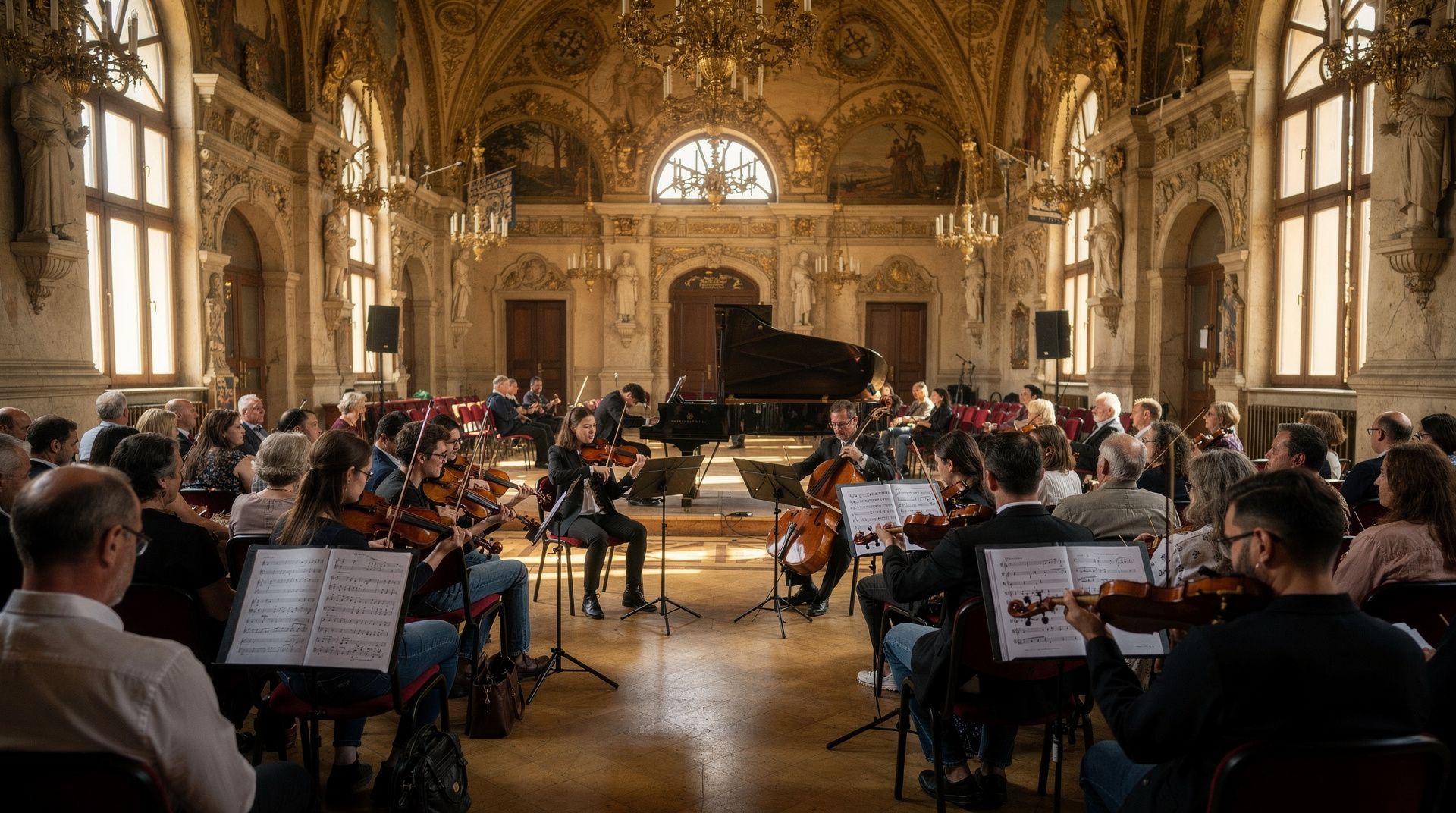
If you want to stretch the evening, pair the show with a view of the river. The night cruise and Parliament lights guide explains why the evening hours are the best time on the water. For something more musical afterwards, the live music and jazz guide covers venues that continue the theme without the formality of a theatre. And if you prefer a different kind of cultural night, the Hungarian State Opera guide and the St. Stephen’s Basilica guide cover the grander alternatives; the classical concert held inside the Basilica is the quieter counterpart to a folk evening.
Choosing the right night of your stay
A folklore show suits a first or second evening, but it also works well on a cold night when you would rather be indoors. The Budapest in winter guide explains how short days shape a visit, and an indoor performance with warm food fits that rhythm. In summer, when the evenings are long, the cruise version lets you stay outside. If this is your first visit, the first time in Budapest guide helps you decide how much of your limited time to give to an evening show, and the Budapest nightlife guide shows what else competes for that slot.
Booking and timing tips
Book at least a day or two ahead for the popular dinner-show venues, particularly from May to September when tour groups fill availability. The Hungarian Heritage House publishes its programme roughly a month ahead — check the current schedule rather than assuming a show runs every night, since some weeks have no public performance. Arrive 15–20 minutes early for seating; dinner-show formats often serve the first course before the performance begins, so latecomers miss part of the meal rather than the show itself.
For those without a fixed evening plan, the folklore cruise is the most flexible option, since Danube cruises run nightly year-round regardless of the Heritage House’s monthly schedule. See the best Danube cruises guide for departure times and how the folklore option compares to a standard sightseeing cruise. If you are building a full evening around it, the best restaurants in Budapest guide covers where to eat before or after a concert-only ticket, and the budget guide notes where a folklore evening fits for cost-conscious travellers.
Practical planning
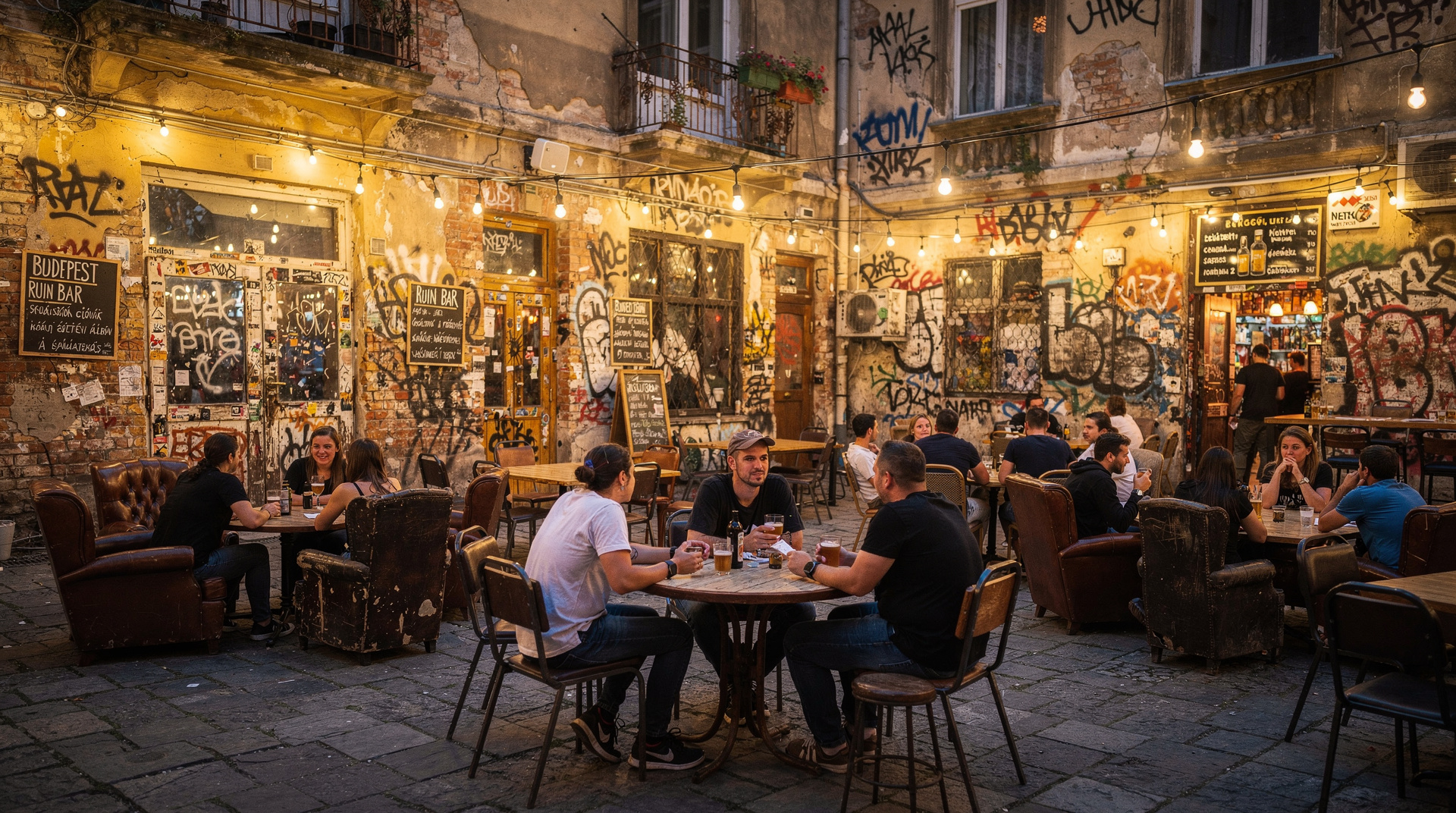
An evening folklore show works well as an alternative to the ruin bar circuit, particularly for visitors who want a cultural evening rather than a nightlife one. The romantic Budapest guide suggests a folklore dinner show as one of the better structured evenings for couples.
For families, folklore shows are genuinely child-friendly — the dancing is visually engaging, the music is immediate, and shows typically end by 21:00 or 22:00. The Budapest with kids guide notes this as one of the better cultural evening options for mixed-age groups.
The Budapest 3-day itinerary suggests evening programming for each day; a folklore show or classical concert at the Basilica is the standard recommendation for day two’s evening. Budapest’s cultural evening offer is genuinely high quality at these prices — it represents one of the less-obvious values of the city.
Frequently asked questions about Folklore shows in Budapest
What is a Hungarian folklore show?
A Hungarian folklore show (néptánc műsor) is a staged performance of regional folk dances and music from Hungary's various cultural traditions — Transylvanian circle dances, Great Plain csárdás, Bukovinai Székely dances, and others. Most shows for tourists include live musicians playing violin, double bass, zither and cimbalom, with costumed dancers performing the distinctive Hungarian folk dance vocabulary.How much does a folklore show cost in Budapest?
Ticket prices range from 8 000 HUF (around €20) for a concert-only performance to 20 000–25 000 HUF (€50–62) for a dinner package. The dinner add-on is usually Hungarian traditional food: gulyás soup, roast pork or chicken, and pálinka. Budget the total experience at €50–70 per person for dinner plus performance.Which folklore show is best in Budapest?
The Hungarian Heritage House (Magyar Örökség Háza) near the Castle District is the most authentic venue, featuring the Hungarian State Folk Ensemble on regular evenings. The Danube Folk Ensemble also runs regular programmes. For dinner-show combinations, the theatre venues in central Pest (near the Opera) offer the most polished productions.Is there a Danube cruise with folklore?
Yes. The Hungarian Folklore Concert Danube Night Cruise combines a river cruise with folk performance — a way to see the Parliament lit up at night while hearing Hungarian music. Not the most intimate folk experience, but the setting is memorable.What should I wear to a folklore show?
Smart casual is appropriate. These are not black-tie events, but the venues are more formal than a ruin bar. Arriving in tourist beachwear would feel out of place in the better dinner-show venues.Do I need to book a folklore show in advance?
Booking a day or two ahead is sensible, especially in summer when tour groups fill dinner-show venues. The Hungarian Heritage House programme is published on a monthly schedule, so check dates before planning your evening around it. Walk-up availability exists but is not guaranteed for the better-reviewed shows.Are folklore shows suitable as a first-night activity?
Yes, and arguably better suited to a first or second night than a later one — the performance ends by 21:00–22:00, so it works well even if you are still adjusting after travel, and it gives useful cultural context for the rest of the trip without requiring late-night energy.
Top experiences
Bookable activities with verified prices and instant confirmation on GetYourGuide.