Bike tours in Budapest: the best cycling options for visitors
Are bike tours good in Budapest?
Yes. Budapest is largely flat on the Pest side and has decent cycling infrastructure along the Danube. A 3–4 hour guided bike tour covers significantly more ground than a walking tour — typically both banks, Margaret Island and several major landmarks — for around 10 000–15 000 HUF per person.
Why a bike works well in Budapest
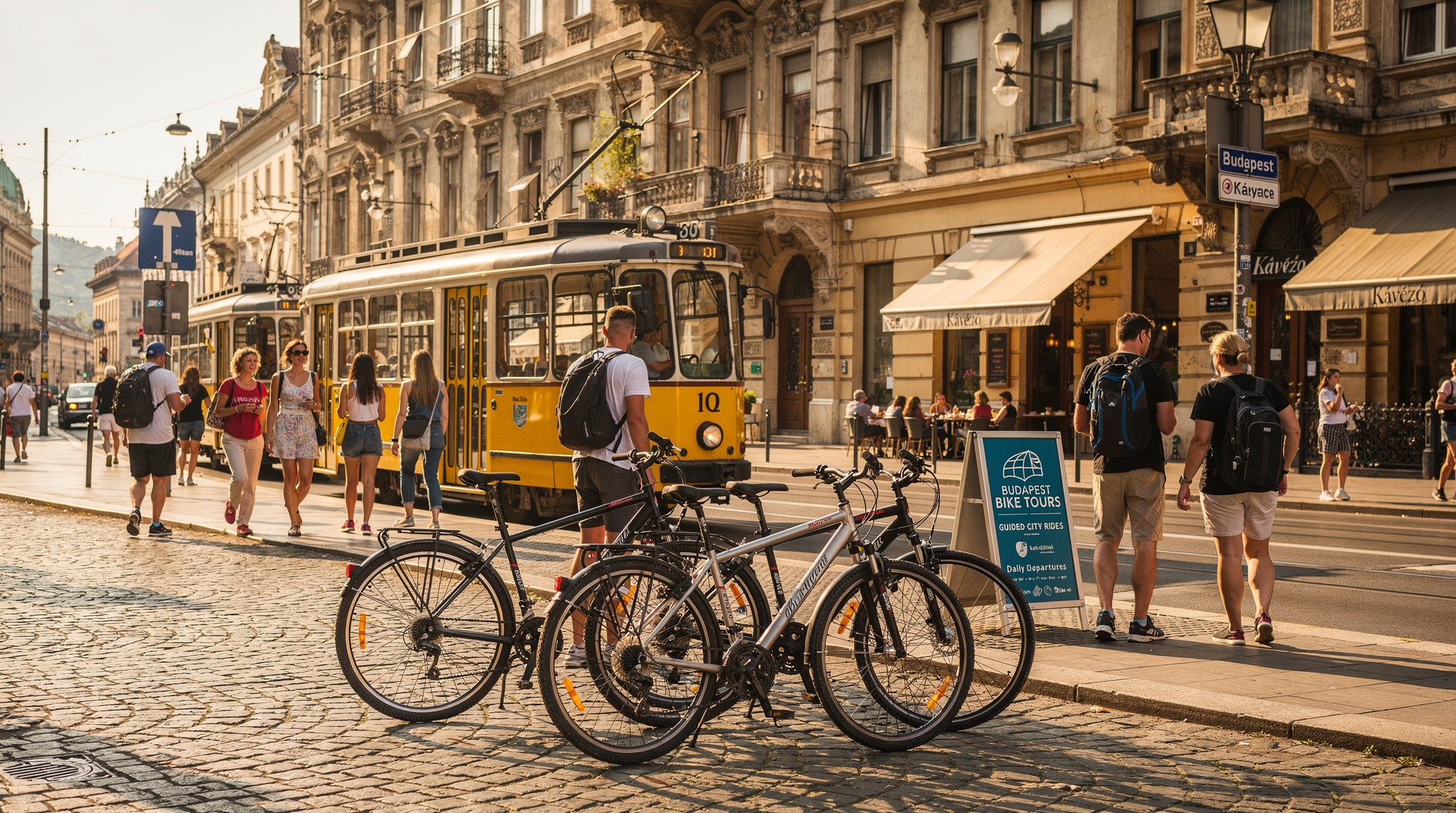
Budapest was designed for large-scale movement. The grand boulevards, the riverside promenades, the park roads of City Park — these are spaces where human-scale transportation feels right and cars feel intrusive. On a bike, you can cover the Pest waterfront from the Great Market Hall to Margaret Island in 20 minutes, stopping where you choose, keeping pace with the city’s rhythm.
Guided bike tours take advantage of this. A 3–4 hour cycling tour covers roughly twice the geographic range of a walking tour in the same time, while allowing more stops than a bus or hop-on-hop-off route. It is the most efficient way to see the breadth of Budapest in a first day.
| Duration | 3–4 hours for a full circuit |
| Cost | Around 9,000–14,000 HUF per person |
| Terrain | Mostly flat; Castle Hill’s steep sections are skirted, not climbed |
| Best time | April–October; avoid heavy rain and midday summer heat |
| Good for | First-day orientation, families with older children |
There is also a practical reason cycling suits this city. Budapest’s main sights are spread across two banks of the river, and the distances between them are just long enough to be tiring on foot yet too short to justify a taxi. A bike closes that gap. If you are still deciding how to structure your stay, the first time in Budapest guide and the three-day overview show where a bike tour fits best, and most visitors slot it into the first or second morning.
How a typical bike tour unfolds
Most guided rides follow the same rhythm. You meet your guide at a central point, get fitted for a bike, and receive a short safety briefing covering hand signals, braking and how the group moves together. The first few minutes are usually spent on quiet streets so everyone can find their balance before the route reaches busier stretches. From there the guide leads the group in a loose line, pausing at landmarks for history, context and photos.
The pace is relaxed. Nobody is racing, and the guide adjusts to the slowest comfortable rider. That is one of the main advantages over renting a bike alone: you do not have to read a map, think about traffic or wonder which side of the river has the better view. You simply follow, look around and listen. The commentary is where a good guide earns their place, linking the architecture on the Pest waterfront to the stories behind it, and pointing out details you would walk past without noticing.
Expect at least one longer stop, often for a drink or a snack, which gives everyone a chance to rest and ask questions. If you want to understand the layout of the two banks before you ride, the Buda versus Pest guide is a useful primer, because it explains why the city feels so different on each side of the river.
The grand sightseeing tour
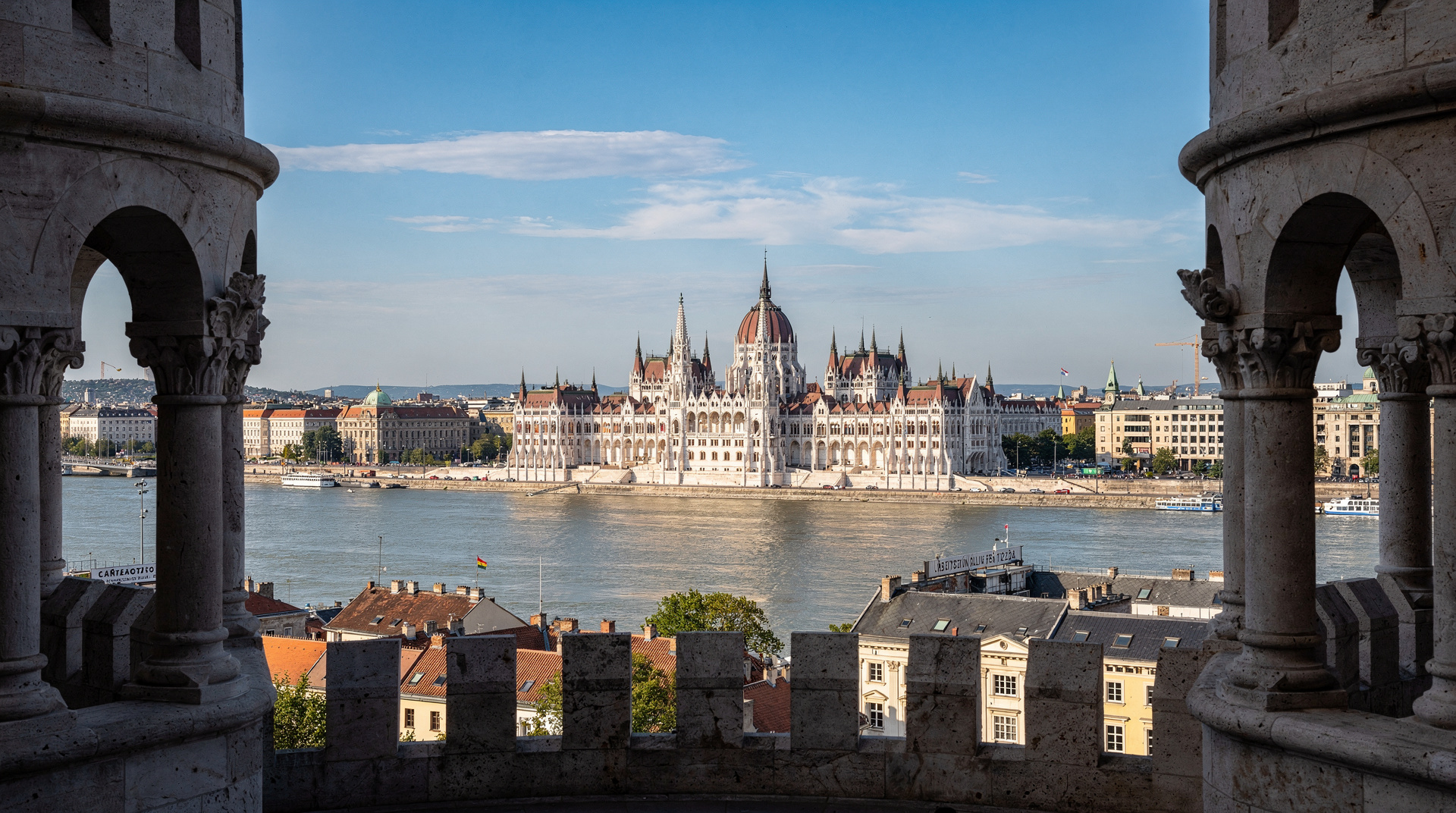
The Grand Budapest sightseeing bike tour is the comprehensive option: a full city circuit lasting 3–4 hours that covers the Pest waterfront (Parliament views, Chain Bridge, Great Market Hall), crosses into Buda, loops through the Castle Hill approach, and typically includes Margaret Island’s car-free roads and the City Park area near Heroes’ Square.
The route is mostly flat — Budapest’s Pest side sits on a plain, and even the Buda bank is manageable with standard cycling fitness. The main elevation is Castle Hill, which organised tours usually skirt rather than climb (the steep sections are not rideable). Group size is typically 8–16 people.
Price: approximately 9 000–14 000 HUF per person including bike hire.
This is the tour to choose if you have one morning and want the broadest possible introduction. It gives you the shape of the city rather than the detail, and that is exactly what makes it useful early in a trip. Once you know where things are, you can decide which areas deserve a second visit on foot, whether that is the Castle District, the Jewish Quarter or the quieter corners of City Park. Many visitors say the tour changed how they planned the rest of their days, because it replaced vague ideas about distance with a real sense of how the districts connect.
Because it covers so much, the tour does not linger anywhere for long. Treat it as a first draft of your itinerary: note the places that caught your attention and return to them later. The Hungarian Parliament guide and the Chain Bridge guide are good follow-ups for the landmarks you pass only briefly on the ride.
Half-day and focused tours
The Discover Budapest half-day bike tour covers a more focused route — typically the riverside and central districts — in 3 hours. Better suited to visitors who have already seen some of the city and want a cycling option rather than full first-day coverage.
Several operators run neighbourhood-specific rides: ruin bar district evening tours, Jewish Quarter history cycles, and food-stop rides that include a lángos break or wine tasting. These combine cycling with another activity and work well as afternoon or early-evening options.
If you like the idea of a guided ride with a little more depth, the extended guided bike tour with added stops is worth a look. It suits travellers who enjoy lingering at a place rather than rolling past it, and who would rather trade a few extra minutes for more explanation. Check the exact inclusions on the booking page before you commit, since operators change what is bundled from season to season.
Choosing between the full circuit and a shorter ride mostly comes down to what you have already seen. If you have walked the centre, joined one of the best walking tours or taken a free walking tour, a focused half-day ride gives you something different instead of repeating the same sights. If this is your very first morning in the city, the full circuit is the better introduction.
E-bike tours
Electric assist bikes make the Budapest circuit accessible regardless of fitness level. E-bike tours follow the same routes as regular bike tours but allow less confident cyclists — or those who want to arrive at stops without sweating through their shirt — to keep pace easily. Useful for: families with older children, visitors recovering from illness, anyone who wants to cover more ground than standard cycling allows in the time available.
Most operators now offer e-bike options alongside standard bikes. Expect to pay a supplement of 2 000–4 000 HUF over the standard tour price for the electric assist. The downtown e-bike tour is a good middle-ground option — a shorter, central route with the electric assist included, useful if you want the sightseeing benefit of cycling without committing to the full half-day circuit.
Margaret Island: the car-free bonus
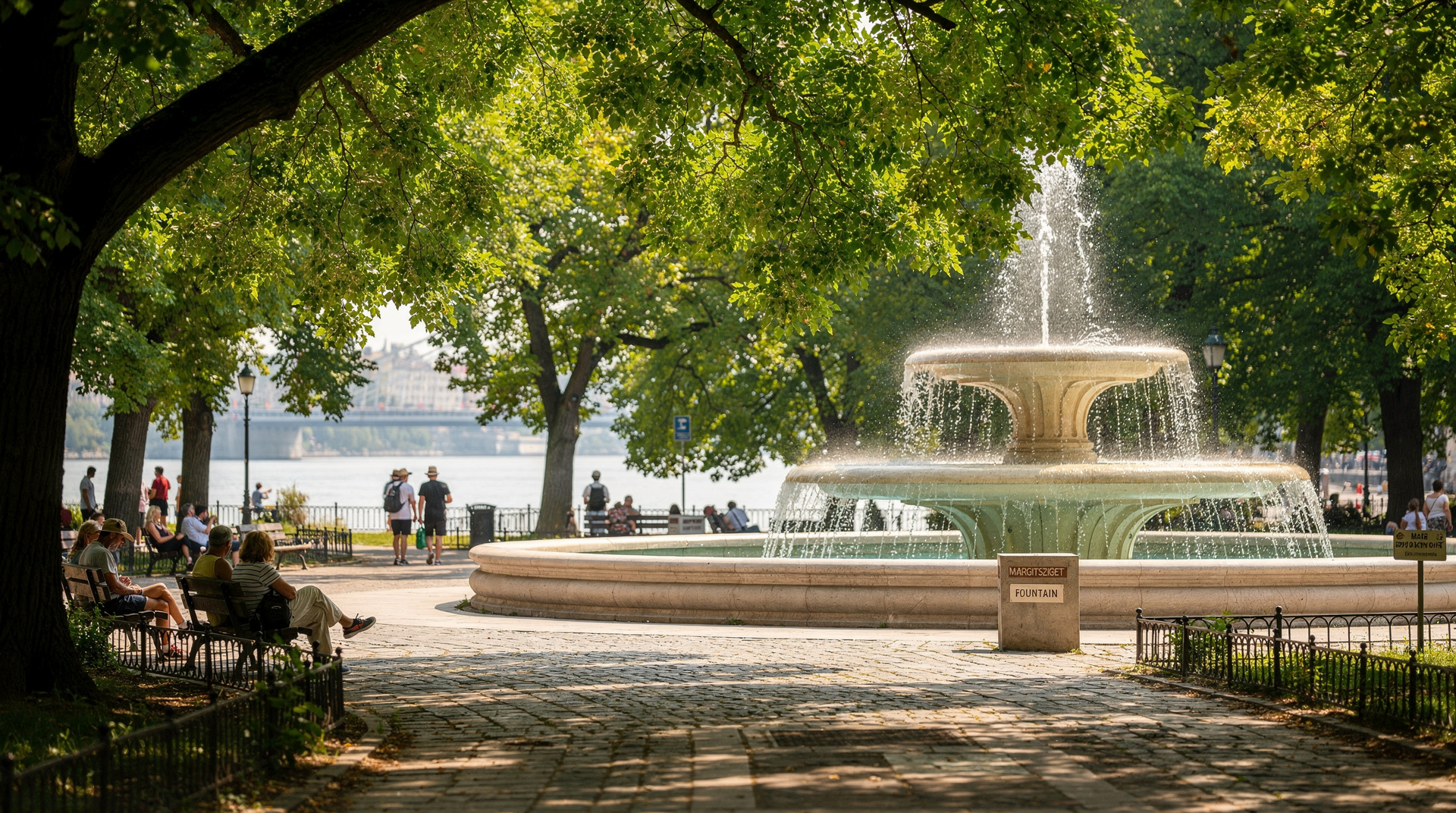
Margaret Island (Margit-sziget), the island in the Danube between Buda and Pest, is nearly car-free and has dedicated cycling paths for its full 2.5 km length. Most bike tours loop through the island; the combination of riverside views, the rose garden, the ruins of a medieval Dominican convent, and the absence of traffic makes it a highlight of any cycling route.
The island is easily reachable independently via the Margaret Bridge (pedestrian and cycle path). The Margaret Island guide covers what to see at a slower pace.
Margaret Island also works well as a break in the middle of a longer day. The shade, the open lawns and the lack of traffic make it a natural place to slow down, and the Margaret Island destination page lists the sights worth stopping for. If your tour passes through quickly, you can always come back later on foot or by bike to explore at your own speed.
Choosing the right season and time of day
Cycling in Budapest is pleasant for much of the year, but the experience changes with the weather. Spring and early autumn are the most comfortable: the air is mild, the light is good for photos and the paths are busy without being crowded. Summer is lively and long days give you plenty of daylight, but the middle of the day can be hot, so a morning or late-afternoon departure is usually kinder. Winter rides are possible for hardy cyclists, though cold, wet or icy conditions can shorten or cancel tours.
If you are planning around the calendar, the guides to Budapest in spring, Budapest in summer and Budapest in autumn explain what each season feels like in practice. A morning departure also tends to mean quieter paths and softer light on the river, which is when the city looks its best from the saddle.
Independent cycling: what to know
MOL Bubi: Budapest’s public bike-share scheme uses docking stations throughout the city. A day pass costs around 500 HUF plus usage fees. The bikes are solid city bikes — heavy, reliable, not fast. Good for A-to-B trips but less pleasant for a multi-hour sightseeing circuit than a well-maintained tour bike.
Private rental: Several shops near the Chain Bridge and along the Pest waterfront rent city bikes and e-bikes at 2 000–4 000 HUF per day. Ask for a lock and a basic route map.
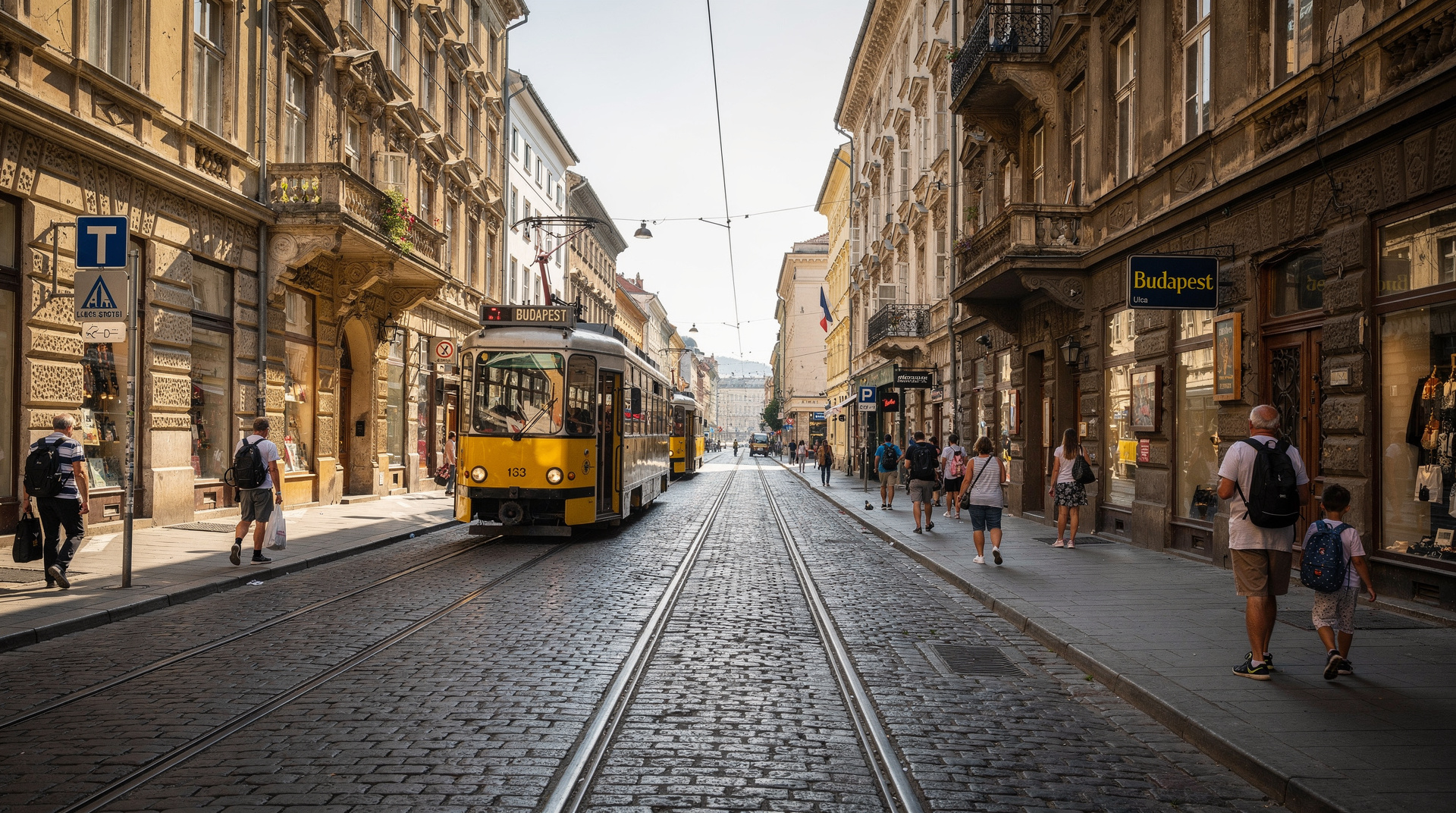
Cycling infrastructure: Budapest has cycling lanes on the main river routes and through City Park, but the inner districts have inconsistent provision. The biggest hazards are tram tracks (wheels can slip on rails — cross at 90 degrees) and parked car doors. Tour guides are experienced with these hazards and route accordingly.
Bike tours versus other city tour options
| Mode | Coverage | Duration | Cost/person | Physical effort |
|---|---|---|---|---|
| Walking tour | 3–5 km | 2–3 hours | 4 000–12 000 HUF | Low |
| Bike tour | 15–25 km | 3–4 hours | 9 000–14 000 HUF | Low–moderate |
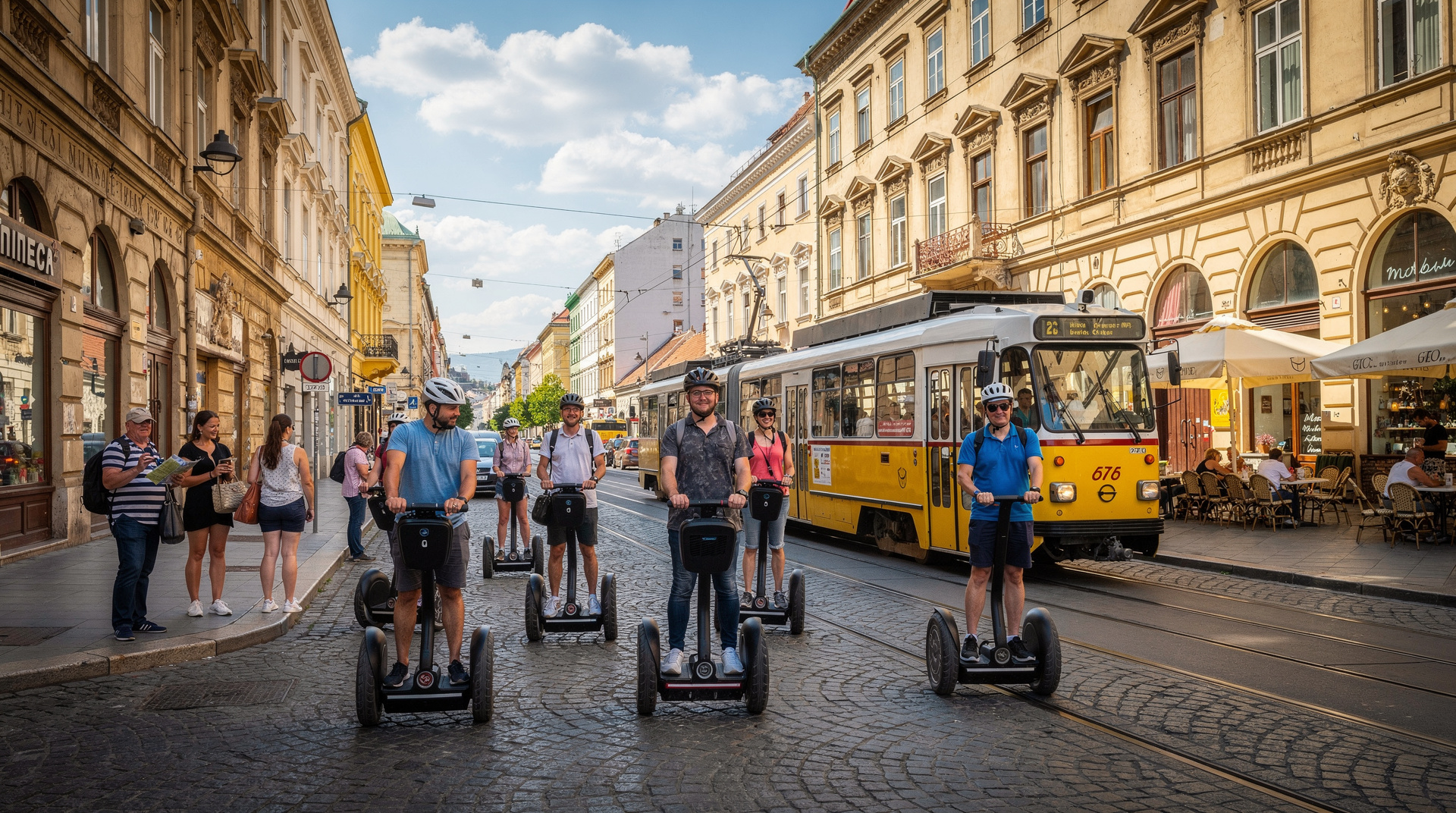
| Segway tour | 10–15 km | 1.5–2.5 hours | 10 000–18 000 HUF | Very low |
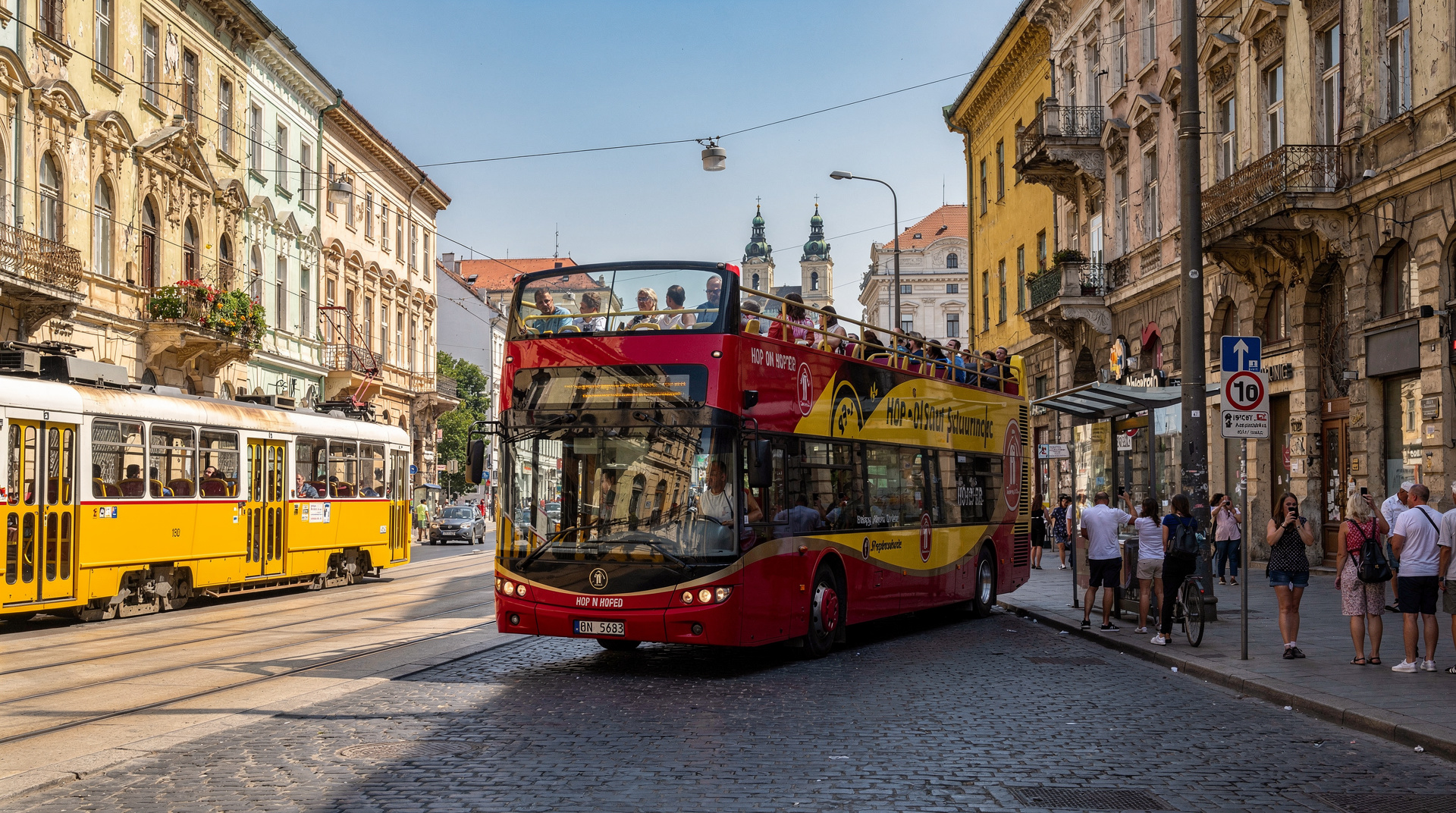
| Hop-on-hop-off | City-wide | Flexible | 8 000–14 000 HUF | Very low |
For first-time visitors who are comfortable on a bike, the bike tour represents the best value-per-distance. For those with mobility concerns or who want passive sightseeing, the hop-on-hop-off bus or segway tours are better alternatives.
What to combine with a bike tour
A morning bike tour followed by an afternoon at Széchenyi thermal bath is one of Budapest’s best day combinations — you see the city, then soak your legs. The bike tour often passes Széchenyi as part of the City Park loop; some operators can drop you there at the tour’s end.
For families, the Budapest with kids guide notes that bike tours with children’s bikes are one of the most effective ways to keep younger visitors engaged with sightseeing. Most operators accommodate children’s bikes from age 8 upwards.
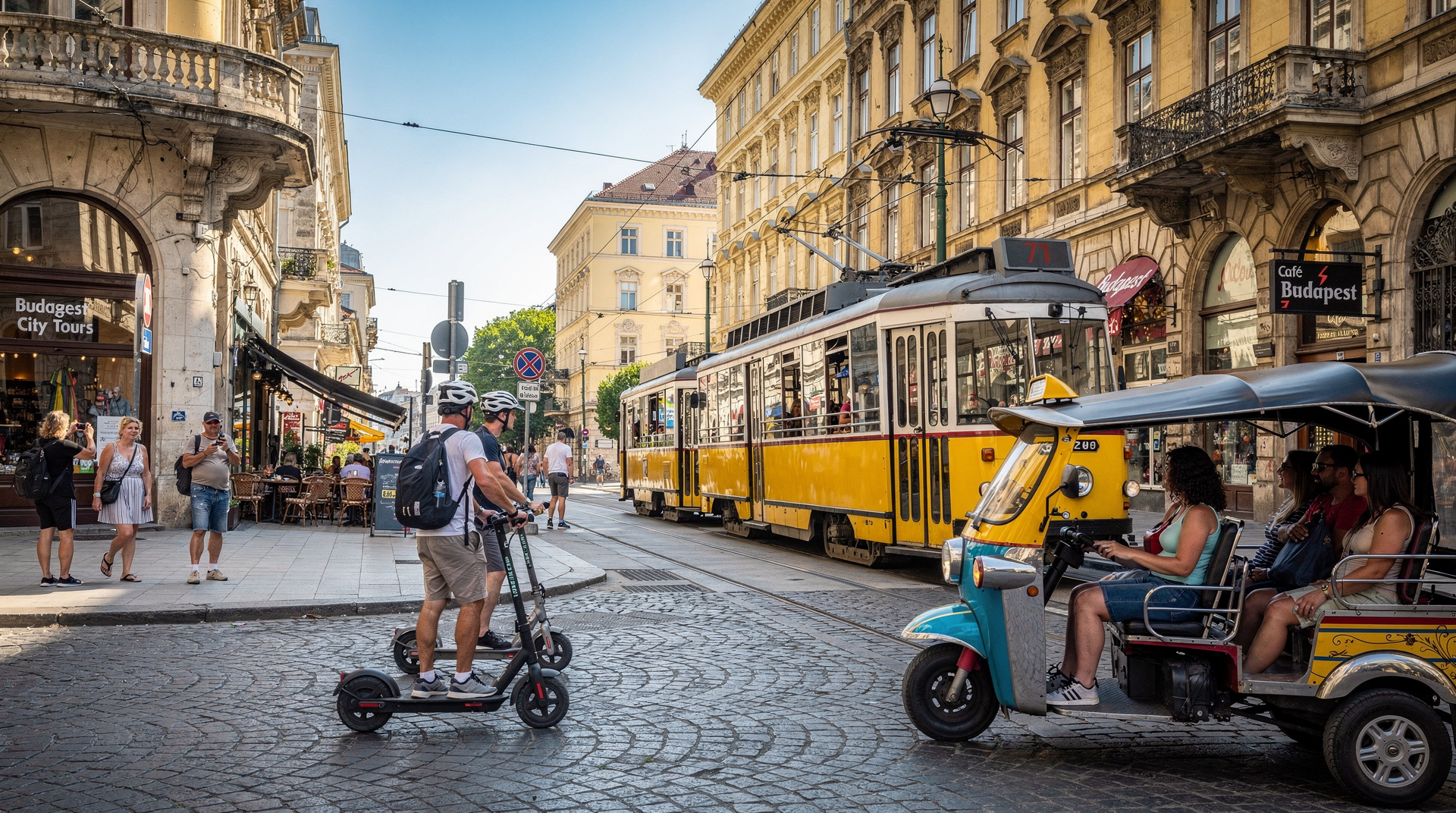
The getting around Budapest guide covers independent cycling and the public transit alternatives in more detail. For visitors interested in covering multiple areas in one day, combining a morning bike tour with an afternoon tuktuk or e-scooter tour covers distinct routes without repetition.
Who should and should not book
A bike tour suits a wide range of travellers, but it is not for everyone. Confident adults, couples, groups of friends and families with older children tend to enjoy it most. Solo travellers often find it an easy way to meet people, since a small group on bikes naturally starts chatting at the stops. If you are travelling alone, the solo travel guide has more ideas for activities that are friendly to people on their own.
Riders who have not cycled in years should be honest with themselves. A standard bike is perfectly manageable for someone with basic fitness, but if you are nervous in traffic or unsure about balance, the e-bike option is the more comfortable choice. If cycling is simply not for you, the Segway tours offer a similar sense of covering ground and are a gentler alternative for anyone who would rather stand than pedal.
For visitors who need step-free or low-effort options, the accessible Budapest guide goes through what works best, and it is worth reading before you choose any active tour.
Booking tips
Book ahead in the busy months, particularly for weekend mornings, since group sizes are limited and the best departure times fill first. Read the meeting-point details carefully and arrive a little early so you are not rushed while being fitted for a bike. Check whether your tour includes a helmet, a drink or a snack stop, and confirm what happens if the weather turns bad. Reputable operators explain their cancellation and rescheduling terms clearly, so choose one that does.
Finally, think about how the tour fits with the rest of your day. A morning ride leaves the afternoon free for a bath, a museum or a long lunch, and the Budapest one-day itinerary shows how to build a full day around a single anchor activity without overloading it.
What to wear and bring
Comfortable, non-restrictive clothing works best — you don’t need dedicated cycling gear for a standard sightseeing tour. Closed shoes are strongly preferred over sandals, since pedals and the occasional cobbled or gravel stretch are unforgiving on exposed feet. Bring sun protection in summer and a light waterproof layer in spring or autumn, when a passing shower is common even on an otherwise clear day. Most operators provide helmets, though not all riders use them; if a helmet matters to you, confirm availability when booking rather than assuming. A refillable water bottle is useful — City Park and the riverside paths have public fountains, but not every stretch of the route does.
Frequently asked questions about Bike tours in Budapest
How long is a typical Budapest bike tour?
Standard guided bike tours run 3–4 hours and typically cover 15–25 km. Half-day tours extend to 4–5 hours. Most operators include a rest stop with coffee or lángos. E-bike tours cover the same distance with less physical effort and are suitable for all fitness levels.Do I need to know Budapest well to join a bike tour?
No. Guided bike tours provide all orientation. You follow the guide; no independent navigation is required. Guides stop at key points for historical commentary. This makes bike tours a good option for first-day orientation, particularly for visitors who prefer cycling to walking.Are Budapest bike tours safe?
Budapest's dedicated cycling lanes are expanding but still inconsistent. Guided tours use routes that minimise traffic exposure — riverside paths, park roads in City Park, quieter boulevards. Guides provide safety briefings. Overall risk is comparable to cycling in any European city. Children's bikes and helmets are usually available from operators.What is the best bike tour for seeing the most of Budapest?
The grand sightseeing bike tour (3–4 hours, full city circuit) is the most comprehensive for first-time visitors. It typically covers the Pest waterfront, Parliament exterior, Castle Hill approach, Margaret Island, Heroes' Square and City Park. For those who want a more targeted experience, half-day tours focusing on specific districts are available.Can I rent a bike independently in Budapest?
Yes. Budapest's MOL Bubi public bike-sharing scheme operates across the city (dock-based, 500 HUF/hour, registration required). Private rental shops near the waterfront offer city bikes at 2 000–4 000 HUF per day. For a first visit, a guided tour is more efficient than independent rental; for a second visit, independent rental is fine.What should I wear on a Budapest bike tour?
Comfortable, non-restrictive clothing and closed shoes — dedicated cycling gear isn't necessary for a standard sightseeing tour. Bring sun protection in summer, a light waterproof layer in spring or autumn, and a water bottle. Most operators provide helmets; confirm availability when booking if wearing one matters to you.
Top experiences
Bookable activities with verified prices and instant confirmation on GetYourGuide.